Goldendale Garage Door Maintenance for High Desert Climate Challenges
Goldendale’s high desert climate creates unique garage door stresses that milder Gorge communities never experience, demanding specialized seasonal maintenance. Goldendale garage door maintenance in high desert conditions requires a different approach than standard protocols designed for moderate climates.
Goldendale experiences extreme east winds, ice
While Hood River and Cascade Locks contend with Columbia Gorge winds, Goldendale’s high desert location north of the Gorge creates its own weather extremes. East winds here arrive with bone-chilling temperatures and ice storms that coat metal garage door components in frozen layers. Temperature swings from below freezing at night to the 40s by afternoon stress springs, cables, and rollers in ways lower Gorge communities rarely experience.
The high desert climate also brings months without precipitation, followed by sudden ice events. This freeze-thaw cycling causes metal components to contract and expand repeatedly. Accelerating wear on hinges and tracks. Your garage door faces weather patterns more similar to eastern Washington than to the moisture-heavy Gorge just miles away.
Understanding Klickitat County’s weather patterns
Goldendale sits in a high desert climate zone distinctly different from Hood River or Stevenson down in the Gorge. While lower communities deal with persistent moisture and moderate temperatures, Goldendale experiences extreme temperature swings—from below-freezing winters to scorching summer days—that expand and contract garage door metal components repeatedly. Add in those relentless east winds that rip across the plateau, and you’ve got weather conditions that demand maintenance timing matched to seasonal stress patterns.
Garage door care in extreme winds and cold conditions requires proactive steps before damage occurs.
Spring Maintenance Checklist
April is your window to address winter damage before Goldendale’s sustained east wind season arrives. Complete these three tasks in sequence to prevent emergency calls during summer heat buildup.
- Task 1: Replace Weatherstripping — Winter ice and snow wear down weatherstripping faster in Goldendale’s high desert than in milder Gorge communities. Replace deteriorated seals with high-temperature vinyl rated for 40°F to 160°F temperature swings—standard rubber fails under these extreme conditions. Use a utility knife to remove old stripping and press new material firmly into channels.
- Task 2: Inspect and Re-Tension Springs — Springs lose tension when exposed to repeated freeze-thaw cycles throughout winter. Ice damage becomes visible in spring as doors fail to open smoothly or balance properly. Check spring coils for gaps or stretching, then use a socket wrench to adjust tension following manufacturer specifications. If you’re unsure about DIY spring work, consult our professional spring inspection guide before attempting adjustments.
- Task 3: Clear Track Debris — Sand, salt residue, and ice fragments accumulate in tracks over winter, restricting door movement when temperatures rise. Wipe tracks thoroughly with a damp cloth, removing all grit that can damage rollers. This final step prevents June and July emergency calls when debris hardens under sustained heat and wind exposure.
Wind and Temperature Stress Points
Goldendale’s high desert location creates a unique double-threat to garage door integrity that lower Gorge communities rarely face. Spring and early summer east winds funnel through the valley, applying relentless lateral pressure to door panels. This pressure exposes weak weatherstripping first—the rubber compresses and fails, allowing wind infiltration that creates pressure differentials across the door. Once air gets behind panels, the door begins to buckle and ripple outward, stressing the hinge mounts and roller brackets. East wind garage door damage prevention starts with proper sealing before wind season peaks.
Temperature swings amplify this mechanical stress. Spring mornings near 20°F followed by afternoon highs near 70°F create a 50-degree expansion-contraction cycle that repeats daily. Metal panels, steel tracks, and galvanized hinges all expand at different rates. Welds crack first, then hinge plates separate from the door frame. Tracks warp slightly with each cycle, creating alignment issues that worsen over months. You’ll notice panel rippling—a wavy appearance across horizontal sections—or gaps appearing between hinge plates and the door surface.
Standard maintenance protocols assume stable temperatures. Lubrication helps moving parts glide smoothly, but it doesn’t address the structural fatigue from thermal cycling or the seal failures from wind pressure. Compare this to Hood River or Stevenson, where marine air moderates temperature swings and wind hits doors at different angles with less sustained force.
Goldendale needs reinforcement-focused maintenance: weatherproof caulking around frame edges to seal out wind infiltration, and hinge reinforcement brackets installed before stress cracks appear.
April preparation—before summer wind season intensifies—prevents the emergency panel replacements and frame repairs that spike in July and August when winds peak and repair crews are backlogged.
Fall Hardening Tasks
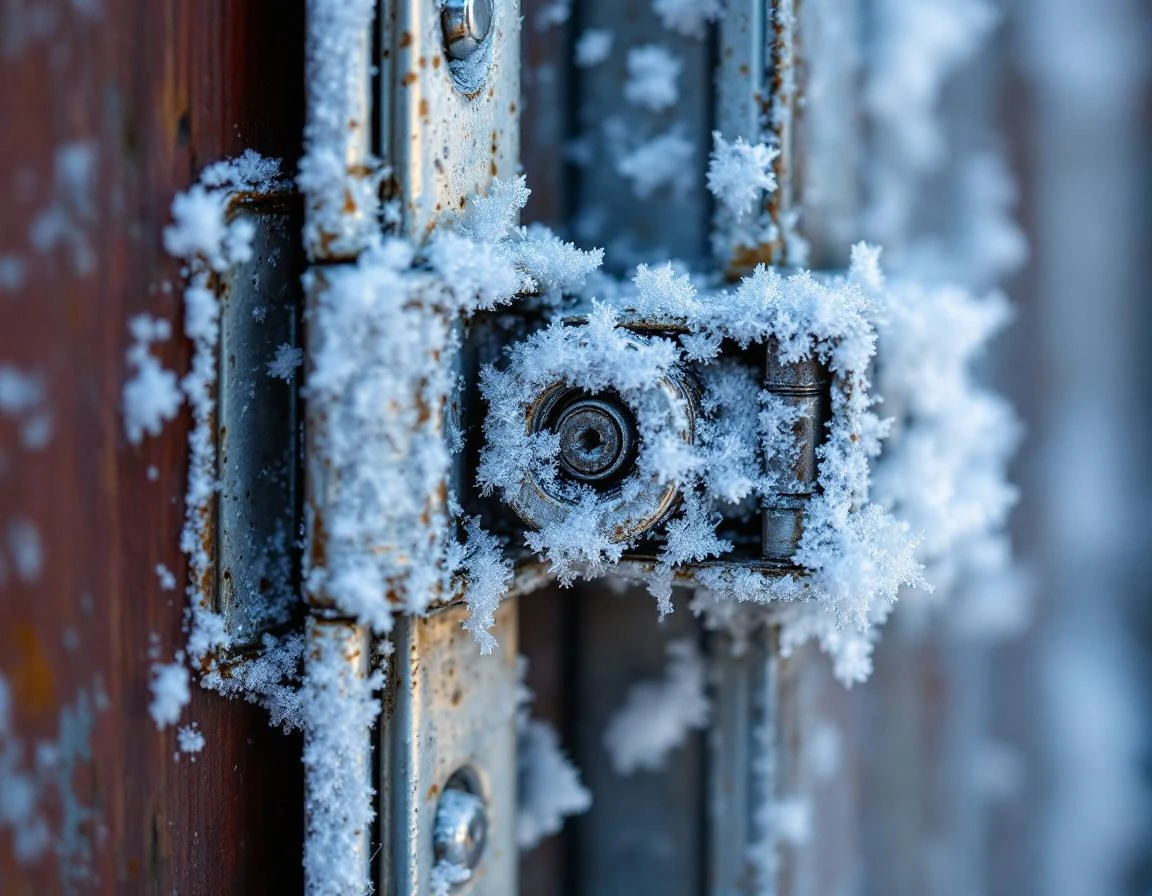
September and October form a narrow preparation window before Goldendale’s November freeze cycles begin. During this critical period, you’ll need to complete three fall maintenance tasks that address ice storms and cold climate garage door maintenance tips before harsh weather arrives.
- Task 1: Seal all gaps before ice intrusion begins. Inspect caulking around door frame edges, hinge mounting points, and cable entry holes. Apply weather-resistant silicone caulk to any gaps you find—ice melt during daytime thaw cycles will seek these openings and refreeze at night, expanding into cracks that damage frames and tracks.
- Task 2: Switch to low-temperature lubricants. Replace your standard lithium-based grease with synthetic formulations rated to −20°F. Goldendale’s high desert cold differs from the wetter Gorge valleys—drier air creates different friction patterns that cause standard lubricants to thicken and seize rollers during freeze cycles. Low-temperature grease maintains viscosity through temperature swings.
- Task 3: Pre-check spring tension before freeze-thaw stress. Verify springs are at full strength now, before ice loading begins. Ice accumulation adds 50+ pounds to panel weight when 1–2 inches coat the door surface. Weak springs that barely function in autumn will snap under ice-weighted panels during winter storms. Testing tension in fall gives you time to schedule replacements before emergency conditions arrive.
When to Call a Professional
Spring re-tensioning and track realignment aren’t DIY projects. Professional garage door technicians use calibrated torque wrenches and spring tension meters to balance the door precisely—work that requires specialized tools and safety protocols to prevent injury from stored torsion spring energy. High desert homeowners should also recognize that Goldendale’s freeze-thaw cycles and east winds create failure modes that progress faster than in milder climates. A slightly loose hinge in March can become a catastrophic panel warp by June when summer heat amplifies the stress.
We recommend scheduling an annual professional inspection in February or March—after winter ice storms have passed but before April wind season begins. This timing allows technicians to catch ice-related spring fatigue, track shifts from freeze-thaw cycling, and weatherstripping damage before conditions worsen. Expect to pay $75–$125 for a full inspection, with typical repairs (spring replacement, track adjustment, hinge reinforcement) ranging from $150–$400 depending on the extent of damage.
This proactive approach prevents the majority of high desert emergency calls. Deferred maintenance leads to wind-driven panel damage and ice load failures that require immediate—and expensive—intervention. Schedule your April inspection now, before the wind season rush. To extend your garage door’s lifespan and avoid emergency repairs during peak summer months. For professional service backed by industry-certified expertise, contact us today to book your pre-season inspection!