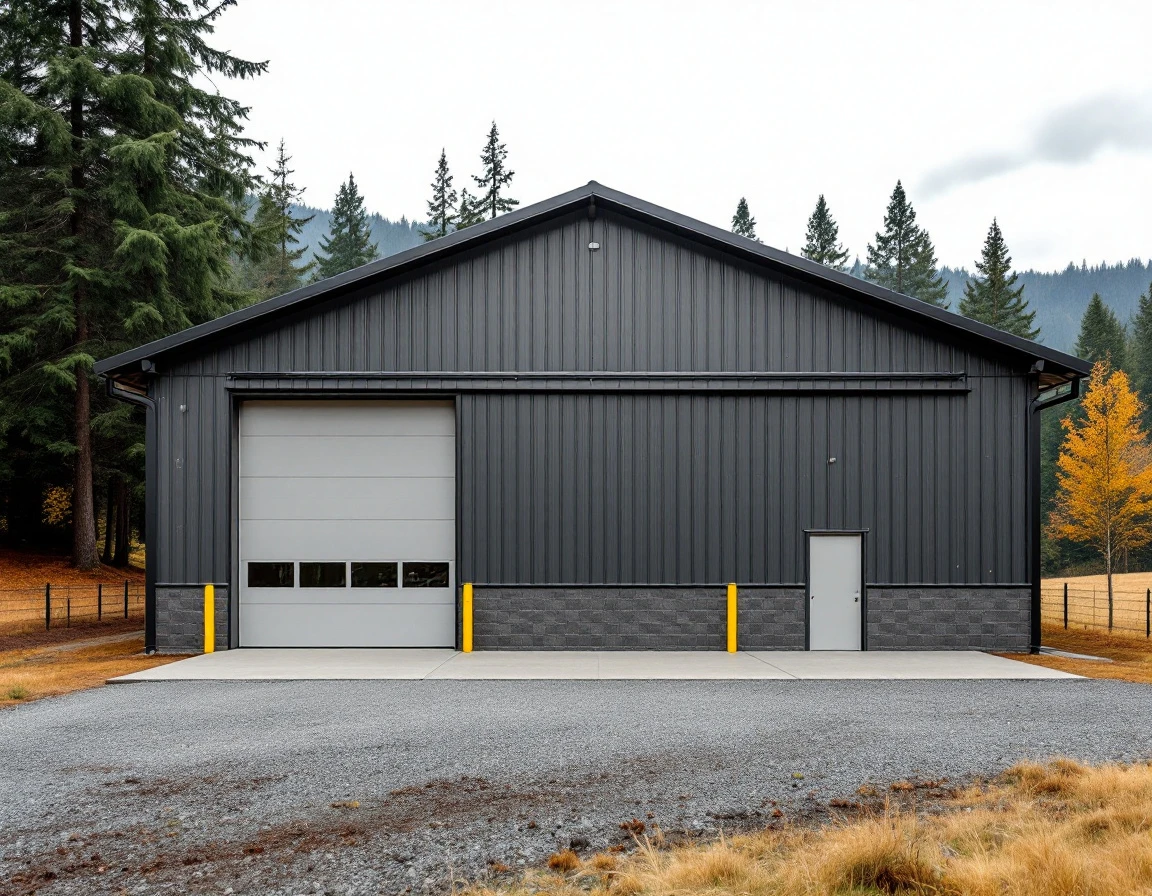
Amboy’s Climate Demands & Equipment Risk
Amboy sits in the Clark County foothills where elevation changes everything. While Vancouver properties face moderate winters, Amboy’s location east of Woodland creates heavy snow accumulation and repeated freeze-thaw cycles that standard residential garage doors simply cannot handle. Heavy-duty garage doors Amboy property owners install must meet demands far beyond typical valley installations. The difference isn’t subtle—snow load requirements for foothills properties run 50 to 80 pounds per square foot higher than valley standards, demanding engineered heavy-duty systems rather than off-the-shelf residential models.
What does inadequate protection cost? Agricultural equipment storage doors fail to protect machinery when moisture intrusion occurs. Rust penetration from moisture intrusion, hydraulic line freezing, and electrical component corrosion damage tractors and implements. Battery systems fail after repeated frost exposure. Engine blocks crack when temperatures drop below freezing. These aren’t minor inconveniences—each repair runs into thousands of dollars, and full equipment replacement becomes necessary years earlier than expected.
Many rural property owners underestimate the math. Replacing a failed door every five to seven years, plus repairing frost-damaged equipment, costs far more than installing proper systems upfront.
A tractor with corroded hydraulics, a UTV with frozen fuel lines, or a generator with moisture-damaged electronics represents real financial loss that proper garage protection prevents entirely.
Snow Load Ratings & Heavy-Duty Garage Doors Amboy
Standard residential garage doors carry snow load ratings between 15 and 25 pounds per square foot—adequate for Seattle or Portland lowlands, but dangerously insufficient for Amboy’s foothills elevation. Properties in this rural area require doors rated for 50 to 80 psf to handle the heavy accumulation common during winter storms. Installing a door rated below these thresholds invites structural failure when snow piles up, leading to bent panels, broken hardware, and compromised weathersealing.
Material selection directly determines whether a door meets these demanding requirements. Insulated steel construction offers the best combination of snow load capacity and frost protection, with 16-gauge or heavier steel providing the structural integrity needed for high-performance installations. These doors resist deflection under load while their foam core insulation prevents interior frost formation that damages stored equipment and vehicles. Non-insulated steel doors lack the rigidity and thermal protection Amboy properties need, while single-layer aluminum doors—though lightweight and rust-resistant—simply cannot withstand the forces generated by heavy snow accumulation.
The door itself represents only part of the structural equation. Header and track engineering must match the door’s capacity, or the entire system fails prematurely. Undersized headers sag under repeated snow loads, creating gaps that break weatherseals and allow moisture infiltration. Track reinforcement prevents the twisting and misalignment that occurs when heavy doors operate under stress. Many installation failures in rural areas trace back to contractors using standard residential support structures with heavy-duty doors—a mismatch that guarantees expensive repairs within a few seasons.
When evaluating contractor recommendations, confirm both the door’s rated snow load capacity and the engineering specifications for headers, tracks, and mounting hardware. This complete-system approach with weather-resistant garage systems for rural property means your investment protects equipment rather than becoming another seasonal maintenance burden.
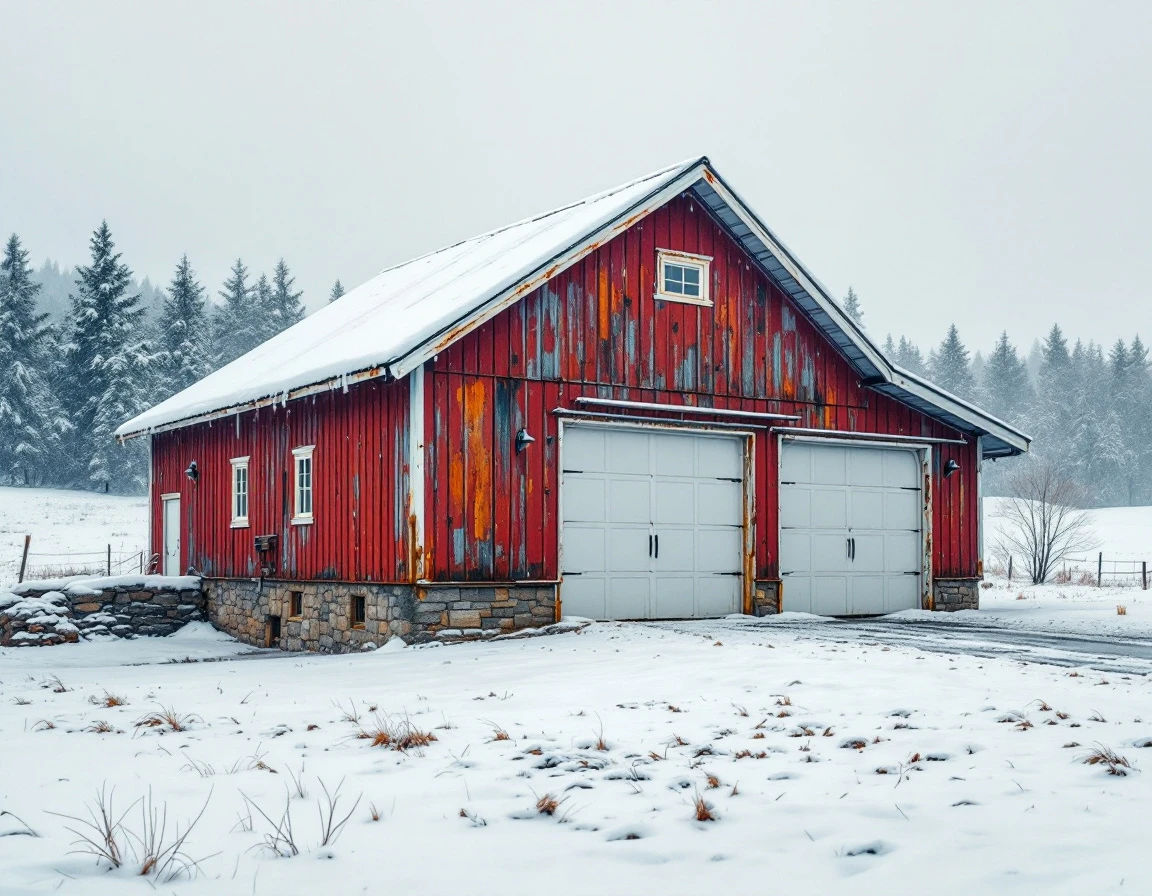
Frost Damage & Moisture Protection
Amboy’s freeze-thaw cycles create mechanical failures that standard garage doors can’t withstand. When temperatures drop below freezing at night and rise during the day, moisture trapped in door components expands and contracts repeatedly. This causes torsion springs to become brittle and lose tension, tracks to develop ice buildup that binds rollers, and rubber seals to crack open—exposing your stored equipment to direct weather exposure.
Weather-resistant gaskets and continuous bottom seals aren’t optional upgrades in this climate—they’re essential protection against moisture infiltration. Agricultural equipment storage doors with inadequate sealing expose machinery to rust formation and corrosion that develops within weeks of exposure. A single crack in your bottom seal allows meltwater to seep inside, pooling on concrete floors and creating humidity that damages everything stored at ground level.
Proper door insulation rated R-12 to R-16 does more than reduce heating costs. It prevents internal condensation that forms on equipment surfaces when warm indoor air meets cold metal components. This condensation freezes overnight, creating frost buildup on stored machinery that accelerates metal corrosion and damages sensitive electronics.
Thermal breaks in door frames and headers minimize cold bridging—the direct heat transfer path that turns metal frames into ice conductors. Without thermal breaks, cold radiates from your door frame into adjacent wall structures, creating frost damage that extends beyond the door itself and compromises your entire garage envelope.
Detached Shop & Barn-Style Configurations
Detached shop building garage doors Amboy face exposure conditions no attached garage ever sees. Without the thermal mass and wind protection of your home, these structures endure direct wind gusts, rapid temperature swings, and unfiltered weather that demands reinforced engineering. Standard attached-garage doors buckle under these conditions—their frames flex, panels warp, and tracks misalign after a single winter season.
What does proper detached-building engineering look like? Heavy-duty detached structures require:
- Reinforced perimeter frames anchored directly to structural headers with through-bolts rather than lag screws
- Impact-resistant panels using heavier-gauge steel that won’t dent from wind-driven debris or hail
- Track systems mounted with additional support brackets every 18 inches instead of the standard 24-inch spacing, preventing deflection when heavy snow loads press against closed doors
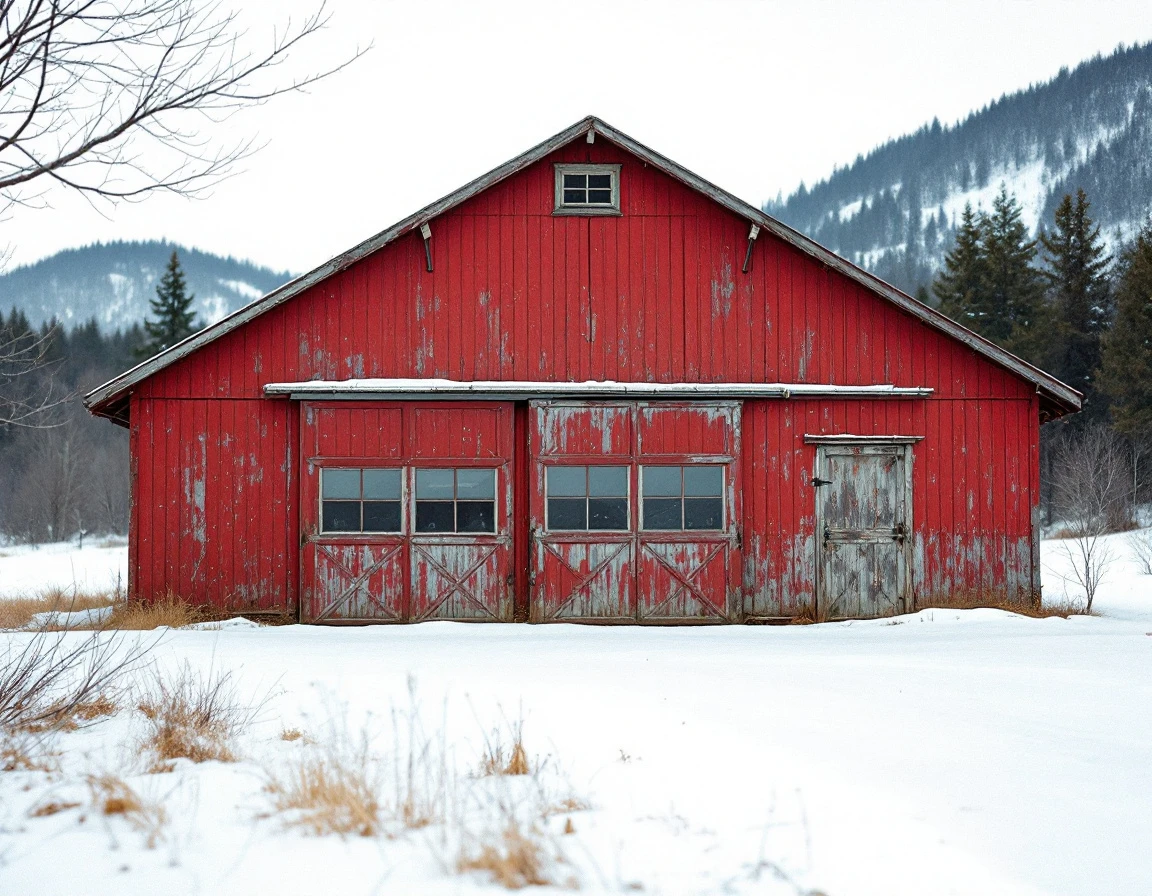
Barn-style doors—whether bifold or sliding—need the same 50-80 psf snow load ratings as sectional overhead doors, but their horizontal track systems face unique challenges. Bifold doors concentrate weight on hinges and pivot points, requiring commercial-grade hardware rated for repeated cycles under load. Sliding barn doors demand precision track alignment because frost heave or foundation settling creates binding that tears rollers from their mounts.
Oversized garage doors foothills elevation (12 feet wide or larger) multiply these demands. Multi-point locking systems secure doors at three or more locations along the perimeter, preventing the wind-induced warping that turns single-latch doors into flapping liabilities. Proper installation starts with foundation work—detached buildings settle differently than homes, and headers must be engineered to remain level as footings shift through freeze-thaw cycles. Track mounting directly to framing rather than wall sheathing prevents the misalignment that jams doors and destroys operator mechanisms.
Installation & Contractor Evaluation
Finding a contractor qualified to install heavy-duty garage doors Amboy requires more than a quick online search. Your foothills location demands installers who understand Clark County code requirements for improved snow loads and can engineer installations that meet 50–80 psf specifications. Before hiring anyone, ask explicitly about their experience with foothills installations and whether they’re familiar with the structural requirements that differ from standard valley work.
Before signing a contract, verify the following:
- Header sizing must match your door’s actual snow load rating. Not standard residential tolerances that work in Vancouver but fail in Amboy
- Track alignment needs precision calibration to handle the weight of reinforced panels and prevent binding during frost heave cycles
- Spring tension must be engineered specifically for your system’s weight and dimensions—generic adjustments won’t cut it when your door faces months of freezing temperatures
Watch for red flags that signal problems ahead. Contractors who rush installations before winter arrives often skip critical steps like proper sealing and track squareness verification. Vague warranty language that doesn’t explicitly cover snow load performance or frost protection leaves you exposed when damage occurs. If a contractor can’t provide signed documentation showing compliance with foothills code requirements, keep looking.
Post-installation inspection protects your investment. Before winter weather arrives, verify that all seals sit flush against panels, springs show proper pre-tension, and tracks measure perfectly square. A well-installed heavy-duty system will perform reliably for decades. Poor installation negates the quality of even the best materials, leaving you with failures that cost thousands to repair.
ROI & Long-Term Cost Comparison
Heavy-duty garage door systems require a larger initial investment than standard residential doors, but this upfront cost eliminates the frequent equipment replacement cycle that agricultural property owners face. When you calculate the full cost over time, proper systems pay for themselves by preventing the premature failure that Amboy’s frost heave and snow load stress would otherwise cause.
Equipment damage from moisture and frost costs Amboy agricultural operators $2,000–$5,000 annually when using inadequate storage. Rust spreads across implements, frost cracks hydraulic lines, and temperature swings damage small engines.
A $4,000 heavy-duty door system amortizes in 3–5 years simply by preventing these ongoing losses—this isn’t a premium upgrade, it’s financial protection against predictable damage patterns.
Engineered systems also reduce ongoing maintenance costs. Spring replacement, track repair, and seal maintenance run lower with heavy-duty components, while standard doors require full replacement every 7–10 years as frost cycles degrade the frame and panels. Seasonal emergency repairs—frozen doors, collapsed frames, warped tracks—disrupt equipment access during critical windows and require premium labor rates during harvest or winter prep seasons.
Property owners who invest before the 2026–2027 winter season protect their equipment immediately and avoid the compounding costs of inadequate storage. The math is clear: paying for proper protection now prevents thousands in avoidable losses year after year.