High Elevation Garage Doors Snow Load Reality Check
If you live in Amboy, your high elevation garage doors face a completely different winter reality than properties just fifteen miles west. At elevations above 2,000 feet in the foothills east of Woodland, your property sits in a distinct snow accumulation zone that generic maintenance advice simply doesn’t address. The same six-inch snowfall that barely stresses a lowland garage door creates much heavier structural loads at your elevation—the same depth of snow contains far more moisture and weighs much more per square foot than the lighter,…” fluffier snow that falls at lower elevations. For properties in Clark County with high elevation garage doors, snow load reality differs from what lowland owners experience.
Here’s what makes Amboy’s spring season particularly tough on garage doors: freeze-thaw cycling. While Clark County lowland properties might experience occasional overnight freezes in winter. Foothill properties go through repeated freeze-thaw cycles from late February through May. Metal components expand and contract. Water seeps into tiny cracks, freezes, and forces those cracks wider. Springs that seemed fine in January begin showing wear patterns that can lead to sudden failure by April.
The timing matters, too. When Vancouver and Ridgefield properties are enjoying dry spring weather in March, Amboy is often still dealing with heavy, wet snow. Your peak stress period hits later—right when standard spring tension settings and basic inspection protocols start failing under intensified load conditions. That’s why reinforcement before late April becomes critical for preventing emergency repairs.
Spring Tension Upgrade Requirements for Heavy Snow Areas
If you’re maintaining a detached shop or agricultural building in Amboy, your garage doors face demands that residential installations never encounter. These structures typically span larger openings—often 10 to 16 feet wide for equipment access—requiring springs with much higher tension ratings than standard residential doors. The physics are simple: wider spans mean heavier panels, and heavier panels demand stronger springs to counterbalance the load safely. Shop garage doors and agricultural building garage doors in freeze-thaw cycles foothills zones require this specialized approach.
Freeze-thaw cycling progressively weakens spring tension throughout winter. By April, springs that performed adequately in October may have lost enough tension to create dangerous imbalances. Here’s how to conduct a DIY inspection before professional measurement becomes necessary:
- Visually check for sagging—does the door sit level when closed, or does one side droop lower than the other?
- Test manual operation—disconnect the opener and lift the door halfway. It should stay in place without assistance. If it slides down or requires effort to hold, your springs have lost tension.
- Watch for uneven movement during powered operation. Jerking, hesitation, or one side rising faster than the other signals spring degradation.
These visual checks identify problems, but they can’t tell you whether replacement springs need to match residential specifications or step up to heavy-duty agricultural ratings. That determination requires professional spring tension measurement against manufacturer load ratings. You’ve reached the decision point where DIY inspection ends and expert assessment begins.
Why April Timing Matters
Late-spring weather in the Amboy foothills intensifies operational loads on garage doors. Rapid temperature swings cause panels to expand and contract, while afternoon winds add lateral stress during operation. Replacing failing springs during calm April weather prevents the scenario every property owner dreads: emergency spring replacement during a windstorm when your equipment bay won’t close. Pre-thaw damage has already occurred—the question is whether your springs can handle the additional stress that May and June will bring.
Spring problems compound quickly once tension drops below safe thresholds. What starts as slightly uneven operation becomes cable derailment, track damage, or worse. Contact us today for professional spring tension measurement and load capacity assessment matched to your agricultural structure’s specific requirements.
Spring Tension Measurement Protocol
Before attempting this test, disconnect your automatic opener to prevent interference. Stand clear of the door’s path and manually lift it from the closed position. A properly tensioned door should rise smoothly with light hand pressure applied at waist height—you shouldn’t need to strain or grip hard to move it. The door should remain in place when you stop lifting, not drop back down or require constant upward force to hold position.
Watch for these freeze-thaw damage indicators during your lift test: The door rising unevenly on one side suggests asymmetrical spring wear. With one spring losing tension faster than its partner. Listen for creaking or popping sounds that weren’t present before winter—these indicate internal spring damage from repeated expansion and contraction cycles. If the door sags visibly at rest or feels noticeably heavier than it did last fall, tension loss has occurred.
Compare what you observe to the load rating printed on your door frame or installer documentation. If manual operation feels strained, uneven, or different from its pre-winter behavior, schedule a professional tension check before late April. Do not attempt spring adjustment yourself—garage door springs store lethal force that requires specialized tools and training to handle safely.
When to Call a Professional
If your door won’t open manually without extreme effort, opens unevenly, or shows visible spring damage like rust, cracks, or separation, professional tension measurement is required. These warning signs indicate spring fatigue that DIY inspection cannot safely evaluate.
Spring replacement on agricultural doors is never a DIY project. The tension forces on oversized shop doors exceed safe homeowner tools and require calibrated measurement equipment. For high-elevation Amboy properties, get professional assessment before late April—snow load complexity and liability risk make expert evaluation critical.
A professional pre-spring inspection provides essential peace of mind, while emergency spring replacement during the busy season requires a considerable financial commitment. Early professional engagement protects both your budget and your safety when measurement exceeds your comfort level.
Track Inspection for Freeze-Thaw Damage
Freeze-thaw cycles create unique damage patterns in garage door tracks that accelerate throughout winter. When temperatures drop below freezing, moisture in the track channels expands into ice, trapping debris like dirt and mineral deposits. As temperatures rise, this ice melts and contracts, creating gaps that allow tracks to warp. Each cycle forces debris deeper into the track system while bending the metal slightly, misaligning rollers and creating friction points that compound with every freeze-thaw event. Detached garage door track inspection becomes critical for elevation areas where these cycles repeat relentlessly.
Detached shops and agricultural buildings experience more aggressive track damage than attached residential garages. Because these structures lack the insulation and climate protection of an attached home, their tracks face direct exposure to temperature swings on all sides. Agricultural doors accumulate additional debris from machinery operations, animal bedding dust, and field dirt that gets ground into tracks during freezing cycles. Amboy properties with workshop buildings should expect heavier maintenance demands than lowland attached garages.
30-Minute Track Inspection Checklist
Start your inspection by visually examining both tracks from top to bottom. Look for the following issues:
- Rust spots where moisture has concentrated
- Dents or warping in the metal channel
- Visible ice debris or mineral buildup
- Gaps between rollers and track walls
- Each roller for smooth rotation—freeze-damaged rollers often show separation between the wheel and bracket or visible flat spots where ice prevented rotation
You can handle minor cleaning yourself using a wire brush to remove surface debris and applying silicone-based lubricant to clean tracks. However, stop immediately if you notice track misalignment, severe warping, or multiple damaged rollers. These conditions require professional realignment tools to measure track plumb and adjust mounting brackets precisely.
April represents your final opportunity for track maintenance before warmer weather intensifies existing problems. As temperatures climb into the 50s and 60s, warming cycles create maximum internal stress on already-compromised tracks, transforming minor misalignment into complete operational failure. Address track issues now while conditions remain stable.
Load Capacity Assessment for High Elevation Garage Doors
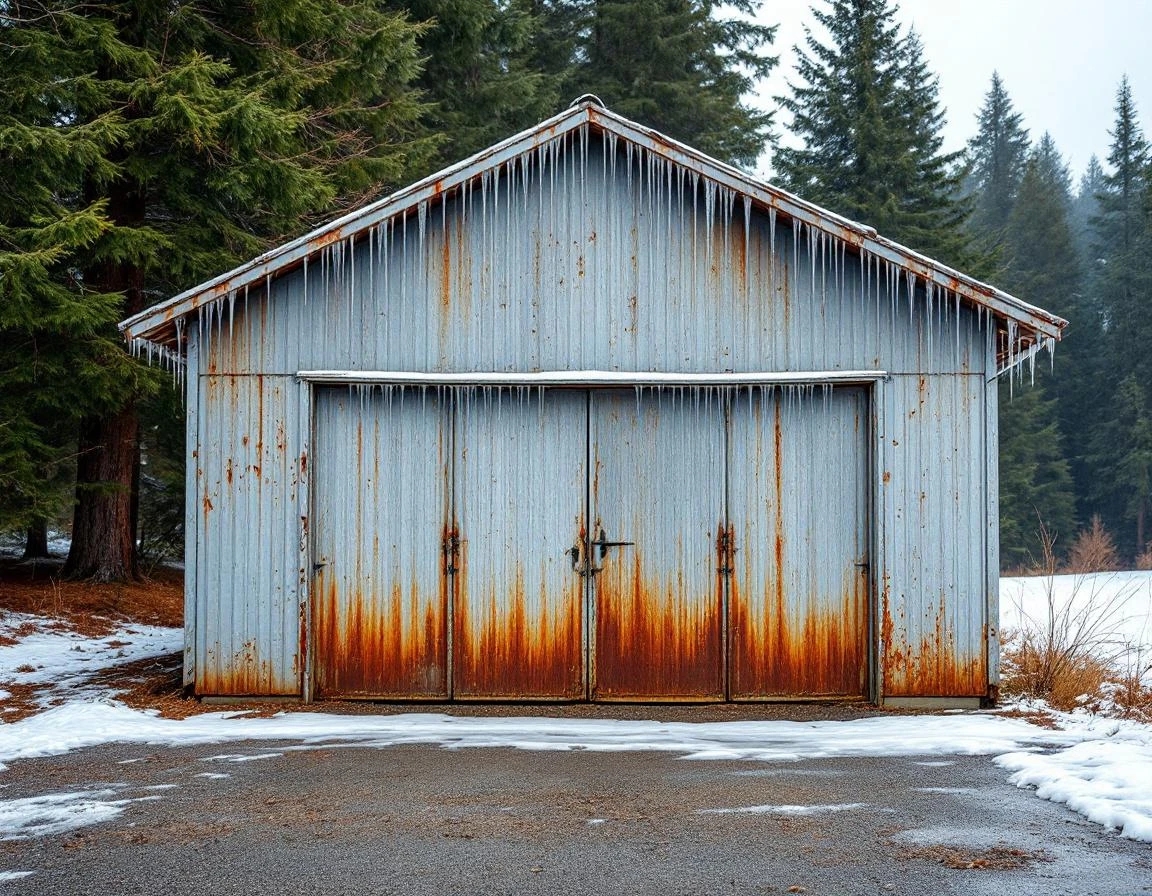
Most residential garage doors are manufactured to withstand a 40-psf snow load, which works fine for Vancouver or Portland lowlands. But Amboy properties at 2,000+ feet elevation face a different reality—heavy snow years can deliver 60 to 80+ psf of weight to your door structure. That gap between design capacity and actual load is where failures happen. Spring tension upgrades and snow load garage doors require this assessment before winter arrives.
Detached shops and agricultural buildings present the biggest concern. Many of these structures were built decades ago, when Amboy saw lighter winters, and their doors reflect those milder conditions. A door rated for 30 psf might handle daily operation perfectly well—until eighteen inches of wet snow sits on top of it for three weeks straight.
Finding Your Door’s Actual Capacity
Start by checking the door frame label, usually located on the vertical track or header bracket. This label lists the manufacturer, model number, and rated load capacity. If you can’t find a label, pull out installer documentation from when the door was purchased. No paperwork? Measure the door dimensions (width, height, panel thickness) and contact the manufacturer directly—they can often identify capacity based on model specifications.
Once you know your rated capacity, compare it to Amboy’s worst-case scenario. If your door is rated below 50 psf and you have a low-pitch roof that holds snow, you’re operating with minimal safety margin. Spring and track reinforcement can buy you one more season while you budget for replacement, but it’s a temporary fix. Structural capacity limits can’t be overcome by adjusting spring tension—that’s like tightening the cables on a bridge with cracked support beams.
This April assessment determines your path forward. Marginal capacity means reinforcement now, replacement next spring. Insufficient capacity means scheduling a new door installation before next winter arrives.
Spring Thaw Reinforcement Timeline
April represents your last reliable window for garage door reinforcement before late-spring thaw cycles create urgent problems. In Amboy’s foothills, spring thaw typically begins in late April and peaks through May, placing maximum stress on doors already weakened by winter freeze-thaw damage. Weather conditions narrow quickly—professional track realignment and spring replacement require dry conditions that become increasingly unpredictable as May progresses. Rural acreage garage door winter preparation demands action now.
Here’s your action timeline:
- Assess your doors by mid-April using the inspection methods covered earlier.
- If you’ve identified spring tension problems, track misalignment, or capacity concerns, schedule professional work for early May before availability tightens.
- Complete all reinforcement work before late May. When thaw peaks create the highest risk of operational failure.
Professional garage door companies serving north Clark County typically book up by late April as property owners across the region prepare for spring. Why does this matter for rural acreages? May garage door emergencies can trap equipment during critical growing season activities or prevent animal shelter access. A failed agricultural door isn’t just an inconvenience—it’s an operational crisis that emergency repairs solve at premium cost.
Your next step is simple: schedule your inspection now or call a professional this week. Contact Garage Harmony today to assess your high elevation garage doors before the spring rush begins.