October Leaf Debris Impact on Garage Door Leaf Debris Clogging Portland
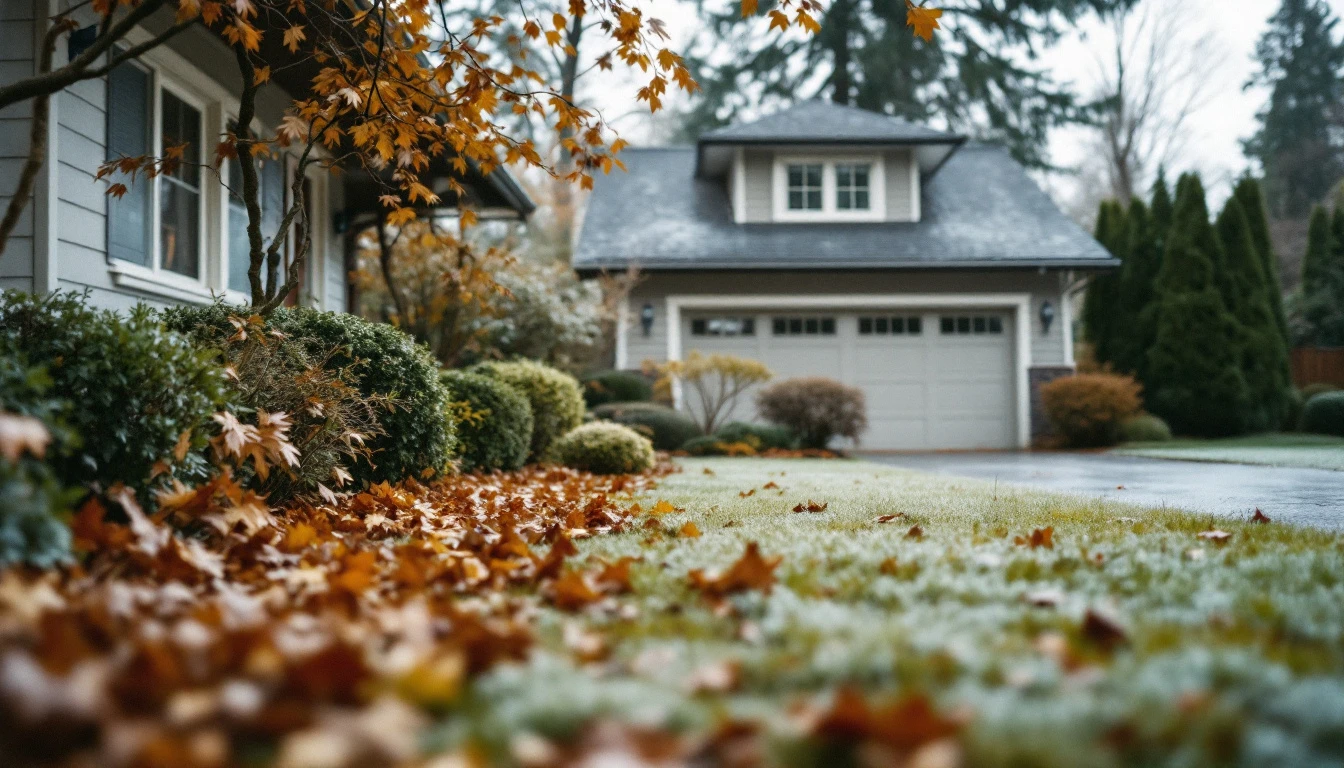
Why does October pose such a threat to Portland garage doors? The answer lies in our native trees. As oaks, maples, and Douglas firs shed their foliage, they create the perfect storm of debris accumulation that directly threatens your garage door system and floor drainage. Understanding how garage door leaf debris clogging Portland occurs helps you protect your investment before the problem starts.
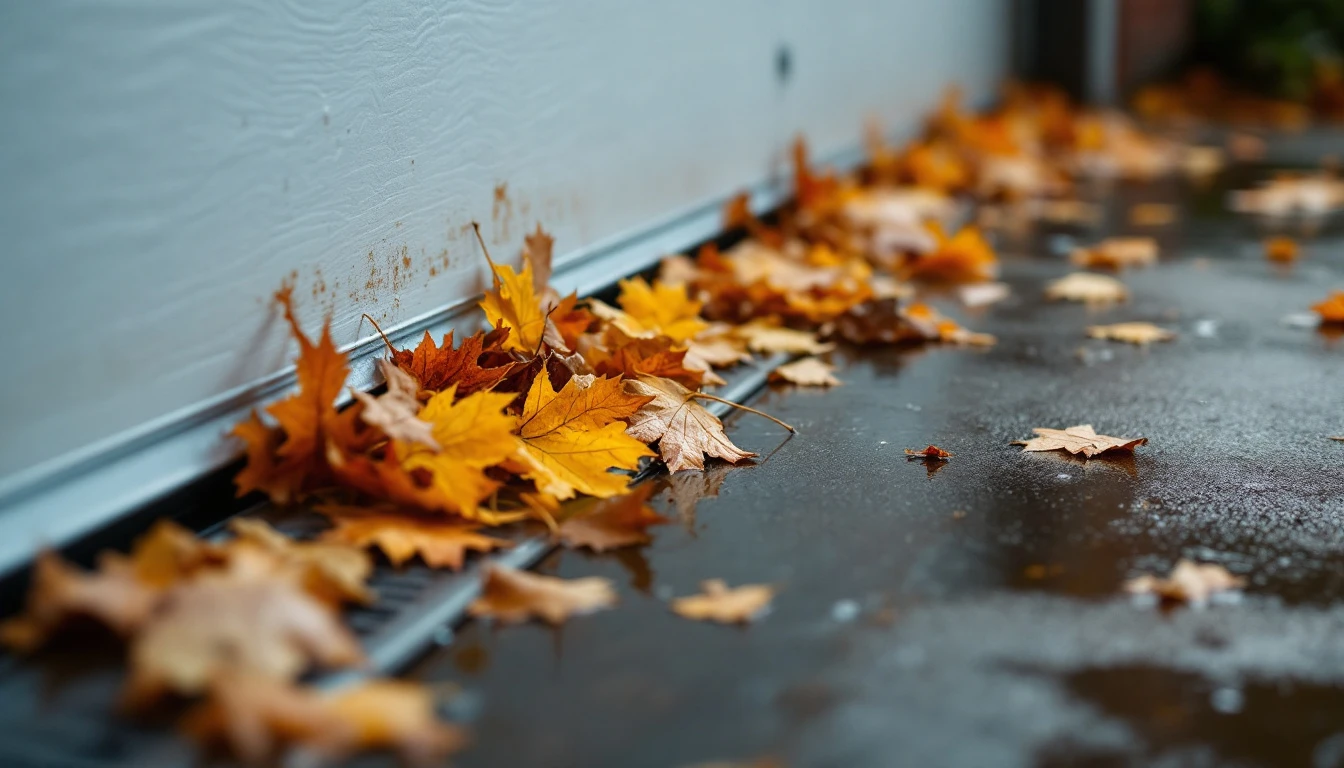
Leaves find their way into your garage through surprisingly varied paths. They blow in through worn door seals during windstorms, hitch a ride on vehicle tires after you’ve driven through piles at the curb, and accumulate in open tracks when doors sit partially raised. Once inside, these leaves settle into garage door channels and roller tracks. Creating friction that prevents smooth operation and leading to clogged garage door tracks leaves.
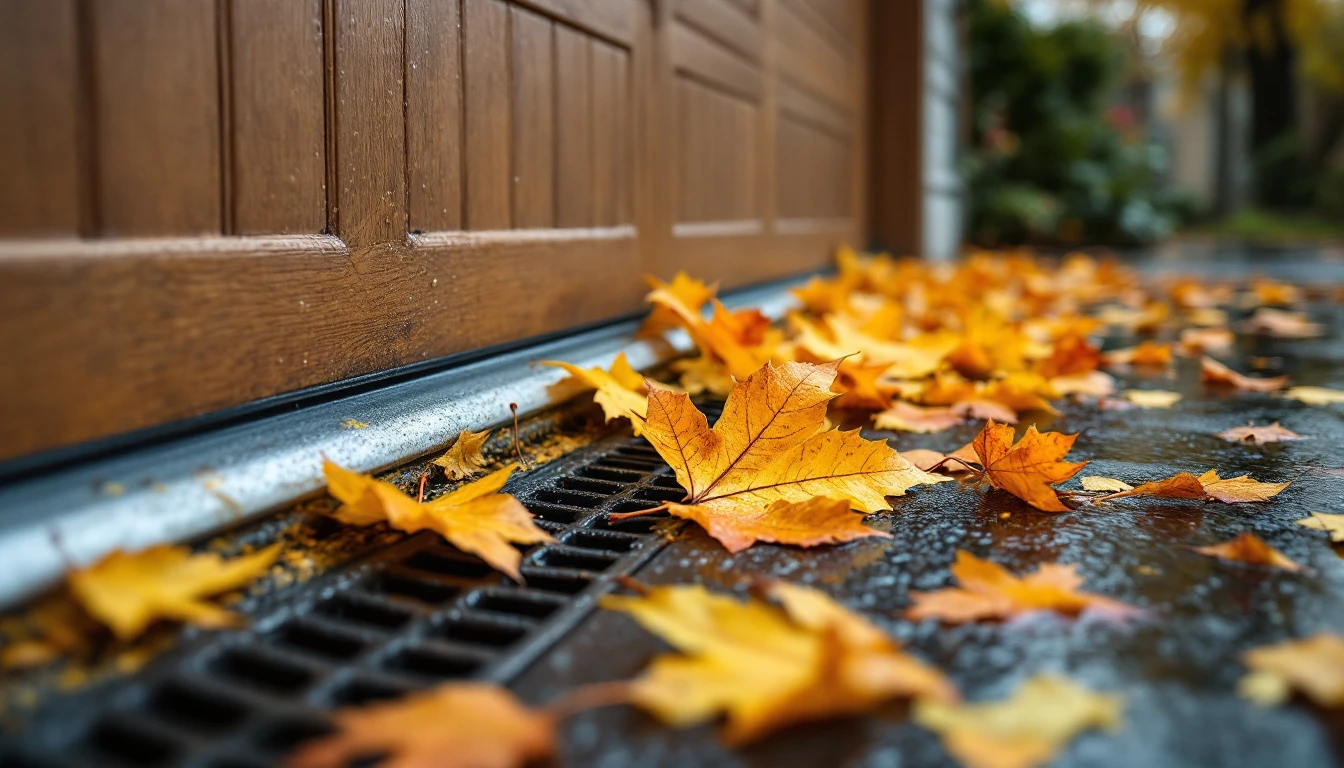
But track interference isn’t the only concern. When gutter runoff and downspout overflow carry leaf litter toward your garage floor drains, blockages form quickly. The result? A garage floor drain blocked by leaves causes water to pool near your garage entry instead of flowing away, setting the stage for potential flooding.
What signs should you watch for? Door binding or jerky movement when opening indicates leaves have lodged in the tracks. Water pooling near the garage threshold after rain signals drain blockage.
Catching these issues now, before peak accumulation hits mid-to-late October, prevents emergency repair calls and protects your system from freeze-thaw damage cycles that strike later in the season.

Three-Step Prevention Strategy
Here’s: protecting your garage door system from leaf damage doesn’t require expensive equipment or professional help for most tasks. This three-step framework ranks actions by cost-effectiveness, helping you invest your time and budget where they matter most. Each step builds on the others to create a complete defense system—skipping any one leaves your garage vulnerable.
Step 1: Clear and Inspect Tracks and Seals (Lowest Cost, Highest Impact)
This is your first line of defense and costs almost nothing. Before Portland’s peak shedding hits in mid-October, remove all debris from your garage door tracks using tools you already own: a shop vacuum, old toothbrush, and damp cloth. Pay special attention to the vertical track sections where leaves wedge themselves in and the bottom seal where moisture and debris accumulate together. Fall leaf cleanup garage door Portland starts with this foundational step.
What you need: Shop vacuum or hand broom, cleaning rag, flashlight, and about 20 minutes. When to do it: Complete a thorough initial cleaning by October 10th, then repeat every two weeks through November.
Step 2: Install or Maintain Gutter Extensions and Drain Covers (Moderate Cost, High Impact)
Gutter extensions direct water and debris away from your garage entrance, while drain covers prevent leaves from entering your garage’s drainage system. Both plastic extensions and metal drain covers remain affordable options that deliver real protection against the costly repairs that water damage can trigger.
What you need: Downspout extensions (if not already installed), drain covers or grates, screwdriver, and wire cutters for securing covers. When to do it: Install before September ends. Check weekly during October for clogs or shifting.
Step 3: Establish Your Two-Week Inspection Schedule (No Cost, Minimal Tools)
Consistency matters more than intensity. Set calendar reminders for every two weeks from October 1st through November 30th. During each 10-minute inspection, check tracks for debris buildup, test door balance, and verify that water drains properly around your garage entrance.
What you need: Flashlight, gloves, and a simple checklist. When to do it: Every other Sunday throughout fall, or immediately after major windstorms.
Together, these three steps form a complete prevention system. Step 1 addresses immediate threats, Step 2 creates physical barriers, and Step 3 catches problems before they escalate into expensive repairs.

Track and Drain Inspection
Before Portland’s leaf fall peaks in mid-to-late September or early October, inspect your garage door tracks and floor drains. This is your first line of defense and the highest-impact step you can take with minimal investment. Addressing clogged garage door tracks leaves early prevents binding and system damage.
Start with a visual inspection of the track channels along both sides of your door. Look for leaves, twigs, and sediment that have already accumulated, paying special attention to pinch points where the track curves. Use a broom or soft brush to sweep out visible debris, then follow up with a shop vacuum to capture finer particles.
Next, test your floor drain by pouring a bucket of water directly into it. Does the water disappear quickly, or does it pool? Slow drainage signals an existing blockage that will worsen once leaves start falling in earnest.
Finally, check the weatherstripping around your door frame.
Gaps in this seal create entry points for wind-blown leaves. Acting now—before peak accumulation—prevents the binding, jamming, and water damage that leads to expensive repairs later.
Gutter and Drain Defense
Before October arrives, investing in gutter and drainage improvements will reduce how often you need to manually clear debris from your garage area. These upgrades work year-round but become particularly valuable when Portland’s maples and oaks start shedding. Preventing leaves clogging garage doors through infrastructure upgrades saves time and prevents seasonal damage.
- Gutter guards attach directly to existing gutters and prevent leaves from entering while letting rainwater flow freely. Most mesh or screen varieties cost between $50-$100 and install in an afternoon with basic tools—a DIY-friendly project rated as easy.
- Downspout extensions direct runoff away from your garage door area, preventing pooling that carries leaves toward floor drains. These cost under $30 at hardware stores and snap onto existing downspouts without professional help.
- Floor drain covers with fine mesh screens block leaf entry while maintaining water flow. Available for $15-$40, they drop into place over existing drains—no installation expertise required. For guidance on preparing your entire garage system for seasonal changes, check our seasonal maintenance checklist.
Two-Week Maintenance Schedule
From October through November, plan to inspect your garage door system every 10 to 14 days. This two-week interval matches Portland’s fall leaf cycle—frequent enough to catch problems before they turn into clogs, but not so demanding that it feels like a chore. Seasonal garage maintenance leaf removal on this schedule prevents garage drain blockage autumn leaves from causing serious issues.
Each inspection takes about 10 minutes. Walk along the door’s path, check the track for leaf buildup. And pour a bucket of water into your floor drain to test flow. Keep a simple log noting the date, recent weather, leaf volume you removed, and any binding or pooling you observed. These notes help you spot patterns and adjust your schedule during heavy wind events.
Know when to call for help. If you see standing water that won’t drain after clearing debris, if your door binds despite clean tracks, or if debris won’t budge with manual clearing, contact Garage Harmony. This schedule is temporary—once December arrives, leaf pressure drops and you can return to normal maintenance routines.

When to Call a Professional
You’ve cleared tracks, installed preventive barriers, and inspected regularly. But how do you know when DIY maintenance isn’t enough? Certain warning signs indicate problems that require professional expertise.
If your door binds, sticks, or refuses to open smoothly despite clearing visible debris from the tracks, you’re likely dealing with misalignment that needs adjustment tools and technical knowledge. Standing water or pooling that doesn’t drain after gentle flushing suggests a deeper blockage in your drainage system that manual clearing can’t reach.
When drain blockage persists after removing visible debris. The clog may be far down the line where you can’t safely access it.
Perhaps most concerning, visible rust, corrosion, or damage inside tracks signals water intrusion damage that will worsen through Portland’s wet winter if left unaddressed.
Calling a professional early prevents minor issues from becoming expensive repairs. Homeowners who act now protect their investment and avoid emergency service calls during winter storms. Need expert assessment? Contact us today for a garage door inspection.