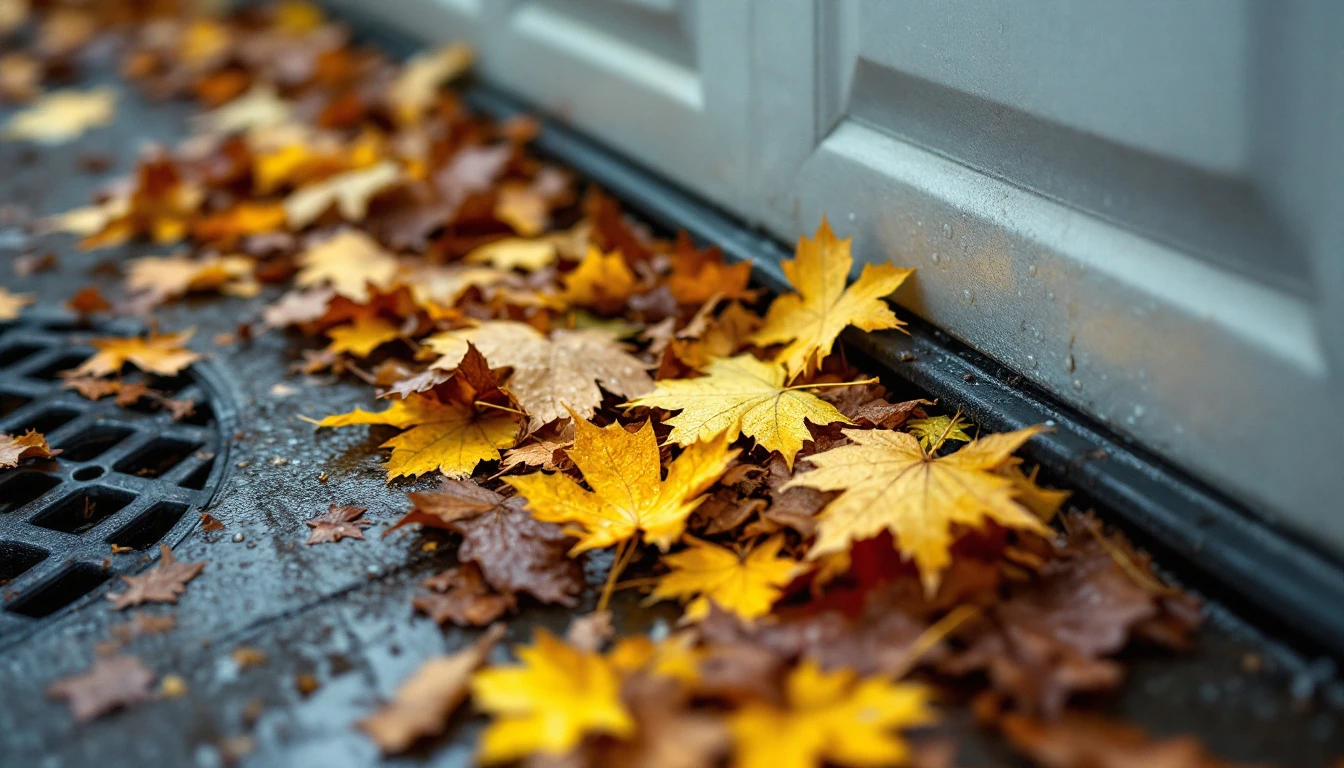
Fall Leaf Debris Impact: How to Clean Garage Door Tracks Fall Leaves Portland
September and October bring a stunning canopy of fall colors to Portland—but those beautiful leaves create real problems for your garage door system. Learning how to clean garage door tracks when fall leaves accumulate is essential to prevent damage. As trees shed their foliage, leaves clogging garage door tracks becomes increasingly common, with debris accumulating in garage door tracks and floor drains, wedging into narrow spaces and blocking proper operation. This debris doesn’t just sit there harmlessly; it actively interferes with your door’s ability to open and close smoothly.
Once Portland’s rainy season arrives in late September, the situation gets much worse. Dry leaves are a nuisance, but wet leaves accelerate rust and corrosion on metal tracks, hinges, and rollers. Moisture trapped against metal components speeds up oxidation, leading to track misalignment, binding, and sensor failures. Water pooling in clogged floor drains can seep under door seals, potentially damaging your garage floor and stored belongings.
Why does timing matter so much? The window between early September and the start of heavy October rains is your chance to prevent these problems. Cleaning tracks and drains before moisture arrives stops debris from becoming a sodden, corrosive mass. Prevention now means avoiding emergency repair calls during the wettest months, when rust damage and track failures spike.
A few minutes of maintenance in early fall protects your investment and keeps your garage door running smoothly all winter long.

Signs of Clogged Tracks
How do you know when your garage door tracks need attention? Listen carefully. Grinding or scraping sounds during operation signal that debris is blocking smooth movement. If your door moves more slowly than usual or seems to labor as it opens and closes, you’re likely dealing with track obstruction.
Visual inspection reveals even more. Walk to your garage door and look inside the tracks themselves. Can you see leaf debris, dirt, or rust buildup. These visible signs indicate imminent problems that will worsen once October rains begin. Pay special attention to the horizontal sections where debris tends to collect.
Check the area around your garage door opening, especially after a rainstorm. Water pooling near the threshold or just inside the door suggests your floor drain is already clogged and can’t handle incoming water. This standing water accelerates rust formation on metal components.
Watch your door’s closing pattern. Does it stick at certain points or close unevenly on one side? Partial obstructions create these inconsistent movements.
Catching these warning signs now in September—before the heavy rains arrive—prevents emergency repairs when water damage compounds the original problem.
Cleaning Tools and Method: How to Clear Garage Door Tracks Fall Debris
Ready to tackle how to clear garage door tracks fall debris before Portland’s rainy season begins? You’ll be able to complete this maintenance taskk in 30-45 minutes using tools you likely already own. Gather a stiff-bristled brush, your shop vacuum or household vacuum with hose attachment, several dry cloths or rags, and a can of silicone-based track lubricant. If you have a leaf blower or compressed air canister, those are helpful for dislodging packed debris.
Your cleaning process follows these key steps:
- Unplug your garage door opener or disable the automatic function to prevent accidental activation while working near moving parts
- Start at the top of each vertical track and work downward, using your stiff brush to scrub away visible debris, leaf fragments, and dirt buildup from the interior channel where the rollers travel
- Pay special attention to corners and bends where material tends to compact
- Use your vacuum to remove the loosened debris from both tracks
- For stubborn leaf matter wedged deep into crevices, aim your leaf blower or compressed air directly into the track channel to blast it free
- Wipe down the entire interior surface of both tracks with dry cloths to remove any moisture, as damp tracks invite rust formation
- Apply a light coating of silicone-based lubricant to the track interior once completely dry
Here’s where many DIYers make a mistake: they skip the drying phase. After vacuuming, wipe down the entire interior surface of both tracks with dry cloths to remove any moisture. Damp tracks invite rust formation, especially during our wet fall months. Once completely dry, apply a light coating of silicone-based lubricant to the track interior. Avoid overdoing it—excess lubricant attracts dust and creates sticky buildup. Two to three light passes down each track section provides adequate protection against corrosion through winter.

Floor Drain Clearance
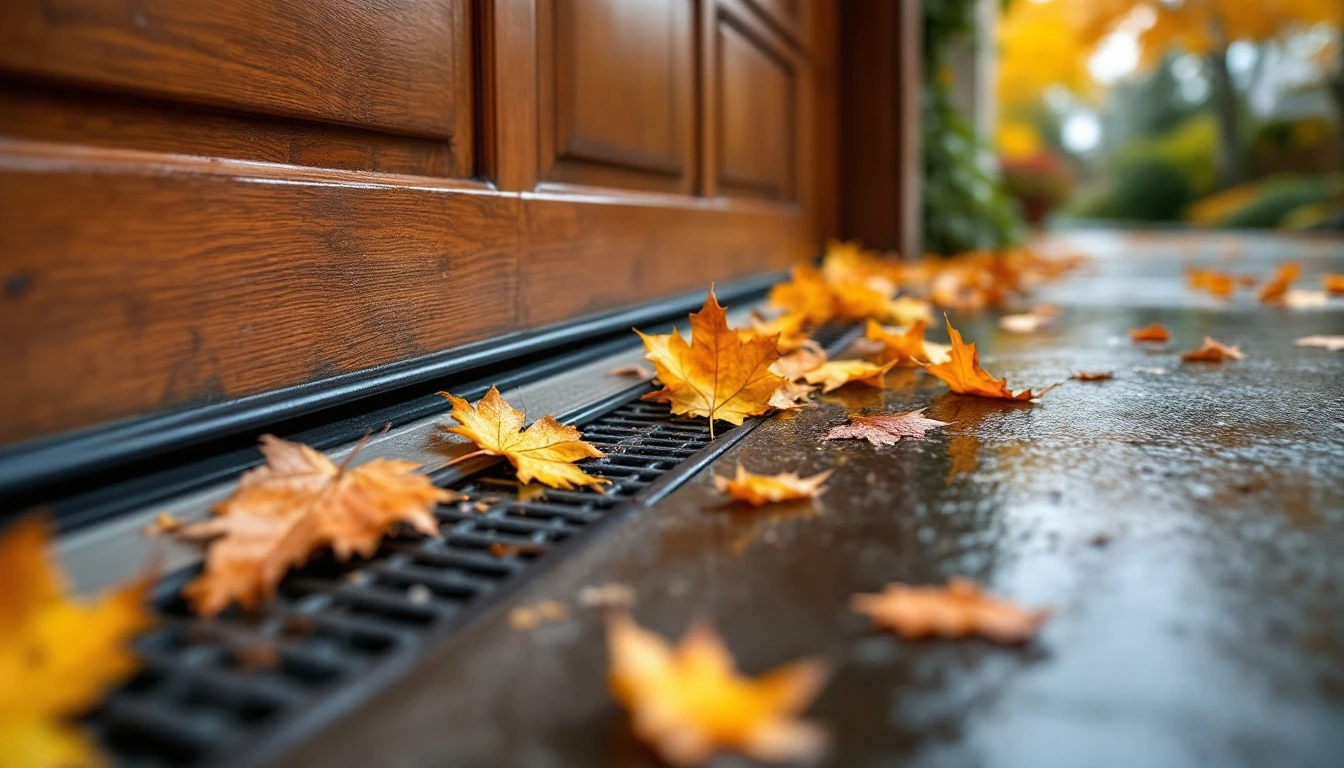
While most Portland homeowners focus on garage door tracks, the floor drain near your threshold deserves equal attention. These drains sit directly in the path of wind-blown leaves that pile up against your garage door during September and October. Once wet leaves pack into the drain opening, they create a solid plug that traps moisture against your foundation. When a garage floor drain is clogged with leaves, water damage can follow quickly.
In the Pacific Northwest rainy season, a clogged floor drains leaves create serious risks. Water that can’t escape through the drain backs up across your garage floor, seeping into foundation cracks and creating ideal conditions for mold growth. During heavy October storms, that backup can even push water into adjacent living spaces.
Clear your drain before late September using this quick process: remove visible debris by hand, flush the drain with a garden hose at full pressure, and use a plumbing snake if water drains slowly. This five-minute task prevents water damage that costs hundreds to repair.
Lubrication and Protection
Once you’ve cleared away leaf debris and dried your tracks, proper lubrication completes the job. Why does lubrication matter? It creates a protective barrier that reduces rust formation and keeps metal components moving smoothly through Portland’s damp fall and winter months.
Choose silicone-based or lithium lubricants designed for outdoor use in the Pacific Northwest climate. These formulas resist moisture penetration and won’t break down when exposed to rain. Apply a thin, even coat to tracks, rollers, and hinges—remember, less is more.
Over-lubrication actually works against you. Excess grease creates sticky surfaces that attract leaves, dust, and debris, undoing all your cleaning work. A light application protects components without becoming a magnet for the very problems you just solved.
September Prevention Schedule
When should you tackle garage door track and drain maintenance to prevent leaves from clogging garage door systems? Early September offers the ideal window—before leaf fall peaks and before October’s heavy rains arrive. Scheduling your annual cleaning during the first two weeks of September gives you a head start on the debris that accumulates throughout autumn.
Create a simple annual checklist tied to Portland’s rainy season calendar. Mark early September as your primary cleaning date, when you’ll complete the full track cleaning and drain inspection process covered earlier. This preventive approach stops problems before moisture locks debris into place and accelerates corrosion.
Weekly visual inspections make a real difference during peak debris season. From mid-September through October, spend five minutes each week scanning your tracks, checking the door threshold, and looking at floor drains. Catching fresh leaf buildup early means a quick sweep prevents the need for another deep clean.
Document your maintenance completion each year. Note the date in your phone calendar or maintenance log, then set a reminder for next September. This simple tracking habit means you never miss the critical prevention window. Many homeowners find that setting recurring phone alerts for the first Saturday in September creates an automatic annual rhythm.
By following this schedule, you protect your garage door system before the rainy season can cause damage—exactly when prevention matters most.