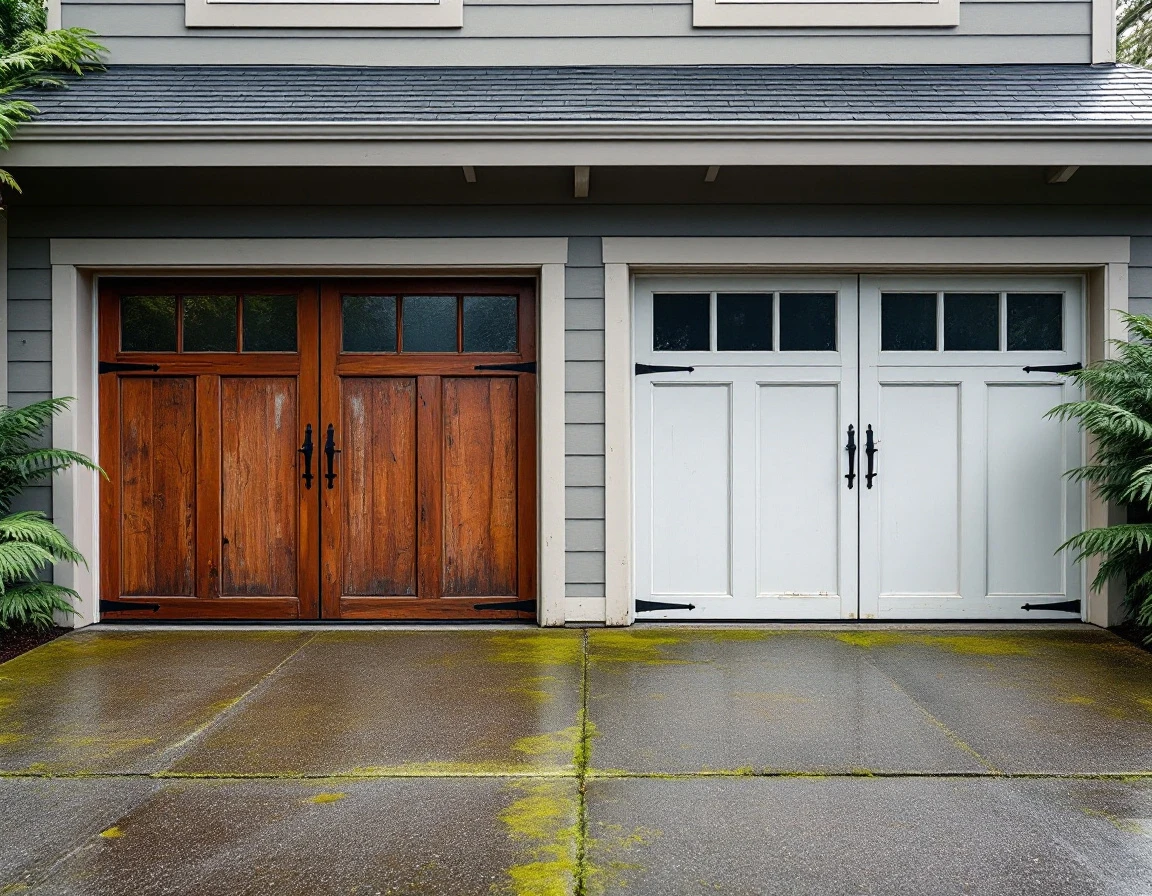
When to Repair or Replace Your Garage Door
Some garage door problems start small but escalate quickly. Once repair costs approach half the price of a new door, the decision to repair or replace garage door becomes clear for Portland homeowners. Understanding when repair costs spiral versus when replacement makes financial sense helps you avoid throwing money at a deteriorating asset.
Identify repair cost thresholds that signal replacement is more economical
When a single repair estimate exceeds 50% of what you’d pay for a complete door replacement, the financial case for replacement becomes clear. In Portland’s metro area, this typically means repairs approaching $800-$1,200 should trigger a replacement conversation with your service provider. Multiple smaller repairs within a 12-month period also add up—if you’re calling for service three or more times per year, those recurring costs often surpass the investment in a new door.
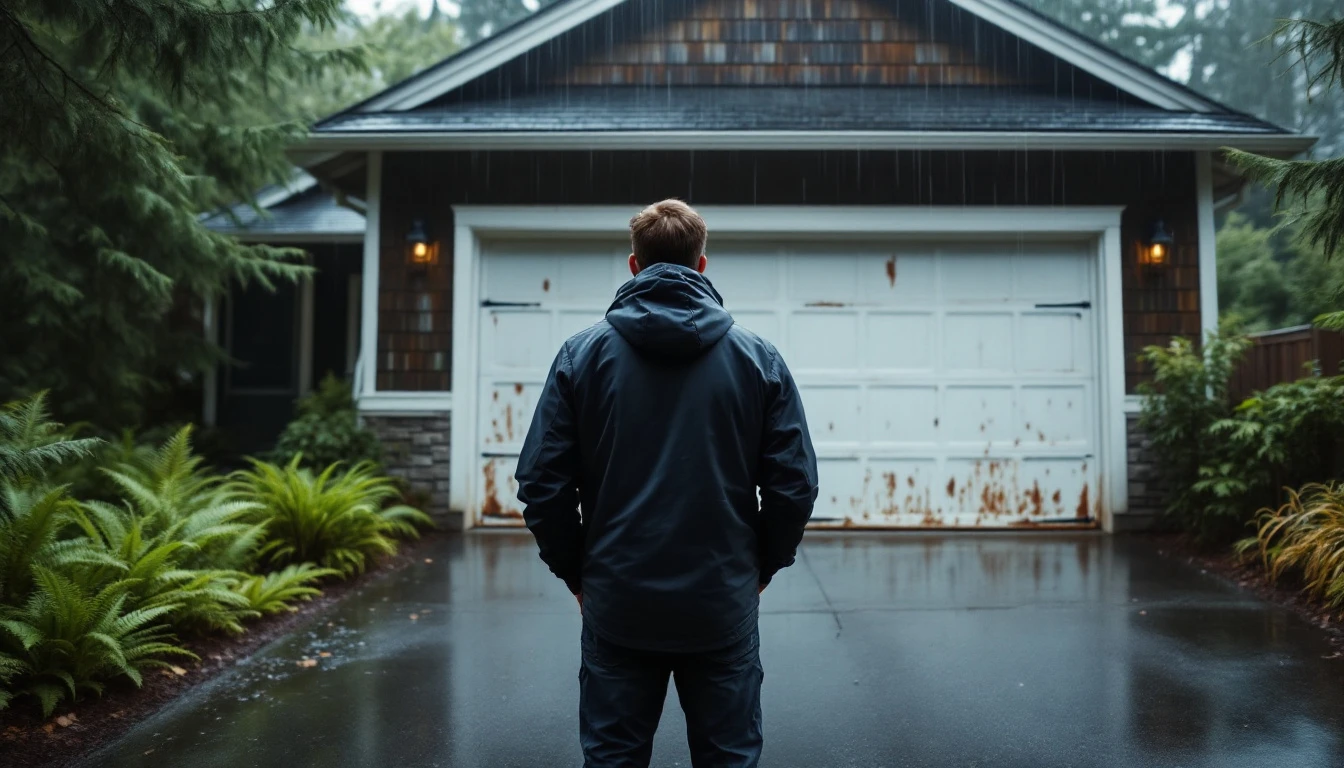
Portland’s wet climate accelerates this calculation. Our 36-42 inches of annual rainfall, combined with persistent dampness from October through May, causes metal components to rust and wooden doors to rot faster than in drier regions. A door that might last 20 years in Arizona may need replacement after 12-15 years here. Water infiltration damages bottom panels first, then spreads upward through the door system. Once moisture penetrates the door’s core, repair costs multiply quickly as technicians address cascading failures across multiple panels and hardware.
Calculate the tipping point between repair and replacement
When your garage door needs work, the math is simple: if total repairs will cost more than half of a new door’s price, replacement makes financial sense. In Portland, where a standard double-car garage door replacement runs $1,200-$2,500 installed, that tipping point sits around $600-$1,250. Once you’ve spent that much fixing broken springs. Worn panels, and aging openers, you’re better off investing in a complete system that won’t need repairs for years.
Door Age & Repair History Framework
The most reliable predictor of whether to repair or replace your garage door is its age combined with repair frequency. Doors under 10 years old with zero to one previous repair almost always justify fixing—the issue is likely isolated rather than systemic. But once your door crosses the 10-year threshold and you’re scheduling your second or third repair within five years, you’re dealing with accumulated wear that signals deeper problems ahead.
Portland’s climate accelerates this aging process faster than drier regions. Our persistent rain and humidity create constant moisture exposure that corrodes metal tracks, rusts springs, and degrades weather seals. Temperature swings between winter freezes and summer heat waves cause expansion and contraction cycles that stress door panels and hardware. A door that might last 20 years in Phoenix or Denver may only give you 12-15 years here before systemic failures begin. Wood doors face even harsher consequences—moisture penetration leads to warping, rot, and paint failure that compounds with each passing year.
For doors 15 years or older, replacement becomes the financially sound choice in nearly every scenario. At this age, you’re not just fixing today’s problem—you’re buying time until the next component fails.
Use this quick assessment: If your door is over 10 years old and has required two or more repairs in the past five years, calculate replacement cost versus projected repair frequency. When repair history shows a clear upward trend, continuing repairs means throwing money at a deteriorating asset rather than investing in a new door that resets the clock to zero.
Garage Door Panel Repair vs Replacement Cost Comparison
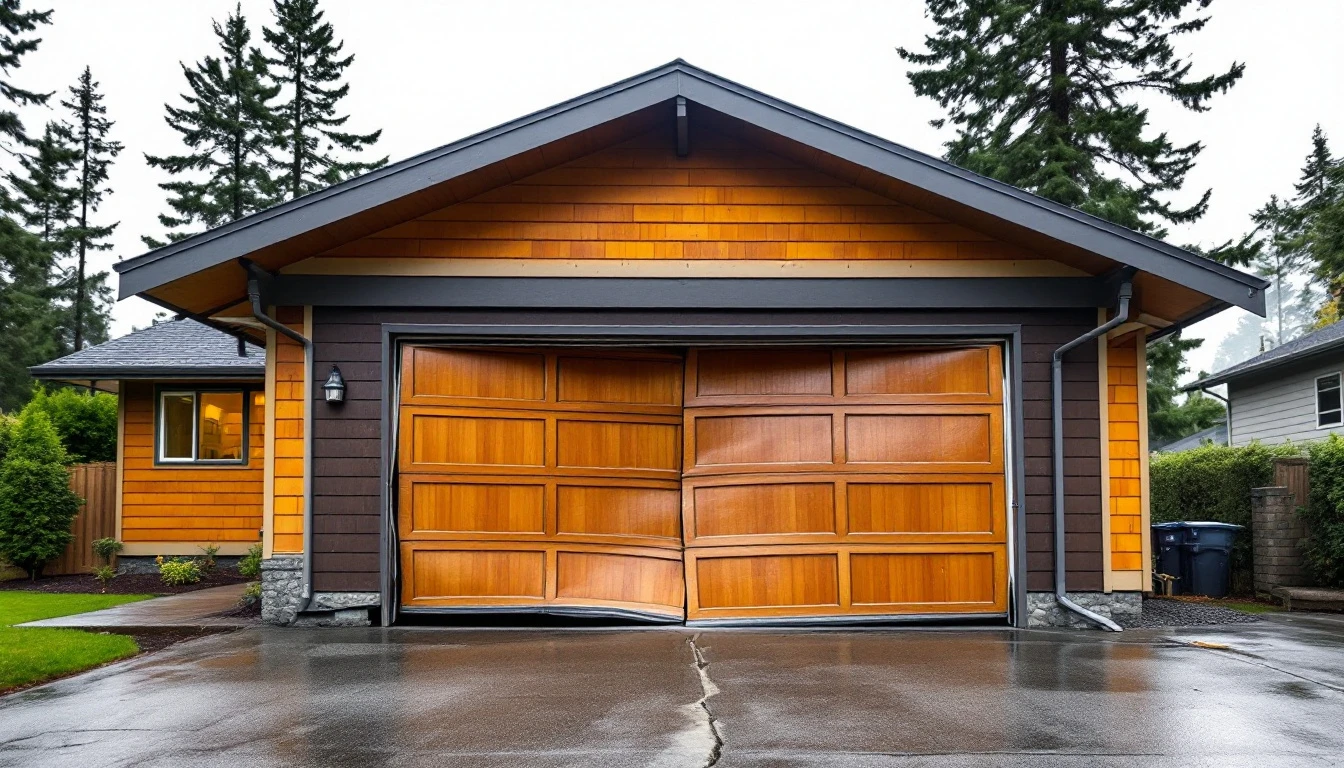
Let’s talk numbers. In the Portland metro area, replacing a single damaged panel runs $300 to $800 installed. Depending on the door style and whether custom panels need to be ordered. A standard steel panel on a common model? Closer to $400. A custom wood panel for an older carriage-style door? You’re looking at $700 or more.
Full garage door replacement costs $3,500 to $6,000 installed for most Portland-area homes. That includes the new door, hardware, labor, and removal of your old door. Basic steel doors with no insulation sit at the lower end, while insulated carriage-house designs with decorative hardware push toward the upper range.
Here’s where the math gets interesting. If you face three $600 panel repairs over three years—say, storm damage, a rotted bottom panel, and a dented section from backing into it—you’ve spent $1,800 in total. When the fourth major failure hits in year four, that repair pushes your total past $2,400. At that point, you’ve burned through more than half the cost of a new door without gaining any of the benefits.
What benefits? Newer doors include improved openers with smartphone connectivity and battery backup. They feature better weatherstripping that keeps Portland’s rain and cold air out of your garage. Most importantly, you eliminate the hidden costs of repeated repairs: taking time off work for service calls, dealing with a non-functional door when you need to leave, and the stress of wondering when the next failure will strike.
The break-even calculation is simple: if your repair history suggests another major failure within 18 to 24 months, replacement pays off immediately.
Safety Red Flags & Replacement Triggers
Some garage door failures move beyond repair economics into dangerous territory. Consider these critical safety concerns:
- Broken springs create high-tension projectile hazards
- Failed sensors allow doors to close on people, pets, or vehicles
- Motor failures in older openers often leave doors stuck partially open, creating security vulnerabilities and weather exposure
Portland’s aging housing stock compounds these risks. Many homes built before 2000 have openers that predate modern safety standards. These units lack dual-sensor systems, auto-reverse technology, and battery backup features that newer installations include by default. Oregon building codes require photo-eye sensors and automatic reverse mechanisms on all installed openers. But repairs to existing systems cannot retrofit these features into outdated hardware.
When should you prioritize replacement over repair? If your opener is 15+ years old and your door needs panel or spring work, replacing both together eliminates liability exposure. You gain modern safety features, extended warranties, and the peace of mind that your system meets current safety standards. A spring repair on a aging opener with a failing motor simply delays the inevitable while maintaining outdated safety technology.
Balance issues present another critical trigger. Doors that don’t stay open at chest height or that slam closed indicate spring or cable problems that create pinch-point hazards. These failures signal replacement urgency rather than repair candidates.
Portland Weather & Material Durability
Portland’s climate creates a perfect storm for garage door deterioration. With more than 40 inches of annual rainfall, winter freeze-thaw cycles, and humid spring conditions, our region accelerates wear on every door component. Water seeps through failing weatherstripping, triggering rust on metal panels and causing wood to swell, warp, and eventually rot. Temperature swings cause expansion and contraction that breaks down seals and compromises structural integrity.
Material choice matters tremendously in Portland’s wet climate. Consider how different materials perform in our region:
- Wood panels look beautiful but absorb moisture like a sponge, developing rot and requiring repainting every few years
- Non-insulated steel doors fare slightly better but still rust at panel edges where protective coatings chip
- Insulated steel doors with thermal breaks resist moisture penetration and temperature swings far better than single-layer alternatives, which explains why they dominate newer installations across Beaverton, Tigard, and Lake Oswego neighborhoods
This weather reality explains why when to replace garage door becomes important: a 12-year-old door in Portland may need replacement while an identical door in Phoenix or Denver could last five more years. Understanding how local climate affects your specific door material helps you predict when repair costs will start climbing and replacement becomes the smarter investment. If your door predates 2013 and shows rust bubbles, warped panels, or failing seals, Portland weather has already done its work.
Your Next Steps: Repair or Replace
You now have the data you need to make a confident decision. Follow this decision framework:
- Door age 10 years or younger: Repair the current issue and keep up with regular maintenance. Your door likely has years of reliable service ahead.
- Door age 10-15 years: Count how many repairs you’ve made in the last five years. If you’ve had two or more service calls, it’s time for a professional inspection to assess the door’s remaining lifespan. A qualified technician can evaluate the track condition, spring cycles remaining, panel integrity, and opener functionality to give you an accurate replacement timeline.
- Door age 15+ years or multiple failure points: Replace it now before an emergency failure leaves your car trapped inside or exposes your home to the elements. June offers ideal timing for replacement—you’ll complete the project before summer heat stresses aging components and before fall windstorms and winter ice arrive.
Don’t guess about your door’s condition. Contact us today for a free professional inspection. We’ll assess your specific situation, provide Portland-metro pricing specific to your home, and help you schedule replacement on your timeline rather than during an emergency. Get in touch with us today to schedule your assessment.