Willamette Valley Climate Threat
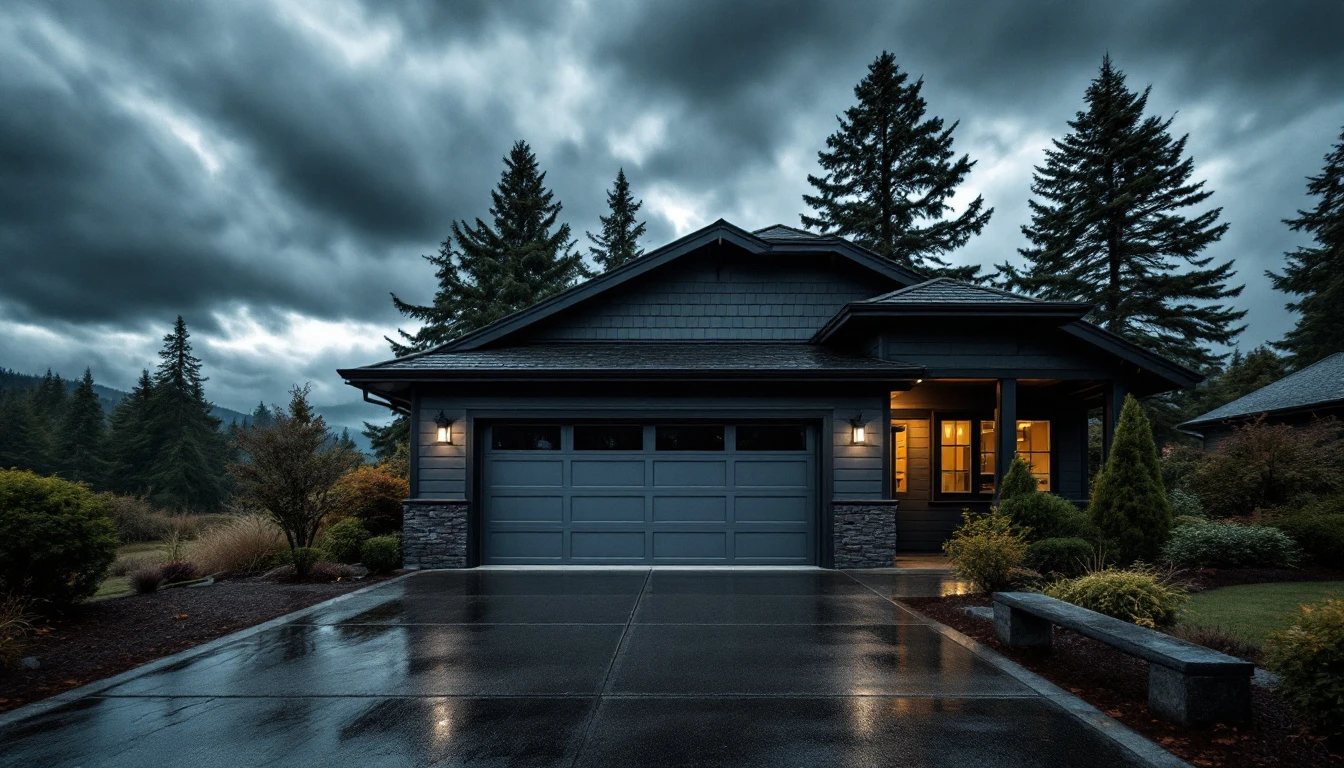
The Willamette Valley’s climate creates a particularly hostile environment for wooden garage doors humidity damage Oregon residents face. While the Pacific Northwest is known for wet weather, Wine Country experiences even more extreme conditions. Spring and summer humidity averages 60-75% across McMinnville, Newberg, and surrounding communities—levels that exceed regional norms and keep wood saturated for months at a time.
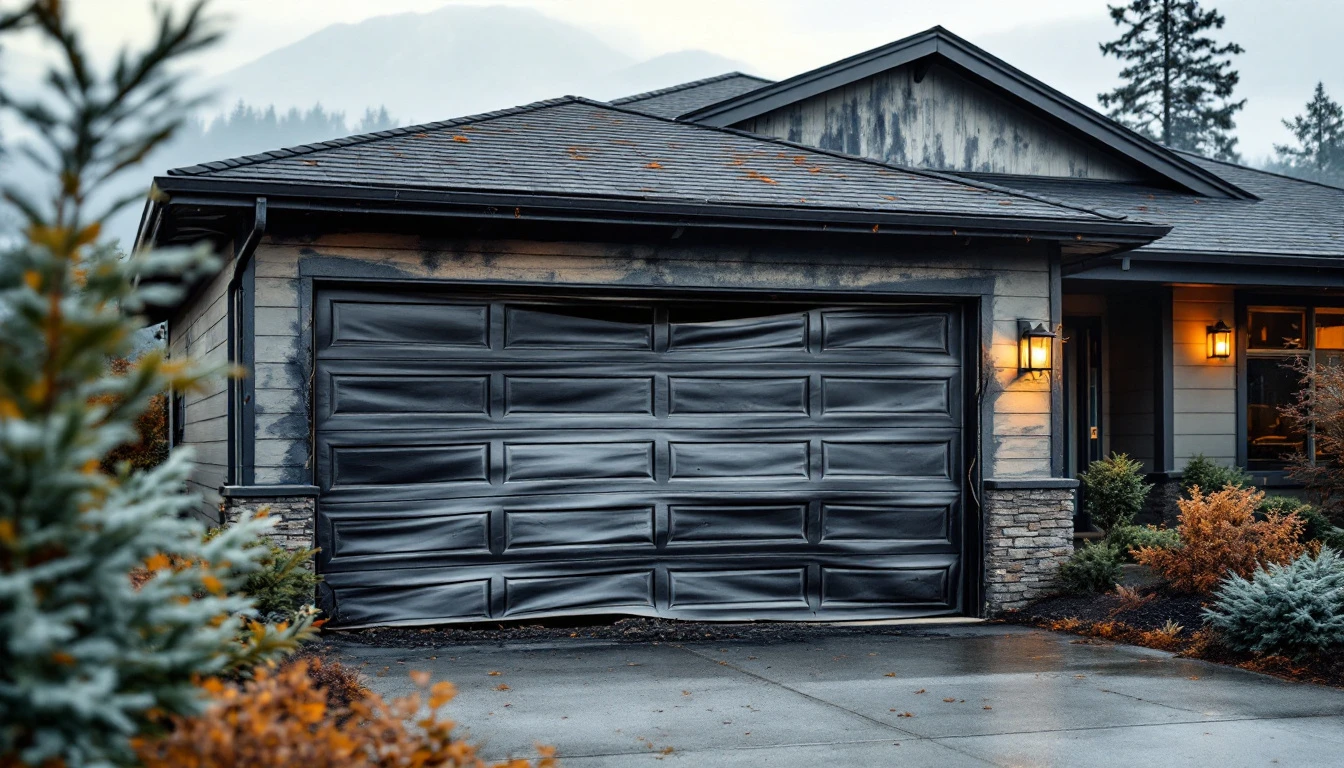
This constant moisture exposure sets off a destructive cycle. Untreated wood acts like a sponge, absorbing water during rainy periods and swelling beyond its normal dimensions. When drier conditions arrive, the wood contracts again. This expansion-and-contraction pattern repeats dozens of times each year, creating warping that throws door panels out of alignment. You’ll notice gaps appearing between sections, frame stress at mounting points, and eventually panel separation that compromises your entire door structure.
The numbers tell a sobering story: Willamette Valley receives 12-15 inches of rain between October and April alone. That’s months of sustained moisture penetrating unprotected wood grain, accelerating rot in bottom panels and jamb points. Homeowners with untreated doors face structural damage within 3-5 years under these conditions. March marks the critical transition point—when winter rains give way to spring humidity and the wet season reaches peak intensity. Protection applied before this window closes can mean the difference between a door that lasts decades and one that fails before its time.
Early Warning Signs
Before spring rains intensify, March offers homeowners across McMinnville and Newberg a critical inspection window. Winter damage becomes visible on wooden garage doors, while you still have time to protect them before peak moisture months arrive.
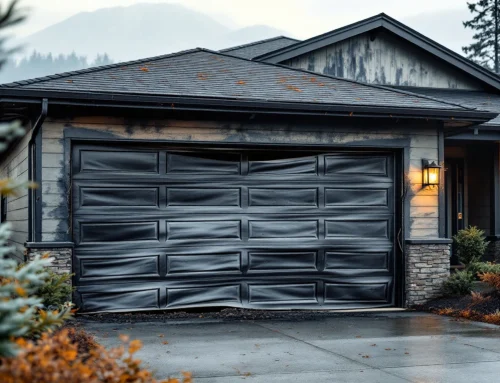
Walk up to your door and look for visible warping or bowing in panels—doors that once hung straight now curve outward or sag. Check where panels meet the frame: gaps that weren’t there last fall indicate active moisture damage. Does the door stick when opening or resist closing completely? That’s swelling wood fighting against the track.
Press your hand against lower panels and corner sections. Soft or spongy wood signals advanced rot progression. As does dark discoloration spreading across grain lines. A musty smell when you open the door means mold has already colonized the interior layers.
Caught early, protective treatments can halt deterioration and add years of service. Advanced rot typically requires replacement. Contact us today for a professional assessment if you notice these warning signs.
Three-Tier Protection Strategy
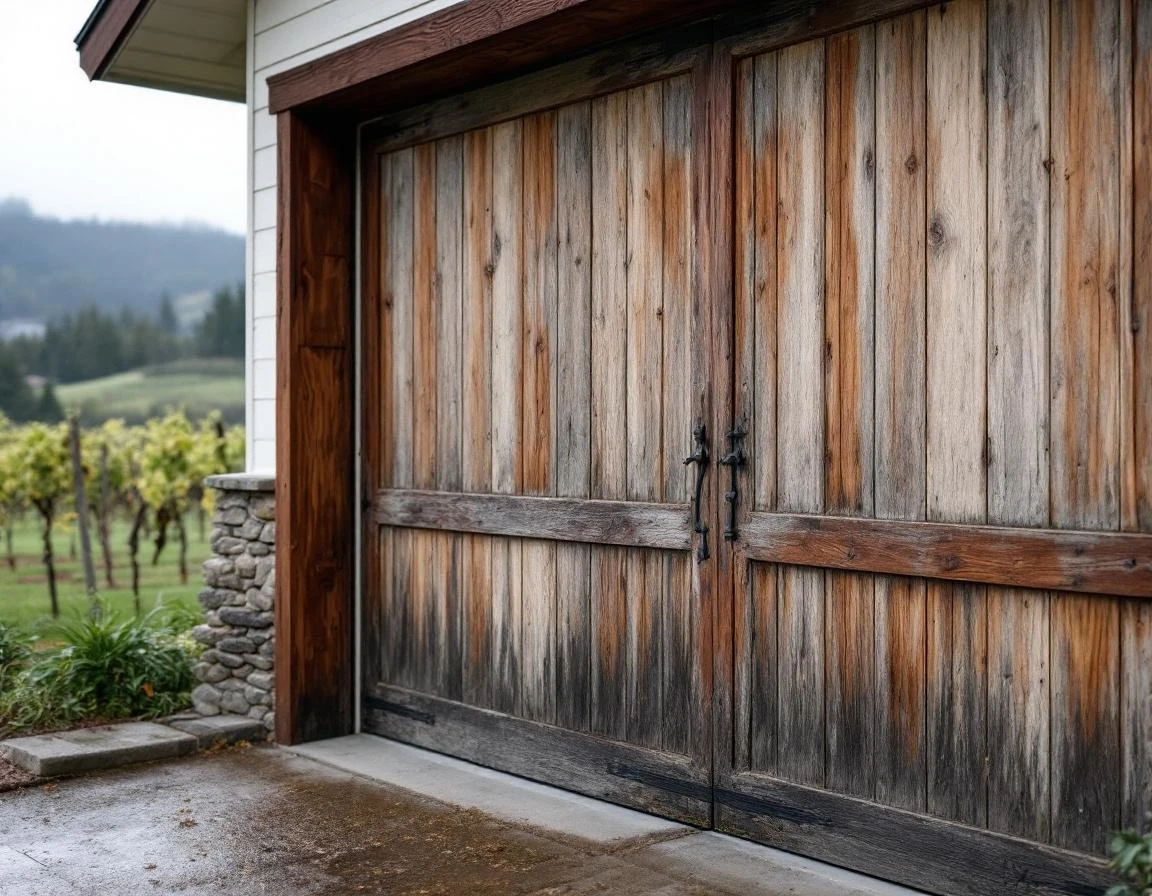
Think of wooden garage doors Willamette Valley protection like securing a wine cellar: the right approach depends on your investment level and how long you want the results to last. The good part? You don’t need to implement all three protective measures at once. Each tier builds on the previous one, and even the first tier alone can extend your door’s life by 5-7 years.
Here’s how the protection strategy breaks down for Wine Country homeowners facing spring rains and year-round humidity.
“Tier 1: Sealant and Stain Application (Budget-Friendly, DIY-Accessible)”
Sealant application forms your first and most critical defense against moisture penetration. When you apply a quality sealant to bare or weathered wood, you’re creating a barrier that prevents water from soaking into the grain. This stops the expansion-contraction cycle that leads to warping and gives you protection through multiple rain seasons.
Most McMinnville and Newberg homeowners can complete this tier themselves over a weekend. You’ll need to clean the door thoroughly, sand any rough spots, and apply two coats of exterior-grade sealant or semi-transparent stain. The key is choosing products rated for Oregon’s wet climate—look for labels mentioning mildew resistance and UV protection.
Tier 2: Drainage Improvements (Moderate Difficulty and Cost)
Water that can’t drain away will find its way into your door frame and panel cavities. Tier 2 focuses on how to protect wooden garage doors moisture by channeling water away from your garage door area through improved guttering, downspout extensions, or French drains near the garage foundation.
This tier requires more planning than Tier 1. You might install a drip edge above the door, add splash blocks to redirect downspout water, or grade the driveway to slope away from the garage. Some homeowners tackle this themselves, while others bring in a contractor for grading work.
“Tier 3: Ventilation Upgrades (Professional-Recommended)”
Even with sealant and drainage in place, moisture can still accumulate inside your garage—especially during those foggy Willamette Valley winters. Tier 3 adds ventilation systems that prevent humid air from condensing on wooden door panels and hardware.
Professional installation typically includes ridge vents, soffit vents, or powered exhaust fans. This tier makes the biggest difference for attached garages where indoor humidity migrates into garage spaces. When you combine all three tiers, you’re looking at 10+ years of added door life—a worthwhile return for properties in Dundee’s vineyard districts or Carlton’s rural areas where replacement costs run higher due to custom sizing.
Sealant & Stain Application
Water-based polyurethane and exterior-grade acrylic sealants create a hydrophobic barrier on wooden garage doors. Causing moisture to bead and roll off rather than soaking into the wood grain. This first line of defense is the most cost-effective protection strategy for Wine Country homeowners, preventing the expansion-contraction cycles that lead to warping and rot.
DIY application requires careful timing and preparation. Start by pressure washing the door to remove dirt, pollen, and old finish. Allow 48 hours of dry weather for complete moisture evaporation—important in our humid spring climate. Apply two thin coats with a natural-bristle brush, allowing each coat to dry according to manufacturer specifications. The critical factor? Seven days of cure time before rain exposure. This is why March application is essential: April and May bring the heaviest rainfall, and premature water contact compromises sealant adhesion.
Professional teams complete the process in one to two days with warranty coverage, eliminating weather-timing stress. Regardless of who applies it, plan for reapplication every two to three years. This maintenance schedule extends door life by preventing moisture penetration between the wood fibers, where rot begins.
Drainage & Frame Protection
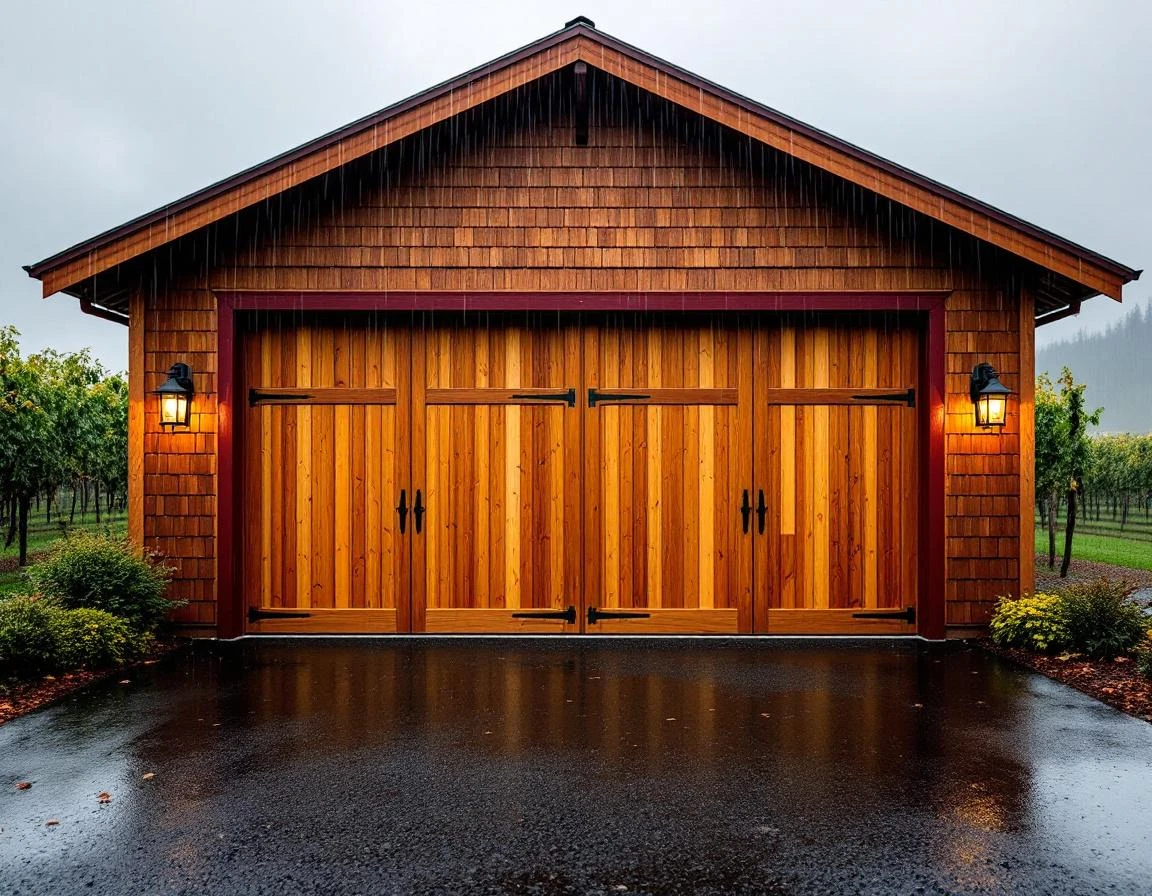
Water accumulation at the base and frame edges accelerates rot in high-rain zones—and Oregon Wine Country’s 12-15 inches of spring rain makes proper drainage critical. Water sitting at the frame base causes rot twice as fast as overhead moisture. Why? Horizontal surfaces hold water longer, allowing it to wick into the frame cavity where wood stays saturated between storms.
Tier 2 protection focuses on garage door rot prevention Oregon properties need through structural drainage improvements that prevent pooling around your garage door. Start by sloping the ground away from the door—that’s about 1/4 inch per foot. Check that your concrete pad doesn’t trap water against the threshold. Install or upgrade gutters to direct roof runoff away from the wall, not onto the ground beside your door frame.
Seal the sill (bottom frame) with silicone caulk or backer rod to prevent water from entering the frame cavity. This simple step blocks the primary rot pathway on wooden garage doors. This tier is more involved than sealant application but less expensive than full ventilation upgrades, typically requiring professional assessment for homes on flat terrain or with existing water pooling issues.
Cost & Timeline Comparison
Choosing the right protection level comes down to your door’s current condition, your budget, and how much time you have before spring rains arrive. Tier 1 sealant application costs $200-500 in materials, takes 6-8 hours of DIY work, and requires a full 7-day cure period before rain exposure—making this week your deadline if you want it dry before mid-April showers hit the Willamette Valley. This tier works beautifully on undamaged wood and prevents minor moisture intrusion.
Tier 2 drainage improvements run $500-1,500 when handled by professionals, take 1-2 days to complete, and provide immediate protection the moment installation finishes. This option suits homeowners who’ve spotted early warping or whose properties naturally channel water toward the garage. Tier 3 ventilation and moisture barrier upgrades represent the biggest investment at $1,000-3,000 and require 2-3 days of professional work, but they’re essential if you’ve discovered soft wood, active rot, or live in particularly wet microclimates around McMinnville or Newberg.
Here’s the math that matters: spending $200-500 on sealant this March prevents a $2,000-4,000 panel replacement in 3-5 years. That’s genuine return on investment, not maintenance expense. March timing is urgent because spring rain arrives by mid-April, and sealant needs that full week to cure properly. If you haven’t inspected your door yet, do it this weekend. Start Tier 1 immediately if the wood looks sound, or contact us today to schedule a professional assessment for Tier 2 or 3 solutions.
Action Plan for March
This week, grab a flashlight and inspect your wooden garage door from top to bottom. Look for warping along panel edges, gaps between boards, soft spots when you press the wood, and any discoloration that signals moisture intrusion. This 15-minute inspection determines your next move.
If you find minor or no damage. Order your sealant immediately and schedule application by the third week of March. Remember: sealant needs a full 7 days to cure before rain exposure, and Wine Country rainfall historically picks up by early April. That timeline matters.
If you discover moderate damage—visible warping or small soft patches—contact professionals this week for Tier 2 drainage quotes. Book installation by late March to beat the wet season. For advanced rot with extensive soft wood or mold growth, budget for Tier 3 ventilation work or a replacement assessment.
Garage Harmony offers free inspections to help you identify exactly which tier your door needs. Schedule your assessment today. And set a reminder to reapply sealant every 2-3 years for ongoing protection.