Longview’s Humidity Challenge for Older Garages
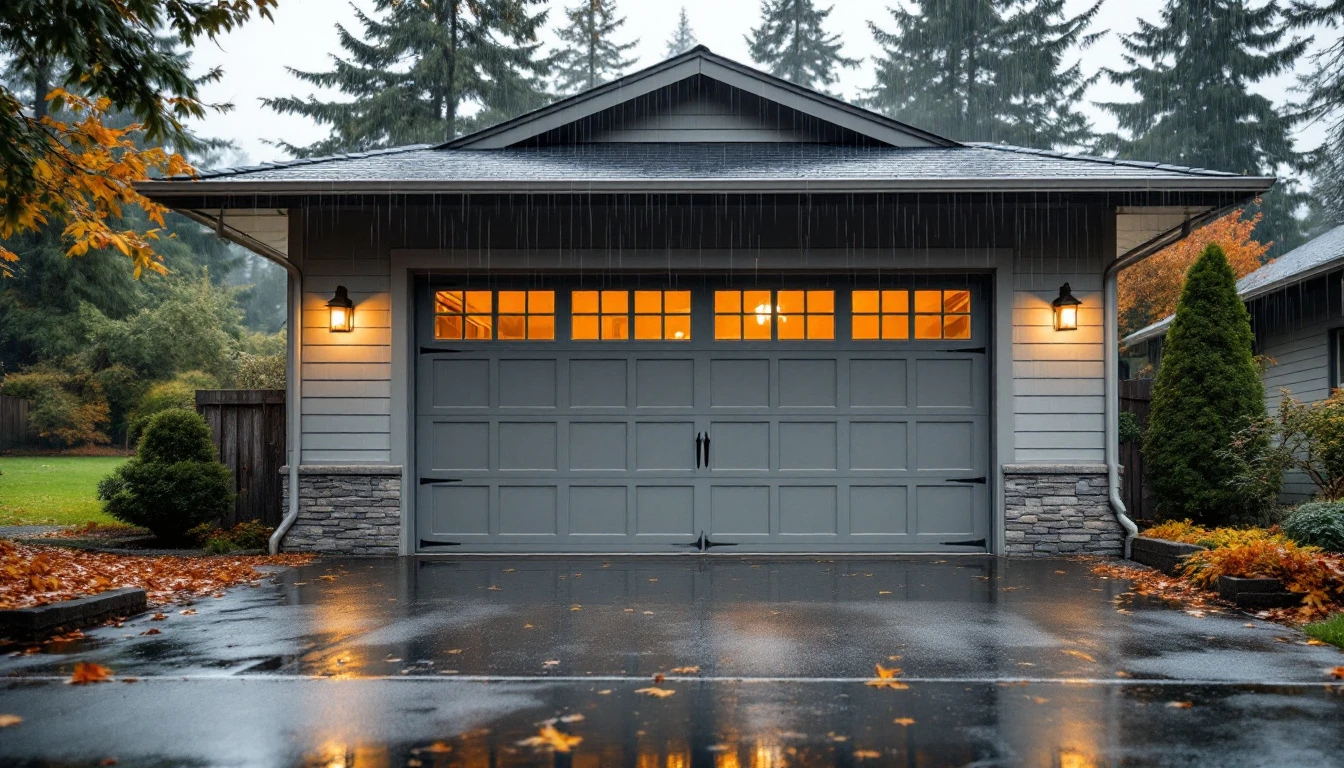
Longview’s river-adjacent location and 40-50 inches of annual rainfall create persistent moisture that accelerates rust on metal garage components and hardware. Understanding garage rust prevention in Longview starts with recognizing how the region’s wet climate attacks older garage structures year-round.
Longview receives 40-50 inches annual rainfall
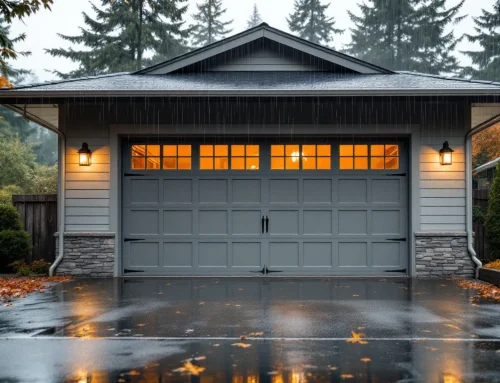
Longview’s location at the confluence of the Cowlitz and Columbia Rivers creates a double challenge for garage door components. The region receives 40-50 inches of rainfall annually. And the river-adjacent humidity keeps metal surfaces consistently damp even between storms. This sustained moisture exposure means springs, tracks, and panels never fully dry out during winter and spring months.
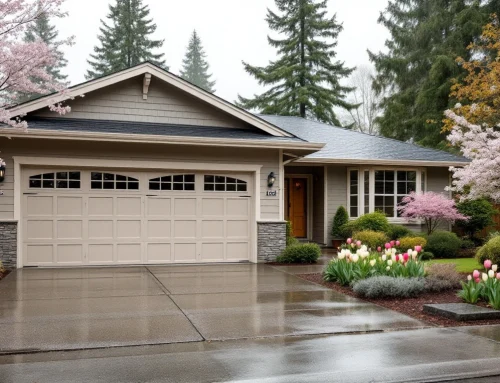
Heritage homes and detached garages built before 1980 lack the moisture barriers standard in modern construction. Without vapor barriers in walls or proper seals around door frames, these older structures allow humid air to circulate freely around metal components, accelerating rust formation on springs, hinges, and track assemblies throughout the wet season. Preventing moisture damage in detached garages requires addressing these structural gaps.
Rust damage accelerates in spring
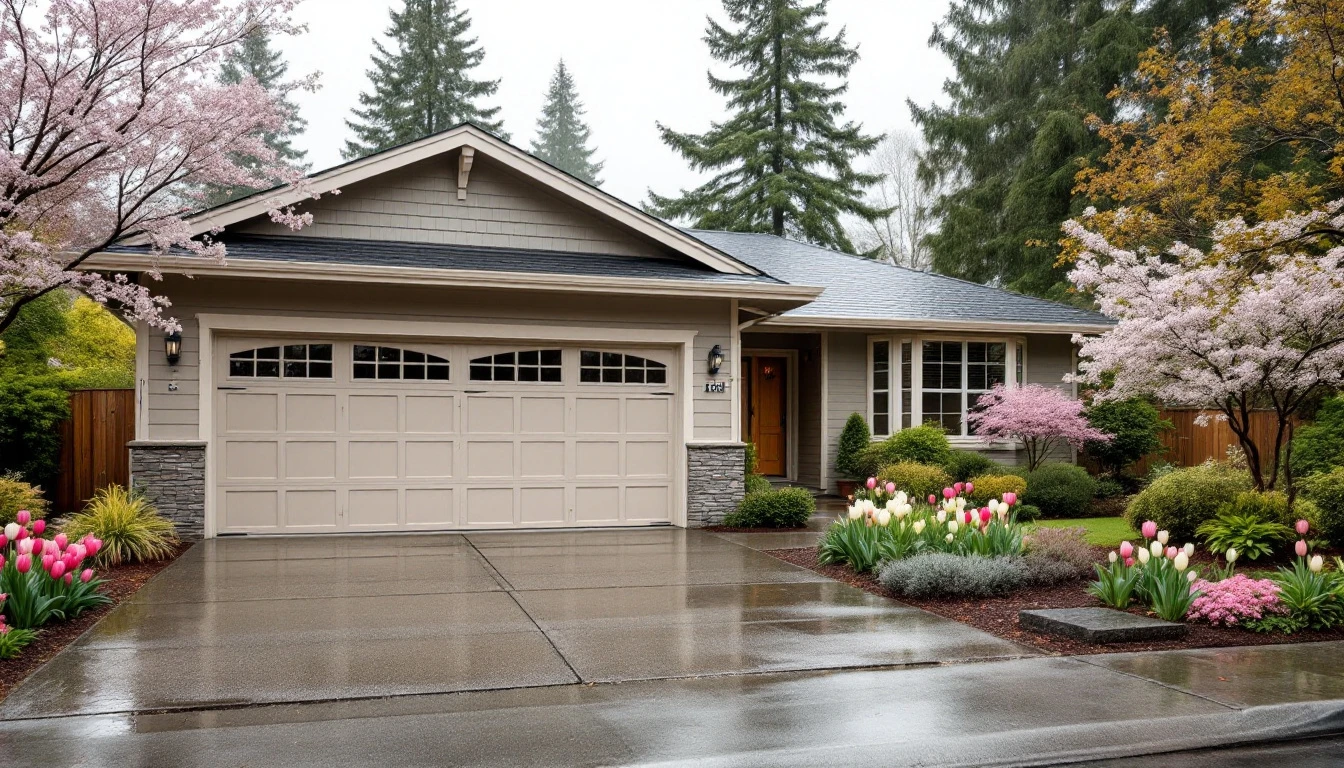
Spring creates the perfect conditions for rust acceleration in Longview garages. Freeze-thaw cycles during March and April break down protective coatings on metal components. Creating microscopic cracks where moisture penetrates. When heavy May rains arrive—Longview typically receives six to eight inches in May alone—water seeps into these compromised surfaces and begins corrosion.
Catching rust damage during May prevents emergency repairs when winter storms hit. A small rust spot treated in spring costs under $50 in primer and paint. That same spot left untreated through summer humidity and fall rains can spread to require a $400 spring replacement by December, when you need your garage door working most.
May Inspection: Identifying Active Rust and Starting Garage Rust Prevention in Longview
Set aside 30 minutes this May to conduct a thorough garage door inspection that catches rust while DIY prevention still works. Start with your torsion springs mounted above the door—look for orange or brown discoloration on the metal coils. Surface rust appears as light oxidation you can wipe with your finger, while pitting creates small craters in the metal that feel rough to the touch.
Check your vertical tracks on both sides of the door, examining where moisture tends to collect at the bottom. Run your hand along the track (wear work gloves) to feel for rough spots indicating corrosion. Test all mounting brackets and hinges by gently wiggling them—loose hardware means rust has compromised connection points.
For spring assessment, carefully test tension by lifting your door manually about two feet. The door should stay in place when you release it. If it drops or rises quickly, your springs have lost tension, which often accompanies internal corrosion you can’t see from outside.
Here’s your decision tree: surface rust with tight hardware means you can handle prevention yourself with the steps we’ll cover next. However, pitting on springs, loose brackets, or failed tension tests require immediate professional inspection. These conditions indicate structural compromise that poses safety risks. Document what you find with photos showing close-ups of corroded areas—this baseline helps you track whether DIY prevention works or whether damage progresses despite your efforts.
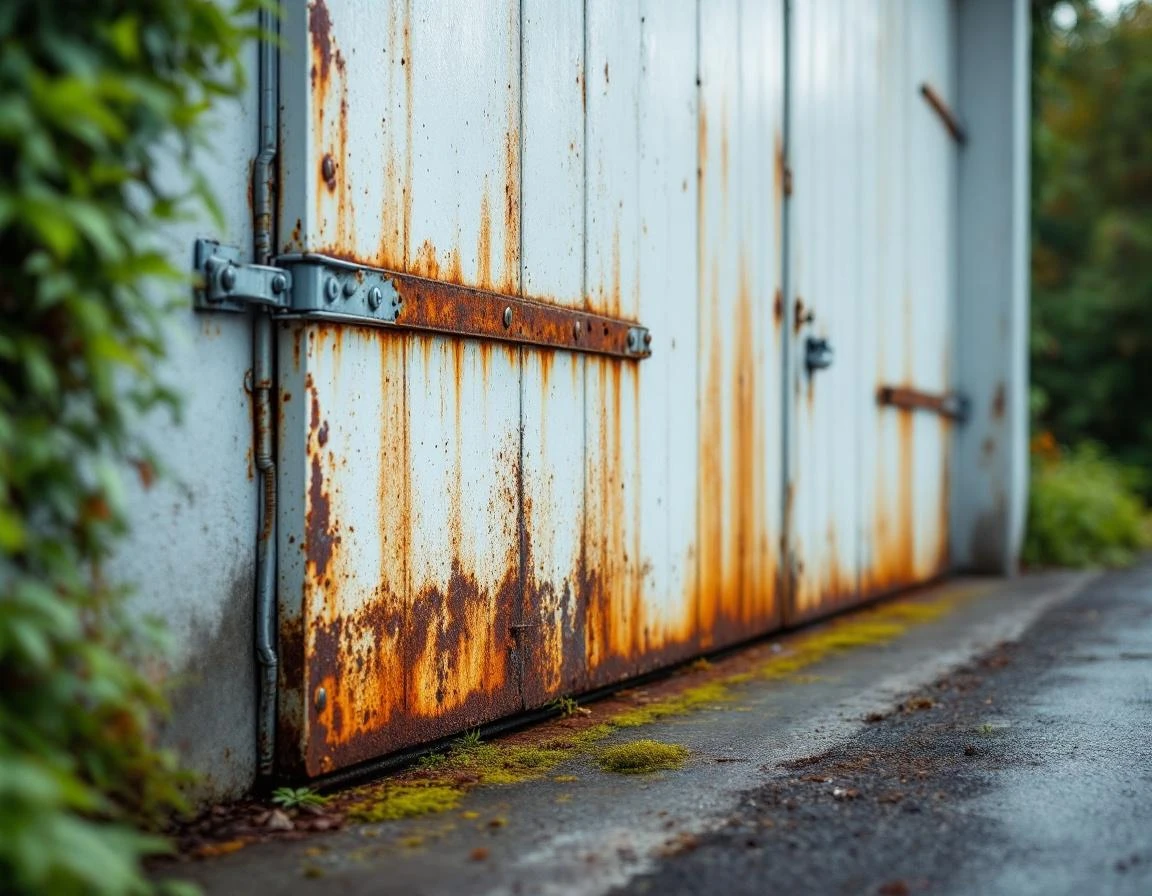
“Three Core Maintenance Tasks for Budget-Conscious Homeowners”
After identifying surface rust during your May inspection, three targeted tasks attack moisture intrusion at its source—protecting your garage door hardware from Longview’s persistent rain and river humidity. All three tasks are budget-friendly maintenance measures that take just 90 minutes total, preventing emergency repairs during winter storm season.
- Task 1: Lubricate Springs and Tracks (May, 30 minutes) – Apply marine-grade rust inhibitor spray to torsion springs, extension springs, tracks, and hinges. Products like 3-IN-ONE Professional Garage Door Lubricant (available at Longview Hardware on Ocean Beach Highway) contain moisture-displacing compounds that coat metal surfaces and create a barrier against humidity. The lubricant physically pushes water away from spring coils and track surfaces, preventing the oxygen-metal contact that creates rust. Focus on spring coils where moisture collects in crevices.
- Task 2: Weatherstrip Bottom Seal and Gaps (May-June, $40-75, 40 minutes) – Replace worn bottom weatherstripping and seal frame gaps where rain-driven moisture enters. A new vinyl or rubber bottom seal (check sizes at Kelso True Value Hardware) blocks water from pooling under the door—the primary entry point for moisture in detached garages. Add weatherstrip tape to vertical track frames and top seals where gaps allow humid air inside. This creates a complete moisture barrier around door perimeters.
- Task 3: Clear Drainage Around Foundation (May, 20 minutes) – Inspect gutters above garage doors and clear debris-clogged downspouts that direct water against foundation walls. Standing water near garage bases creates persistent humidity that rises into door mechanisms. For detached garages common in Columbia Heights and Mint Valley neighborhoods, with ground slopes away from foundations. Clean existing drainage channels or add gravel channels where water pools during heavy rainfall.
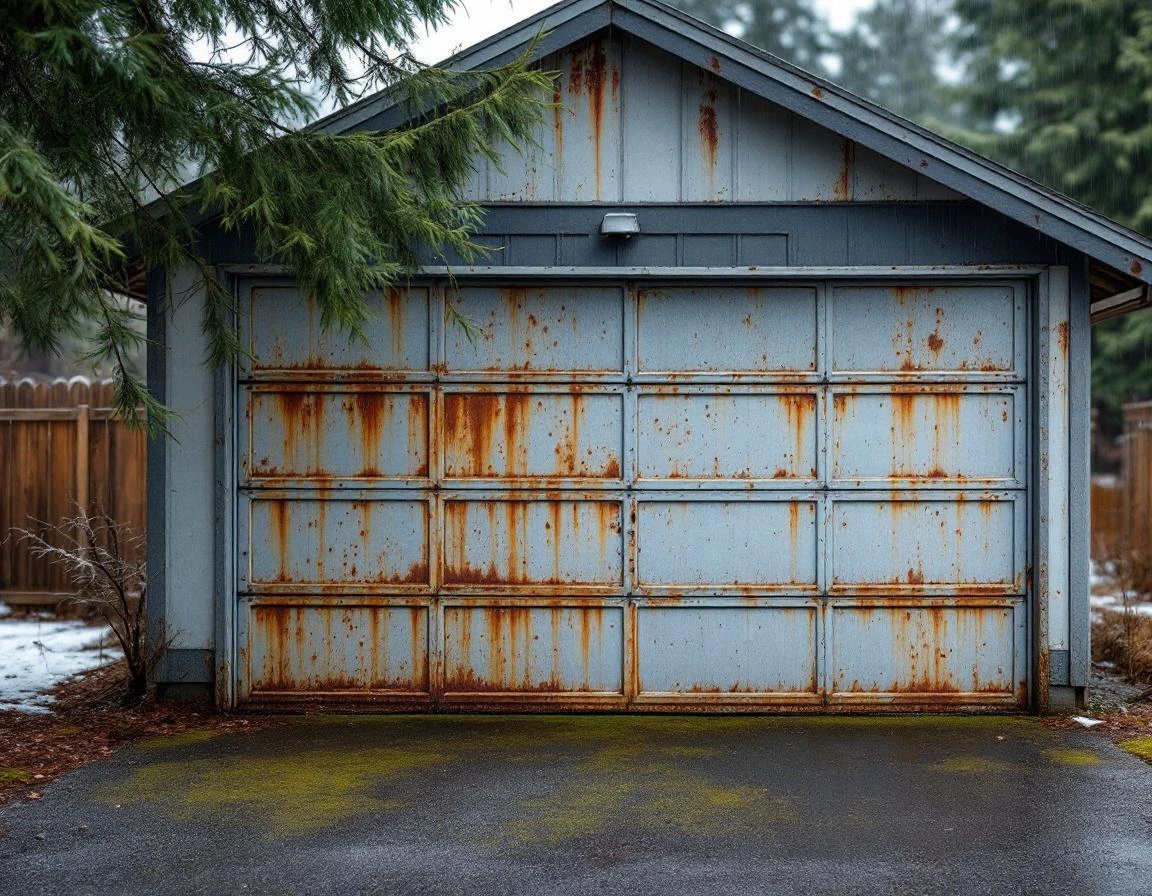
Summer and Fall Moisture Management in High Rainfall Areas
May maintenance establishes your rust protection baseline, but seasonal garage maintenance in wet climate zones demands mid-year reinforcement. Rust prevention requires seasonal rhythm, not one-time intervention.
Summer heat evaporates lubricant films applied in spring, while fall rains return with intensity—September through November brings the wettest conditions of the year. River-adjacent humidity never fully releases, even during drier months.
Re-lubricate springs, rollers, and tracks in mid-July after spring moisture has dried initial coatings. This second application requires only basic materials and minimal time investment. Check weatherstripping for gaps caused by wood shrinkage or panel settling as temperature fluctuations affect garage frame dimensions.
Fall demands vigilance: clear gutters monthly from September through November to prevent water pooling near your garage foundation. Standing water accelerates rust formation on bottom tracks and brackets. Schedule a professional inspection in September before October rains intensify—technicians can spot developing issues like worn rollers or compromised weatherstripping before winter weather creates emergency situations.
These touchpoints align protection to Longview’s precipitation calendar, preserving heritage garages through ongoing attention rather than reactive repairs.
DIY vs. Professional Repair Thresholds
Knowing when your May inspection reveals manageable rust versus conditions requiring professional intervention protects both your safety and your wallet.
Surface rust on tracks, loose mounting hardware, worn weatherstripping, and dry hinges all fall within safe DIY territory. These issues respond well to the prevention routine we’ve outlined: marine-grade lubricants, weatherstripping replacement, and drainage maintenance are affordable steps that keep your windows functioning properly.
However, some rust conditions cross into professional territory. Never attempt repairs on corroded springs—pitting deeper than 1/16 inch or any visible weakening in spring coils indicates imminent failure risk. Garage door springs store hundreds of pounds of tension. And failure during amateur repair causes serious injuries and property damage. Similarly, track misalignment from rust-induced warping, structural panel deterioration, and any visible cracking in metal components require professional assessment.
The cost comparison makes the decision clear. A modest prevention investment protects against emergency repairs that range from single spring replacement to complete track systems or panel replacements—pricing confirmed by local Longview service providers. These emergency calls often happen during winter’s worst weather, when rapid response commands premium rates.
If your May inspection revealed only surface rust and loose hardware, proceed confidently with the DIY maintenance tasks outlined in this guide. If you found spring pitting, track damage, or structural compromise, contact Garage Harmony today for a safety evaluation before these issues escalate into emergency failures.