Garage Door Rust Prevention Longview-Kelso: Moisture Challenges in Castle Rock
Castle Rock’s position along the I-5 corridor creates unique moisture challenges for garage doors. The town’s proximity to the Toutle River and Mount St. Helens visitor center brings persistent humidity that demands effective garage door rust prevention Longview-Kelso strategies. If you own a home in this region, understanding how to prevent garage door corrosion protects your investment from the relentless moisture that accelerates rust formation.
Castle Rock receives 40-50 inches of annual rainfall
Castle Rock’s location near the Toutle and Cowlitz Rivers creates a double challenge for garage door owners. The town receives 40-50 inches of annual rainfall. And the persistent river-adjacent humidity keeps metal components damp even between storms. This constant moisture exposure accelerates corrosion throughout the year.
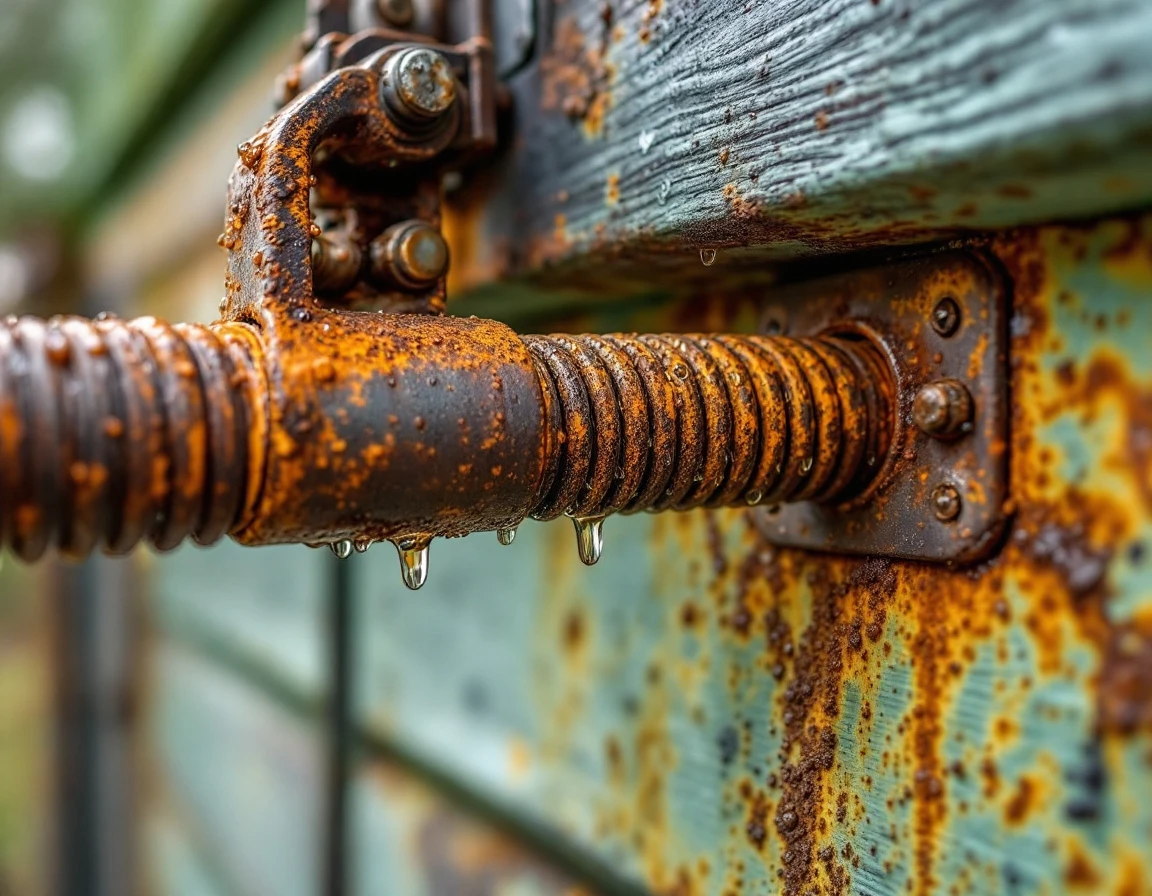
Springs, tracks, and hardware face the greatest rust risk because these uncoated metal components can’t dry out in Castle Rock’s humid environment. Once rust begins on a spring, it weakens the metal and leads to premature failure—often without warning. Understanding how to prevent garage door corrosion at this stage stops damage before structural compromise occurs.
Longview-Kelso homeowners within 10 miles
If you live within 10 miles of the Columbia River, your garage door faces constant moisture exposure that creates ideal conditions for rust development. The combination of river humidity and heavy rainfall means metal components rarely get the chance to dry completely between weather events.
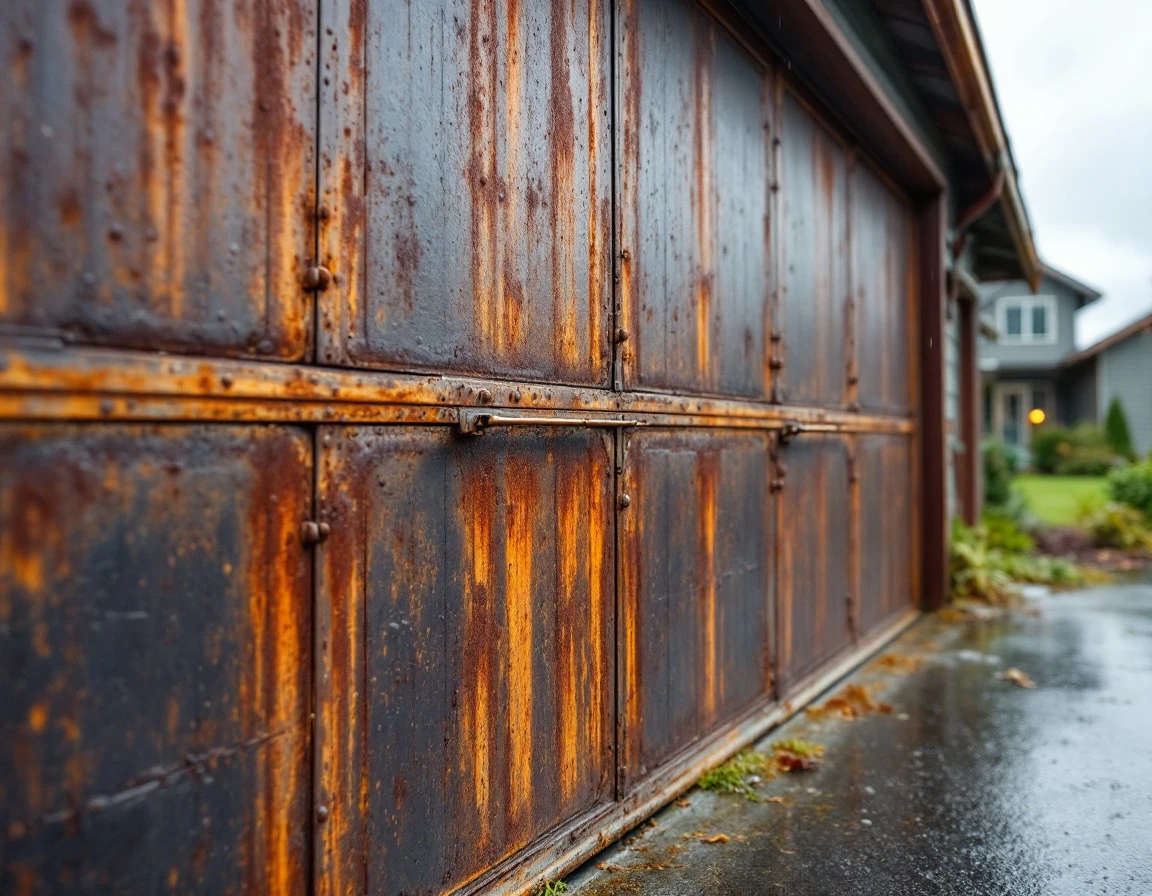
Rust damage accelerates quickly in these conditions. What starts as surface oxidation on springs or tracks penetrates deeper into the metal, weakening structural integrity and leading to component failure.
Preventive intervention stops this progression before you’re facing emergency repairs or complete hardware replacement.
Spring Rust Prevention Tasks for Castle Rock Moisture Management
May represents the critical window for protecting your garage door springs and hardware before summer humidity peaks in the Longview-Kelso area. With annual rainfall reaching 40-50 inches and the Cowlitz and Columbia Rivers maintaining year-round moisture, spring provides the opportunity to address winter damage before humid conditions accelerate rust formation.
Monthly Prevention Checklist
- Visual inspection (15 minutes) tops the cost-effectiveness list. Examine torsion and extension springs for three rust stages: surface discoloration appears as light orange spots, pitting creates small craters in the metal, and structural damage shows thinning or cracking. Surface rust responds well to DIY treatment, while pitting and structural damage require professional assessment from Garage Harmony.
- Lubrication with rust-inhibiting products (30 minutes) creates a protective barrier against moisture. Apply silicone-based garage door lubricant to springs, rollers, and hinges monthly. This task prevents moisture penetration into metal components and displaces existing water film that promotes oxidation on springs, tracks, and hardware exposed to high humidity.
- Weatherstripping assessment (20 minutes) identifies gaps where river humidity enters your garage. Check bottom seals and perimeter strips for cracks or compression. Damaged weatherstripping allows moist air to contact metal components, accelerating rust formation during high-humidity periods.
- Drain clearing (15 minutes) prevents water accumulation near garage door tracRemove debris from floor drains so water flows away from the door.g water creates constant humidity exposure that speeds corrosion on bottom rollers and track sections.
These four tasks require approximately 80 minutes monthly but protect springs worth hundreds in replacement costs. If inspection reveals pitting or structural damage, contact our team before the compromised spring fails during operation.
Summer Humidity Management
June through August brings a deceptive risk to Castle Rock garage doors. While the Pacific Northwest summer feels mild compared to winter’s relentless rain, the combination of improved temperatures with lingering moisture from river proximity creates ideal conditions for rust acceleration. Warm air holds more water vapor, and when that humid air settles in your garage overnight, it condenses on metal components that haven’t fully dried from spring.
What can you do to prevent rust from advancing during these warmer months? Focus on three proven tactics. First, improve garage ventilation by opening doors during dry afternoons or installing passive vents near the ceiling. Second, clear debris from tracks and drainage channels monthly—leaf litter and dust trap moisture against metal surfaces. Third, reapply rust-inhibiting lubricant to springs, rollers, and hinges every four weeks rather than quarterly.
Hardware material matters more in high-humidity environments. Galvanized steel components resist corrosion far better than standard steel because the protective zinc coating shields the underlying metal. Stainless steel hardware offers even stronger protection but costs more upfront. If your garage door still uses standard steel springs or brackets, consider upgrading vulnerable components before rust reaches the pitting stage.
This monthly attention during summer prevents rust from progressing beyond surface oxidation into structural damage that requires component replacement.
Fall Weatherproofing Preparation
September through November offers a critical window for Castle Rock homeowners to seal garage door vulnerabilities before winter moisture arrives. The region’s 40-50 inches of annual rainfall begins intensifying in October, making fall your last opportunity to prevent water intrusion that accelerates rust formation on springs, tracks, and hardware.
Start by replacing worn weatherstripping along door bottoms and sides. Water sneaking through degraded seals during fall rainstorms pools on tracks and saturates spring mounting brackets—exactly where rust begins. Check track connections for gaps where water can enter, and apply silicone sealant to any openings larger than 1/8 inch.
Conduct a thorough inspection for early rust stages: surface oxidation appears as light orange discoloration, scale rust shows as flaking patches, and penetrating rust creates pitted holes in metal. Identifying these conditions before winter freeze-thaw cycles begin gives you time to address problems while they’re still minor.
The investment? Two to three hours of weatherproofing work in fall prevents costly rust repairs that many Longview-Kelso homeowners face each spring.
Water damage compounds rapidly once it starts—a small rust spot on a spring can spread to complete failure within months when exposed to persistent winter moisture. Taking action now protects your garage door through the wettest season ahead.
Winter Protection and Spring Assessment
December through March brings Castle Rock’s coldest and wettest weather—a combination that accelerates garage door damage through freeze-thaw cycles. When moisture seeps into existing rust pits or weakened springs, overnight freezing expands that water and creates micro-fractures in the metal. As temperatures rise during the day, the ice melts and allows more moisture to penetrate deeper into the compromised areas. This repeating cycle compounds rust damage that began during fall and transforms minor surface corrosion into structural weakness.
Protective measures during these months prevent catastrophic spring failures. Apply cold-weather lubricant to springs, rollers, and hinges monthly—standard lubricants thicken in temperatures below 40°F and lose effectiveness. Cover exposed hardware on detached garages or workshop-style buildings with waterproof tarps during heavy rain events. Clear ice buildup and debris from tracks weekly, as frozen material creates resistance that strains weakened springs.
Before peak usage season arrives in April, conduct a post-winter inspection. Check springs for visible cracks or gaps in coils—these indicate imminent failure. Test door balance by disconnecting the opener and lifting manually; doors requiring excessive force have compromised springs. Examine tracks for rust expansion and hardware for loose bolts. This March assessment determines whether professional spring replacement prevents emergency repairs during spring cleaning season, when replacement costs include rush service premiums.
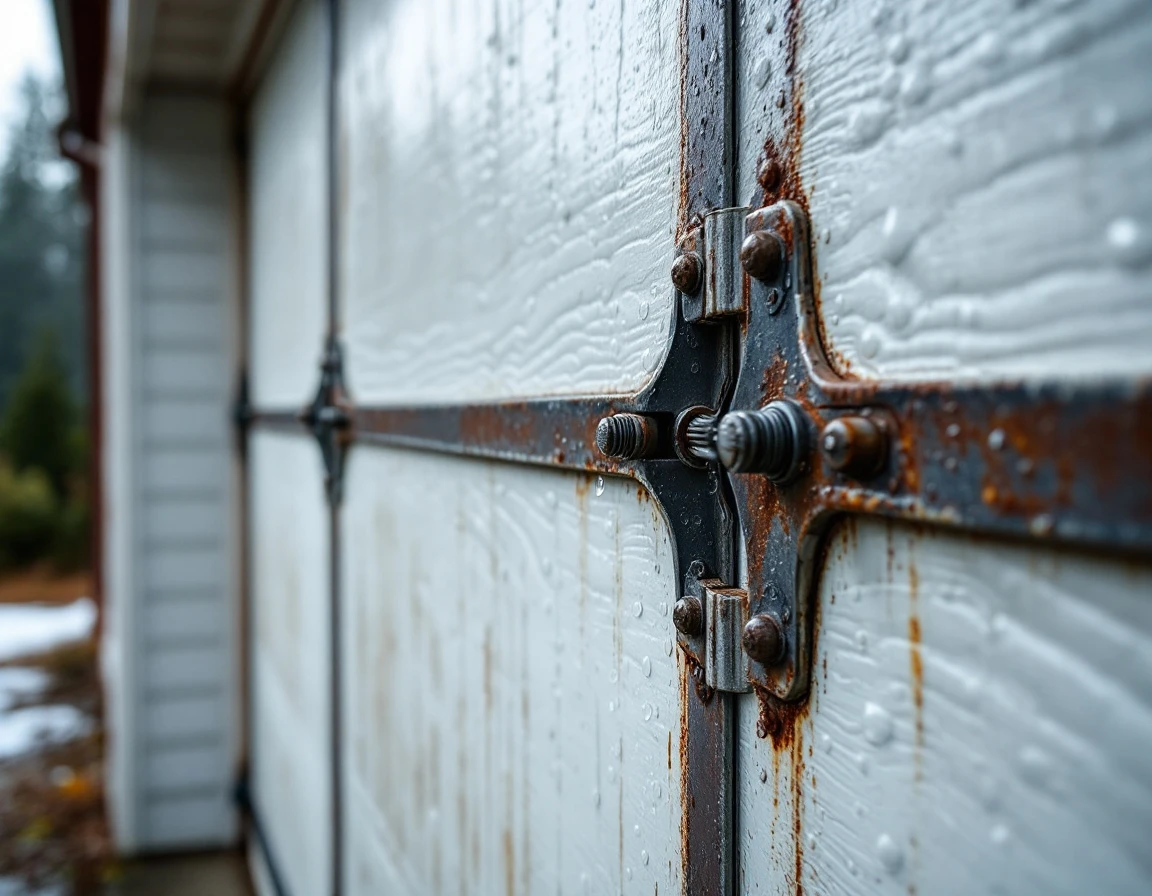
Professional Intervention Triggers
When should you call Garage Harmony instead of handling maintenance yourself? Understanding this distinction saves money and prevents safety hazards. Regular lubrication and cleaning fall squarely in the DIY category, but certain damage conditions demand professional expertise.
Rust progresses through three distinct stages:
- Surface corrosion appears as light orange discoloration that responds well to cleaning and lubrication—this remains DIY-manageable.
- Surface pitting creates small depressions in metal but hasn’t compromised structural integrity; homeowners can still address this with rust converters and protective coatings.
- Structural damage manifests as visible holes, severely weakened springs, or rust that flakes away when touched—these conditions require professional replacement immediately.
The cost comparison tells a compelling story. A spring replacement from Garage Harmony runs $300-500, while emergency repairs after complete failure can exceed $1,000 when additional components sustain damage. More importantly, investing $50 in spring maintenance products and dedicating two hours each season prevents reaching the professional-service threshold entirely.
Regular inspection identifies problems before emergency failure occurs. When your monthly checks reveal visible pitting on springs, structural deformation in tracks, or advanced rust formation that cleaning can’t reverse, contact our team. This proactive approach delivers the promised 5-10 year lifespan extension while keeping thousands of dollars in your pocket rather than paying for emergency repairs.