How to Childproof Your Garage Door: Four Critical Hazards
Learning how to childproof garage door systems is essential for protecting your family. Garage doors pose four distinct dangers to children:
- Crushing injuries from closing doors
- Entrapment inside garages
- Spring-related accidents
- Unsecured access risks
Pinch points in door panels and tracks
Door panels moving along metal tracks create dangerous pinch points that can crush small fingers in seconds. Children naturally place their hands along door edges or slide fingers into track openings while the door operates, leading to severe crushing injuries requiring emergency care.
Closing garage doors also strike children who walk or play beneath the descending panel. These impact injuries range from head trauma to full-body compression if the auto-reverse fails.
Entrapment Risks in Gaps Between Door and Frame
Did you know that children can become trapped in the gap between a closing garage door and the door frame? This space, typically 2-3 inches wide, poses a serious entrapment hazard when curious kids reach or step into it during door operation. Modern photo-eye sensors should prevent this, but older systems in Portland’s historic neighborhoods often lack this protection.
Unauthorized access creates another vulnerability. If your children discover remote controls or learn the wall button code, they can activate the door without supervision, creating immediate danger.
Strategy 1: Install Safety Sensors
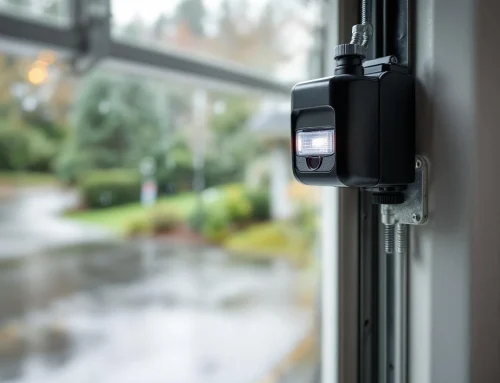
Modern garage door openers include photo-eye safety sensors that create an invisible beam across the door opening. When this beam detects an object in the door’s path, it immediately triggers the reverse mechanism, stopping a closing door from striking a child or pet.
Federal law requires these sensors on all new garage door openers sold after 1993, but many Portland-area homes—especially those with charming Craftsman bungalows in neighborhoods like Laurelhurst or Irvington—still have older systems without this protection. If your opener predates this requirement, you’ll need a retrofit kit, which represents a moderate investment when professionally installed.
The system uses two sensors mounted on either side of the door frame, about six inches above the ground. Both sensors must align perfectly to work properly. Test your sensors monthly by placing a cardboard box or 2×4 board in the door’s path while closing. Never test with your hand or a child. The door should reverse immediately when it breaks the beam.
Garage Harmony can inspect your current system and install or upgrade sensors to meet current safety standards. Most installations take under an hour, giving you immediate protection against impact injuries—one of the four critical hazards we’re addressing in this childproofing guide.
Strategy 2: Secure Remotes and Keypads for Garage Door Child Safety
Here’s a sobering fact: children as young as 3–4 can press buttons. When remotes sit in unlocked cars or on entryway shelves, toddlers gain unsupervised access to a 400-pound moving door. This creates serious injury risks that parents can eliminate in 15–30 minutes without any tools.
Start with a simple decision tree: Is your remote visible or accessible to your child? If yes, immediately move it to a locked drawer or cabinet above 60 inches. If no, verify your keypad security next.
For wall-mounted buttons inside your garage, install them at least 48 inches above the floor—well beyond toddler reach. Many Portland-area homes built before 2000 have buttons positioned dangerously low. Consider retrofit lockable switch covers for added protection.
Smart opener systems offer password-protection features that prevent unauthorized access. Upgrade your keypad with a numeric code children cannot guess—avoid obvious patterns like “1-2-3-4.” If you have older remotes with rolling-code vulnerabilities, contact us for a security assessment. Some outdated systems allow neighbor remotes to trigger your door, creating unexpected hazards.
Strategy 3: Eliminate Pinch Points
Pinch-point injuries happen when curious fingers explore the narrow gaps between garage door panels or along the track sides during normal operation. These accidents occur in seconds—a child touches the moving door, and fingers get caught in the accordion-like action between sections.
Start with a tactile inspection: run your finger along both sides of your closed garage door, feeling for gaps wider than your thumb. Check where panels meet and where the door edges approach the tracks. Any space large enough for a child’s finger poses a crushing hazard.
Foam tube weatherstripping offers an effective, low-cost fix. Available at Portland-area hardware stores like McLendon or online for $20–$50These adhesive-backed foam tubes take just 20–30 minutes to apply. Press them into the gaps along panel edges and track sides to eliminate finger-width openings. Pinch-guard adhesive strips designed specifically for garage doors work as an alternative for metal-to-metal contact points.
Safety note: Never operate the door during installation. After applying weatherstripping, test the door’s operation several times for smooth movement without binding. If the door sticks or strains, remove some material—proper function is non-negotiable.
Strategy 4: Establish Access Control Rules
Hardware solutions alone can’t replace supervision and clear household rules. Educate your children that garage doors aren’t toys or play equipment, using age-appropriate language to reinforce this message consistently.
For toddlers and preschoolers (ages 2-5), use simple, concrete explanations: “The door is very heavy and can hurt your fingers. We never touch the buttons or the door.” For school-age children (6-10), provide more context while setting firm boundaries: “Never press the buttons unless Mom or Dad says it’s okay. The door is strong enough to crush things underneath it.”
Post OSHA-compliant warning decals on both the interior and exterior garage door surfaces—these are available at a modest cost or are sometimes provided free by manufacturers. The visual reminder reinforces your verbal instructions.
Create a printed checklist for babysitters and caregivers covering remote storage locations, wall-button accessibility rules, and sensor testing procedures. This ensures consistent safety practices even when you’re away from home.
DIY vs. Hiring a Professional
Most childproofing tasks outlined above can be completed in under two hours without professional help. Consider these DIY-friendly projects:
- Sensor testing
- Weatherstripping installation
- Remote storage
- Decal application
These tasks involve modest material costs, making them accessible and budget-friendly for Portland-area families.
However, sensor retrofit or alignment on older garage door openers may require professional expertise. If your door is more than 10 years old or you’ve never had the sensors tested, get a professional inspection first. Opener motor inspection and mechanical repairs also fall into professional territory. Professional retrofit services typically range from $300 to $800Depending on your system’s age and condition.
We recommend this approach: complete the DIY tasks first—test your sensors, secure remotes, install weatherstripping, and place warning decals. Then schedule a professional safety inspection to verify your work and address any mechanical issues beyond DIY scope.
At Garage Harmony, our Portland-area technicians can evaluate your entire system, verify that sensors meet current safety standards,…” and handle any repairs that require specialized tools or expertise. Contact us today for a thorough safety assessment that gives you peace of mind.