


Columbia Gorge Wind Patterns
The Columbia River Gorge creates a natural wind tunnel between Oregon and Washington, funneling powerful east winds that regularly reach 40-60 mph during spring and fall. Hood River garage doors face extreme stress from these seasonal patterns, making high wind preparation essential for homeowners in this region.
East winds reach 40-80 mph in spring and fall
The Columbia Gorge experiences its most powerful east winds during transitional seasons, with spring and fall gusts routinely reaching 40-80 mph across Hood River and neighboring communities. These seasonal wind events occur when high-pressure systems east of the Cascades force air through the narrow Gorge corridor, compressing and accelerating the flow until it explodes westward with destructive force.
Spring winds typically peak during March and April, coinciding with the region’s legendary windsurfing season. Fall winds return in September and October as weather patterns shift again. Unlike the gentler westerly breezes of summer, these east winds carry a punishing intensity that can buckle unsupported garage door panels, wrench tracks from wall mounts, and snap springs under sudden pressure changes.
Single-car detached and two-car attached systems
Not all garages face the same wind pressure during Gorge storms. Single-car detached garages endure wind loads from all directions, while attached two-car systems benefit from partial protection when positioned on the home’s leeward side. If your garage opens directly into prevailing east winds, you’ll need a higher wind-rating than a neighbor whose door faces north or south.
Understanding your property’s specific wind exposure helps you select appropriate door ratings. Contact us today to assess which wind-load specifications match your garage’s orientation and vulnerability.
Wind-Rated Door Selection Criteria for Hood River Garage Doors High Wind Zones
What should you actually look for when shopping for a wind-rated garage door in Hood River. Start with the Design Wind Load (DWL) rating. Expressed in pounds per square foot (psf). Hood River’s 40-80 mph east wind events generate substantial pressure on garage doors—to withstand these forces, you need a door rated for at least 90+ psf. This rating correlates to sustained winds around 110 mph, providing a safety margin for the Gorge’s most intense gusts.
The National Fenestration Rating Council (NFRC) provides standardized wind-resistance ratings that appear on product labels, similar to energy efficiency ratings on windows. When comparing doors, look for this certification rather than relying on marketing claims. A door rated at 90 psf will handle the structural loads from Hood River’s typical wind events without buckling or failing.
Material matters, but not as much as homeowners think. Steel doors typically offer better wind resistance than composite models due to their rigidity, but the door is only as strong as its weakest component. A properly rated composite door with reinforced tracks and adequate bracing can outperform a steel door paired with standard hardware. The opener, track system, and strut reinforcements must match or exceed the door’s wind rating—otherwise, you’ve created a weak link that will fail during the next major east wind event.
When shopping, demand complete specifications including track gauge (14-gauge minimum for wind zones), strut reinforcement details, and opener lift capacity. Many big-box retailers stock doors adequate for calm climates but undersized for Gorge conditions.
Track Reinforcement for Extreme Winds
Even a properly rated door can fail if the tracks buckle under wind pressure. When those 60 mph east wind gusts slam into your garage door, the force transfers directly to the vertical tracks—and repeated stress causes warping, misalignment, and binding that strains your opener motor. Fortunately, most track systems can be reinforced before damage occurs.
Start with horizontal cross-bracing. Add angle-iron supports between the vertical tracks at the midpoint and top, creating a rigid frame that resists lateral movement. Next, install resilient track bumpers—rubber or neoprene pads mounted where the door contacts the track—to absorb wind-driven shocks without transferring full force to the mounting points. Finally, inspect and tighten every fastener connecting tracks to the frame, checking for hairline cracks in both the track metal and the garage framing itself. Garage door track reinforcement for high winds prevents costly failures when spring and fall wind seasons arrive.
Materials are moderately priced and within reach for most homeowners, with a competent DIYer able to complete the project in 4-6 hours. But if you spot existing cracks in the tracks, gaps between the track and frame, or bowing visible when the door is closed, call Garage Harmony for a professional assessment—existing damage often indicates structural issues that DIY reinforcement can’t address safely.

Post-Storm Damage Assessment
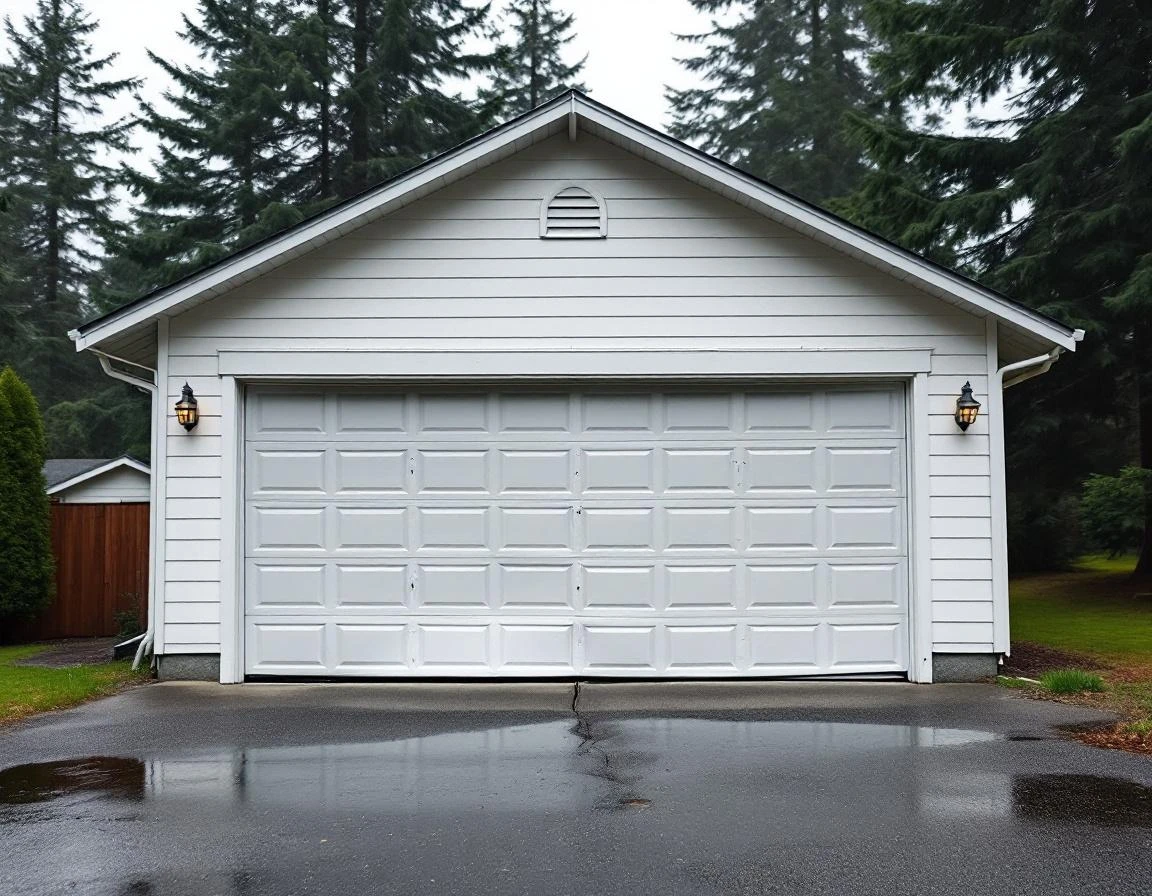
Within 24 to 48 hours of a severe east wind event, Hood River homeowners should conduct a systematic extreme wind garage door damage assessment to catch damage before it compounds into emergency failures. Walk through this checklist with a camera in hand—documentation protects your insurance claim and helps professionals diagnose problems quickly.
Start with a visual panel inspection from both sides. Look for dents, creases, or warped sections. Minor cosmetic dents that don’t affect operation can wait, but deep creases that create panel flex signal structural compromise. Next, examine track alignment by watching the door travel its full path—listen for grinding, binding, or hesitation. Tracks bent even slightly out of parallel force rollers to work harder, wearing out opener components and creating failure cascades.
Test your opener under load by disconnecting the door and operating it manually. Does it feel balanced, or does one side drag? Imbalanced doors after wind events often mean spring damage or track distortion. Check weatherstripping condition along bottom seals and side channels—torn or dislodged seals let moisture infiltrate, accelerating frame rot. Finally, inspect the door frame for cracks, especially at anchor points where wind stress concentrates.
When you spot track misalignment, binding during operation, or frame cracks, call Garage Harmony immediately. These issues multiply repair costs when left untreated through Hood River’s fall wind season. Photograph everything with date stamps—your insurance adjuster needs clear evidence of wind-related damage versus normal wear.
Spring and Fall Wind Season Preparation
The best time to prepare for Columbia Gorge winds is when the air is calm—not when 60 mph gusts are already ripping through. In Hood River, that means scheduling your pre-season maintenance in early March and late August. Weeks before peak wind conditions arrive in April and October.
Start with a thorough weatherstripping inspection. Cold air infiltration around garage door edges signals degraded seals that need replacement before spring gusts expose every gap. Test your emergency brake function by manually disconnecting the opener and lifting the door halfway—it should hold position without creeping downward. This confirms the brake can handle wind-loaded conditions.
Check track lubrication and opener performance under a fully-loaded door. Run several complete cycles, listening for grinding or hesitation that indicates friction points needing attention. Heights neighborhood homeowners often experience more direct east wind exposure due to elevation. While Westside properties may see gusts deflected by terrain features. Walk around your property during moderate wind to identify how air flows around your garage—this helps you understand your specific vulnerability to spring fall wind garage door stress.
Think of this prevention window as your insurance policy. Action taken now prevents emergency calls when April gusts arrive and every garage door company is booked solid.






Leave A Comment