


Columbia Gorge Extreme Wind Reality
The Columbia Gorge funnels wind with relentless force. Stevenson sits squarely in this corridor, where gusts regularly reach 40–80 mph during winter storms and spring wind events.
Stevenson sits in the most intense wind corridor
Stevenson sits at the heart of the Columbia Gorge’s most intense wind corridor, where sustained gusts regularly reach 40–80 mph during fall and spring months. These aren’t occasional storms—they’re predictable, powerful wind events that test every structure in town.
Standard garage doors designed for normal wind loads simply can’t handle these extreme conditions. Panels buckle under pressure, tracks warp from repeated stress, and doors derail entirely when wind forces exceed their design limits. What works fine in Portland fails catastrophically here in the Gorge.
Wind speed and pressure multiply exponentially
Wind force doesn’t increase linearly—it multiplies exponentially with speed. A 50 mph gust exerts roughly five times more force than a 25 mph wind, meaning the Columbia Gorge’s routine 40-60 mph gusts hit your garage door with crushing pressure that standard doors simply can’t handle.
For Stevenson homeowners, timing matters. The March through May wind season brings the Gorge’s most relentless gusts, creating an urgent deadline for door replacement or reinforcement. Installing a wind-rated door before spring winds arrive prevents emergency repairs when contractors are swamped with failure calls.
How Standard Doors Fail in High Wind
Standard residential garage doors are engineered for wind speeds of 70–100 mph under ideal conditions. That sounds impressive until you remember Stevenson regularly sees gusts between 40–80 mph—and those forces don’t just push against your door; they attack it from multiple angles simultaneously.
Here’s how the failure unfolds:
- Initial panel flex. Wind pressure concentrates on the door face, forcing panels inward and sideways. This lateral deformation bends the horizontal rails and warps individual panels.
- Roller binding. As panels twist, rollers jam against track walls instead of gliding smoothly. The door stops moving properly, straining the opener motor.
- Track misalignment. Continued pressure pulls tracks away from mounting brackets or bends them outward, creating gaps between roller and track.
- Spring overload. With rollers binding and tracks misaligned, the torsion springs bear loads beyond their capacity. Springs snap under the stress,…” often sending the door crashing down.
Once one component fails, cascading damage spreads rapidly. A buckled panel derails a roller, which twists the track, which overloads the spring—and suddenly you’re facing a $1,500 replacement instead of routine maintenance. Wind-rated doors resist these specific deformation patterns through reinforced panels, heavy-gauge tracks, and commercial-grade rollers that keep functioning even under lateral stress.
Wind-Rated Door Specifications
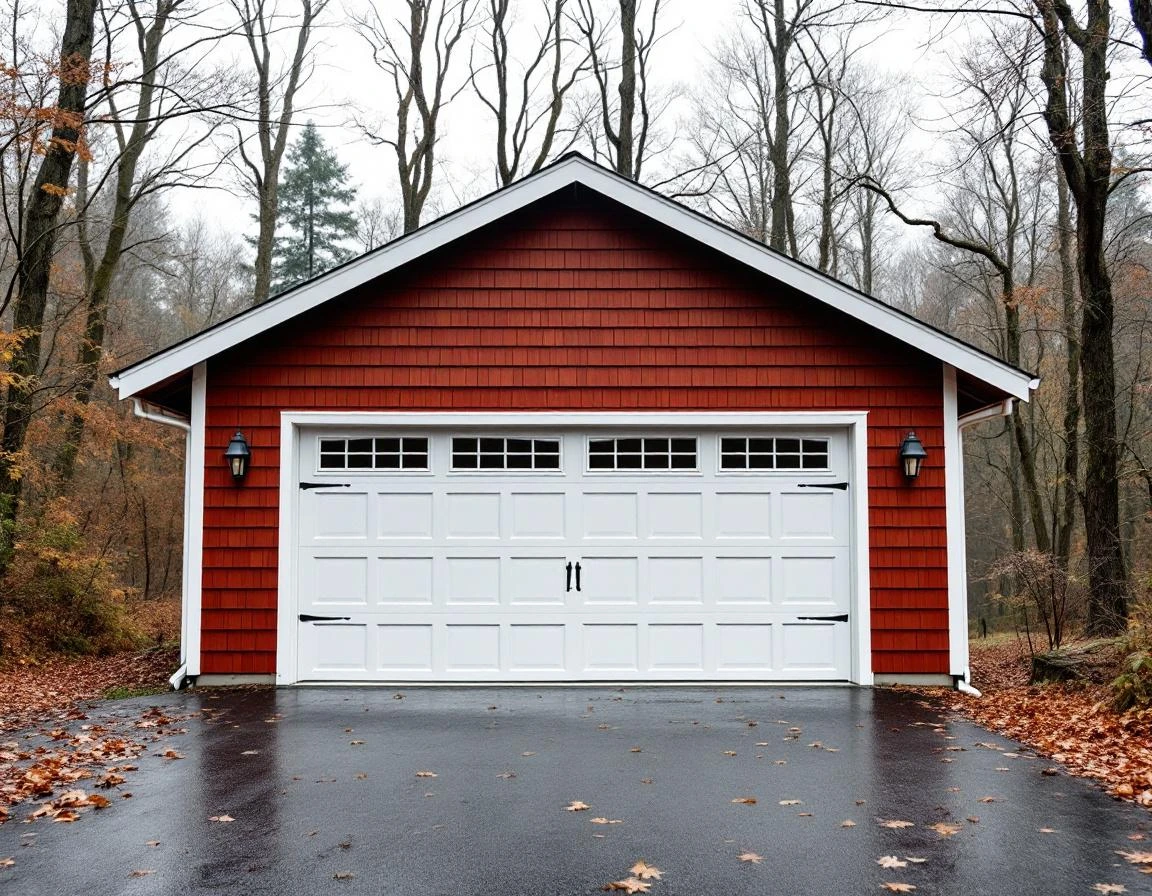
Not all garage doors are built to handle the Columbia Gorge’s wind conditions. Wind-rated doors meet specific engineering standards that separate them from standard residential models. Two key standards define wind performance: NFPA 101 (Life Safety Code) and ASTM E1996. Which test how doors respond to static wind loads and dynamic gusts.
For Stevenson homes, look for doors rated for 120+ mph wind speeds (equivalent to NFPA P3 classification) and 100+ psf (pounds per square foot) sustained pressure. These ratings appear on pressure-rated labels attached to compliant doors. The psf rating tells you how much force the door can withstand without buckling or pulling away from the frame—essential when 50 mph gusts generate 12.8 psf of pressure across a two-car door.
What makes these doors different?
- Reinforced steel frames resist flexing under load
- Thicker gauge steel panels (often 24-gauge or heavier versus standard 25-gauge) prevent bowing
- Heavy-duty springs are calibrated for the added weight and wind forces
- Pressure-rated hinges lock panels together to distribute stress evenly
- Structural gaskets and thermal breaks seal the perimeter, preventing wind from infiltrating behind panels and creating internal pressure that causes blow-out failures
When reviewing contractor proposals, demand documentation of wind ratings, ask to see the pressure-rated label specification, verify hinge and spring duty ratings, and confirm gasket installation details. These details determine whether your door survives the next Gorge wind event.
Learn more about choosing a wind-resistant garage door.
Contractor Selection & Verification
Not every contractor understands what Columbia Gorge winds demand from garage doors. Watch for red flags: any contractor who recommends standard-duty doors for Stevenson, doesn’t reference wind ratings during the estimate, or brushes off regional wind data isn’t equipped to protect your investment. If they can’t cite ASTM E1996 pressure ratings or discuss frame anchoring methods specific to high-wind conditions, walk away.
How do you find a qualified installer? Start by asking for two to three local references from installations completed in the past two years—specifically in Hood River, Stevenson, or White Salmon where wind exposure matches your property. A contractor who’s worked in the Gorge corridor will mention wind automatically; it’s the defining challenge here.
Demand written specifications before signing anything. The proposal should list the exact door model, its tested wind rating in mph, the installation method including frame anchoring details, track reinforcement strategy, and warranty coverage that explicitly includes wind damage. Vague proposals like “premium door with professional installation” aren’t acceptable. Ask about post-installation pressure testing—qualified contractors verify door integrity before leaving your property.
Installation quality determines performance. A wind-rated door installed with inadequate frame anchoring or misaligned tracks will fail just as quickly as a standard door.
Poor track alignment creates friction points where rollers bind under pressure; insufficient anchoring lets frames flex and compromise the seal. You’re paying for engineering—insist the installation lives up to the door’s rating. Research shows a strong garage door is key to preventing damage during severe weather.
Pre-Installation & Post-Installation Checklist
Before installation begins, confirm your contractor has assessed the existing garage frame for square alignment and level positioning—tolerance should be within 1/8 inch. Inspect the old frame and tracks for rust or deterioration that could compromise the new door’s anchoring. Verify an accessible electrical outlet exists for the opener, positioned where it won’t interfere with track mounting or require extension cords.
During installation, watch for proper shim placement between the frame and wall studs—this means the door maintains alignment under wind pressure. The installed door should sit centered in the opening with level positioning across the top and sides. Track alignment is critical: measure the distance between tracks at the front and rear. Deviation beyond 1/8 inch creates binding points during high winds. Demand a pressure-relief valve test before the installer leaves—this safety feature prevents opener damage when wind pressure holds the door closed.
After installation completes, manually lift the door to verify smooth operation without binding or resistance. Run five to ten opener cycles, listening for unusual sounds. Check every hinge and fastener for secure fit—loose hardware is the first component to fail when Gorge winds hit.
Schedule a follow-up inspection two weeks after installation to catch any settling issues. Then arrange a second inspection in early May, before the peak Gorge wind season, to confirm your door is ready for summer gusts. Wind damage prevention starts with verification, not assumption.







Leave A Comment