March Wind Advisory Threat
Oregon’s spring wind season peaks in March, bringing powerful gusts that exceed 40 mph across the Willamette Valley, Portland metro area, and coastal regions. These sustained winds create intense pressure against your garage door’s large surface area, testing every panel, track, and hinge connection. Learning how to prepare garage door for high winds is essential before these storms arrive, as the damage potential far exceeds what most homeowners expect.
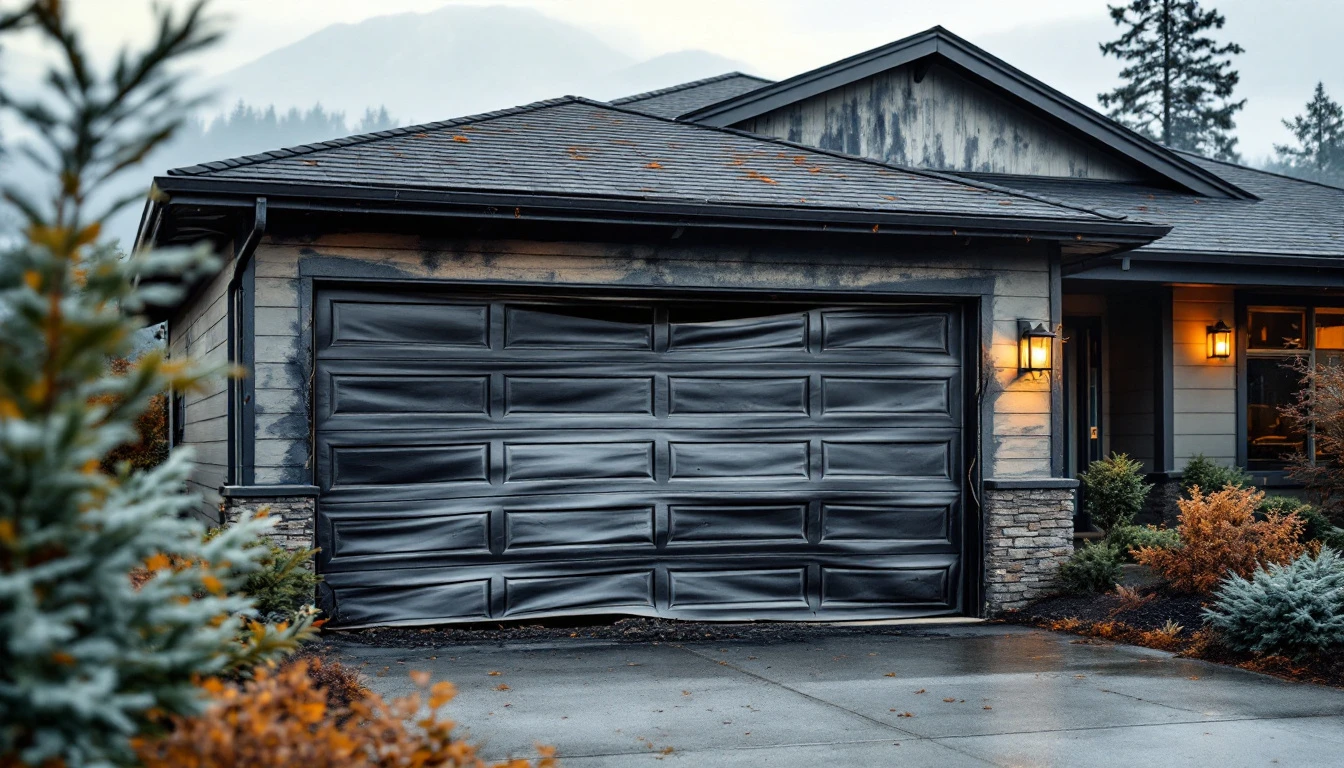
What makes garage doors particularly vulnerable? The average residential door spans a large surface area, acting like a sail when wind pressure builds. Unsecured or aging doors can suffer catastrophic panel collapse, resulting in costly repairs that burden homeowners and disrupt daily life.
Automatic opener systems face additional risks during high-wind events. When wind pressure forces doors upward or downward unexpectedly, opener mechanisms can malfunction, trapping vehicles inside or causing sudden door drops that threaten occupants nearby.
Pre-Wind Inspection Checklist
Before March winds arrive, invest 15–20 minutes in a systematic garage door inspection. This quick check can reveal problems that become catastrophic failures under wind load.
Start with the balance test: Disconnect the automatic opener and manually lower the door halfway. Does it stay put? A properly balanced door holds position without drifting up or down. If it falls or rises, your springs lack proper tension and will struggle against wind pressure.
Check roller movement and tracks: Open and close the door while watching the rollers. Smooth, quiet operation means healthy components. Grinding sounds or jerky movement indicate worn rollers that can seize during high winds. Inspect tracks for debris, dents, or misalignment—bent tracks prevent doors from seating properly in their frames, creating gaps where wind enters.
Inspect weather seals and cables: Run your hand along bottom and side seals, feeling for gaps or brittleness. Failed seals allow wind to get under your door panels. Examine lift cables for fraying or rust spots—these cables bear immense load when winds push against door panels.
Test safety sensors: Place an object in the door’s path and attempt to close it. If sensors fail to reverse the door. Disable your automatic opener before the storm. A malfunctioning opener fighting against wind gusts creates dangerous pressure spikes.
Manual Opener Disabling Steps
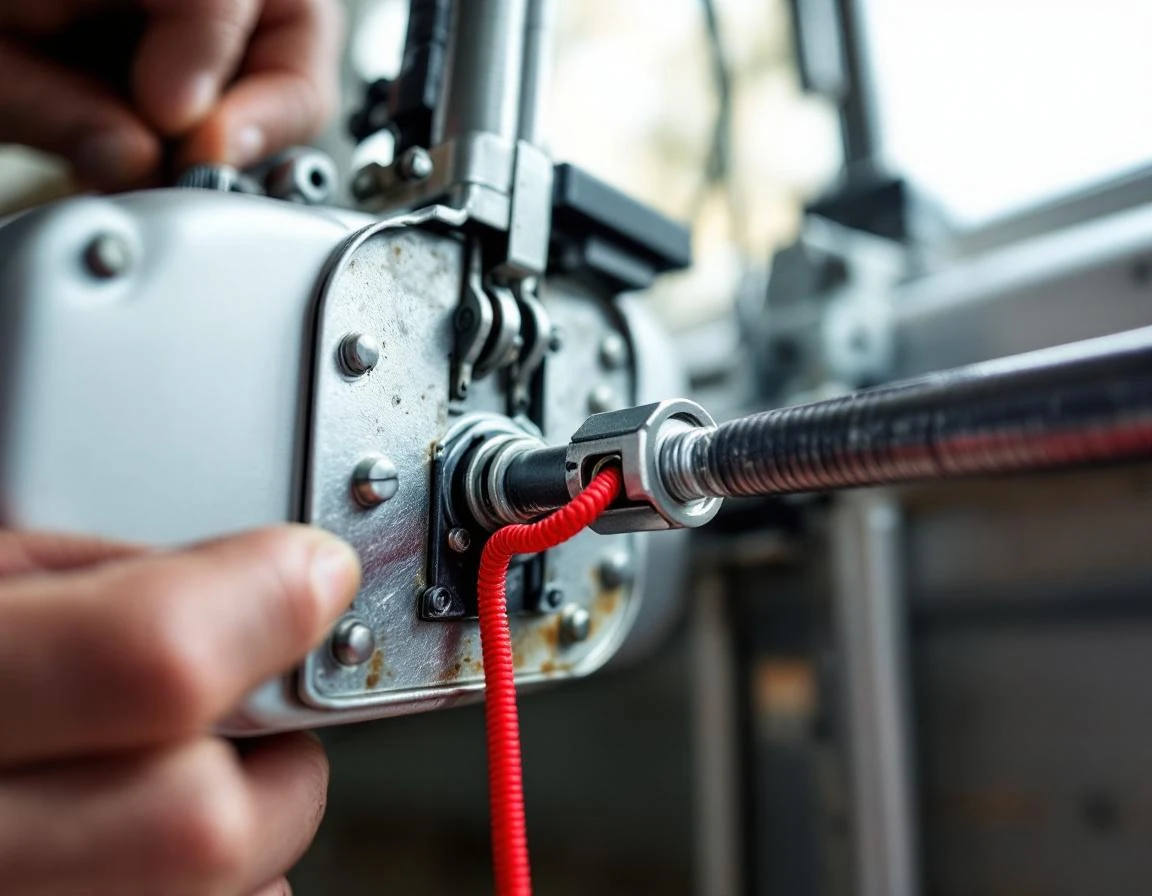
Automatic openers create dangerous conditions during high winds. Safety sensors may fail to detect obstructions when wind pressure fluctuates rapidly, or sudden gusts can trigger the motor to activate unexpectedly, opening your door mid-storm. Before a major storm, disconnect the automatic opener and lock the door by locating the red manual release cord hanging from your opener trolley and pulling it downward to disengage the motor completely.
Once disengaged, secure your closed door in position using C-clamps or locking pliers on the vertical tracks just above the bottom roller. This prevents wind-driven opening even if gusts push against the panels. With the door secured, you can safely hand-lift it for vehicle access if needed. Though keeping it closed throughout the storm offers maximum protection.
Critical Repairs That Cannot Wait
Some garage door damage eliminates your ability to manually operate the door during power outages—a common occurrence during Oregon windstorms. Broken springs prevent lifting the door at all, while frayed cables snap under the load of manual operation, potentially causing the door to crash down. Damaged rollers create binding that makes the door impossible to move, and misaligned tracks jam the door partway open.
Waiting until after the storm to address these issues leaves you facing closed repair shops and multi-week wait times when every homeowner suddenly needs emergency service. Parts availability drops to zero within hours of widespread wind damage.
Priority one: springs and cables. Priority two: rollers and track alignment. Priority three: weather seals.
Contact Garage Harmony today for pre-storm repairs that keep your door operational when you need it most.
Securing Door During High Wind Advisory
Once the wind advisory is active, your garage door needs immediate attention. Start by confirming the door is fully closed—even a partially open door faces exponential wind pressure that can rip panels from tracks. With your automatic opener already disengaged, place C-clamps on the track just above the rollers on both sides, or position heavy sandbags against the inside bottom panel to prevent wind-driven opening.
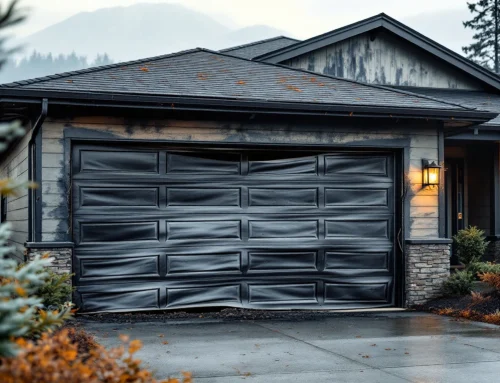
If your pre-storm inspection revealed panel dents, cracks, or deformation, reinforce the affected areas immediately. Cut plywood sheets to fit the inside of damaged lower panels, securing them with construction adhesive or screws through existing panel ribs. This temporary bracing distributes wind pressure across a larger surface area, preventing total collapse during gusts.
Emergency measures to implement during a wind advisory include:
- Clear the garage floor of vehicles, stored equipment, and loose items that could shift during wind events and jam rollers or wedge under the door
- Keep a three-foot clearance zone around tracks and springs
- Never operate your garage door during a high wind event, as doing so can cause injury and damage
These emergency measures protect your property during the 12–24 hour advisory window—schedule permanent repairs with Garage Harmony once conditions improve.
Post-Wind Assessment Steps
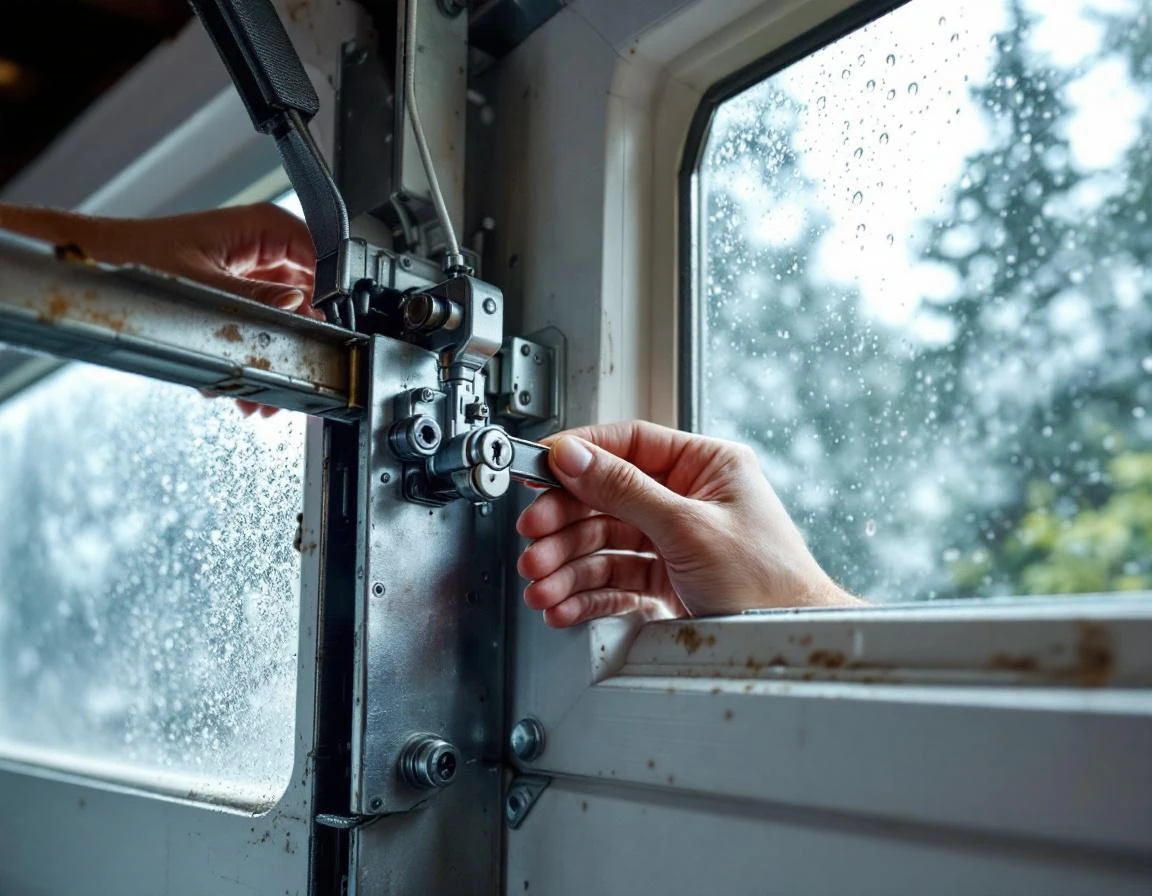
Once the wind advisory passes, walk your garage door through a complete safety inspection before re-enabling the automatic opener. Start by examining panels for new dents, stress marks, or buckling that indicate wind pressure damage. Test the door’s balance by lifting it manually to chest height—it should stay in place without drifting.
Check that all rollers move smoothly along the tracks without catching or grinding. Run your hand along weather seals to verify they remain intact and properly seated. Test safety sensors by closing the door and interrupting the beam with your hand—the door should immediately reverse.
Wind damage often hides beneath the surface, developing into serious mechanical failures if left unchecked. When a garage door fails, it can begin a cascade of damage affecting your roof and surrounding walls.
If you discover any component damage or operational issues during your inspection, schedule professional repairs before reconnecting the automatic opener.
Contact us today if your door shows signs of wind-caused damage affecting safety or normal operation.