Why Portland’s Climate Damages Garage Door Panels Differently
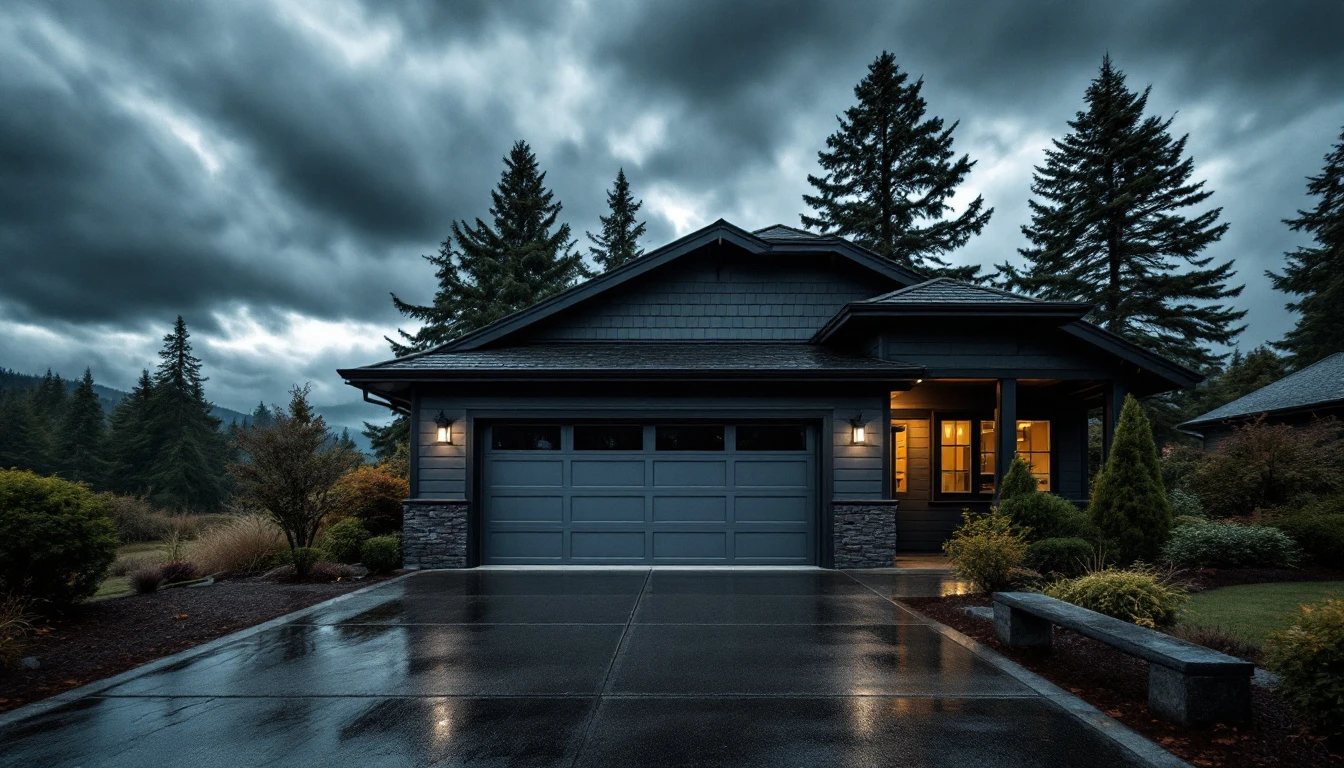
Portland’s climate creates a unique challenge for garage doors. The region’s persistent rain, high humidity, and temperature fluctuations expose panels to constant moisture cycles that accelerate rust, warping, and seal deterioration faster than in drier climates. Understanding how humidity and rain affect garage door panels is essential for Portland homeowners, as the combination of humidity, rain, and garage door panels creates conditions that damage doors significantly faster than in other regions.
“Portland’s 43 inches of annual rainfall and consistently high average humidity create moisture conditions that accelerate rust and seal degradation”
Portland receives 43 inches of annual rainfall combined with an average humidity level of, creating an environment where garage door panels face constant moisture exposure. This combination accelerates two critical failure points: rust formation on steel components and deterioration of weatherstripping seals.
Steel panels absorb moisture through microscopic surface breaches in protective coatings—tiny scratches, paint chips, or manufacturing imperfections you can’t even see. Once water penetrates these weak points, oxidation begins within 6-12 months if the metal remains unprotected. Unlike drier climates where occasional rain evaporates quickly, Portland’s persistent dampness keeps these vulnerable areas wet for extended periods, giving rust a foothold that spreads beneath the surface coating.
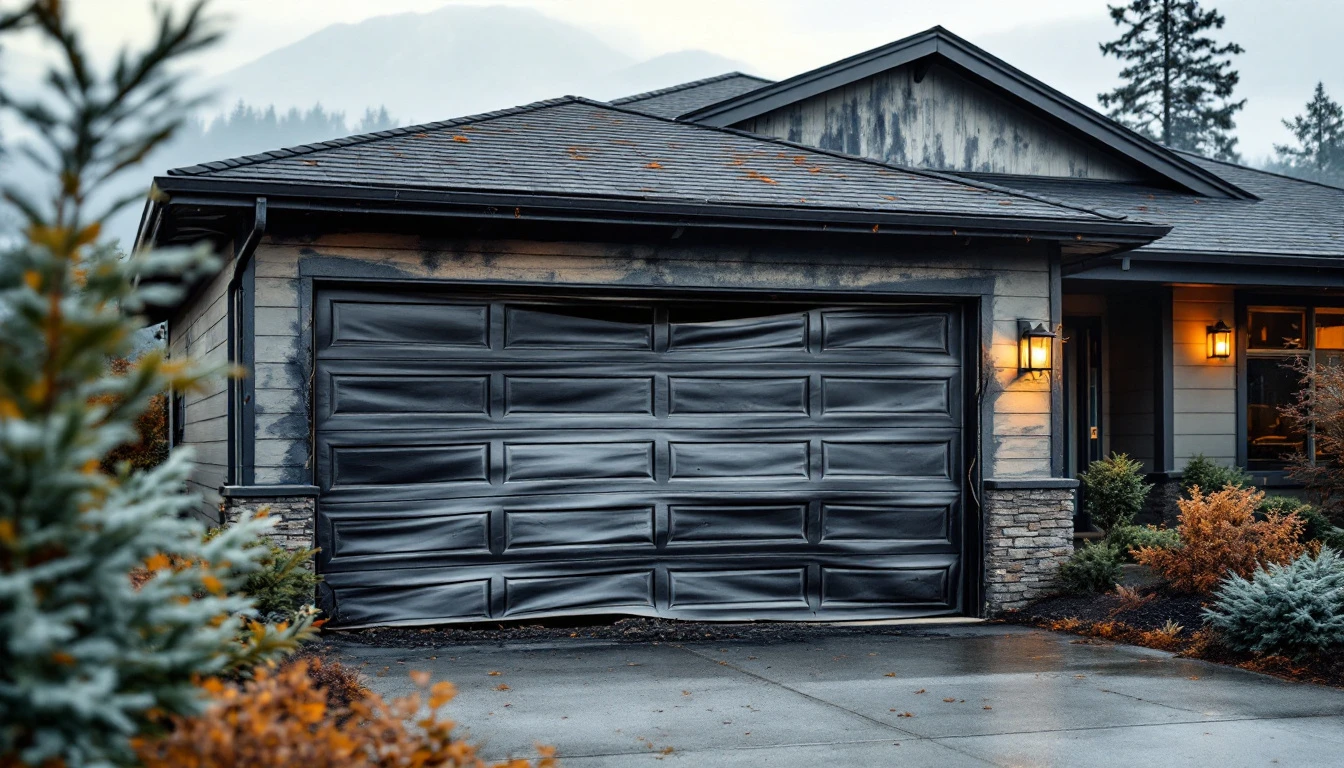
Wood composite panels swell and warp when exposed to repeated wet-dry cycles, compromising panel alignment and seal integrity
Wood composite panels face a different threat in Portland’s climate. As these panels absorb moisture during our months-long rainy seasons, they swell beyond their original dimensions. When summer arrives and the panels dry out, they contract again—but rarely return to their exact original shape.
After several wet-dry cycles, this repeated expansion and contraction causes panels to warp noticeably. The warping creates gaps between panels where weather seals should meet, allowing rain and wind to penetrate your garage. Meanwhile, aluminum and fiberglass panels develop micro-corrosion at seams and fastener points where moisture pools during rainy seasons, gradually weakening structural integrity at these critical connection points.
The Three Moisture Vulnerability Points on Your Garage Door in Humid Climates
While moisture threatens your entire garage door, three specific areas act as entry points where damage begins. Understanding these vulnerability zones helps you focus your inspection and prevention efforts where they matter most.
- Bottom weatherstripping and lower panels face the harshest conditions. Gravity pulls rainwater downward, creating pooling along the door’s base. In Portland homes, especially those with sloped driveways common in neighborhoods like West Slope and Powell Valley, splashback compounds the problem. Look for discoloration, soft spots in wood composite panels, or weatherstripping that feels brittle rather than flexible. Water wicks upward into unsealed panel edges like a sponge absorbing moisture.
- Panel seams and joints rely on rubber gaskets that deteriorate through UV exposure during Portland’s summer months and constant humidity cycling the rest of the year. These gaskets compress and expand with temperature swings between our 35°F winter nights and 95°F summer days. Early warning signs include visible gaps between panels, water stains on interior panel surfaces, or gaskets that have hardened and lost their seal.
- Fasteners and hinges create galvanic corrosion points where dissimilar metals contact moisture-laden air. White corrosion powder around bolt heads signals active oxidation that spreads to surrounding steel panels. Hinges that stick or squeak indicate rust formation that compromises panel movement. Check these components every fall before Portland’s wet season intensifies, as catching corrosion early prevents it from spreading to your door’s structural panels.
Pre-Wet Season Prevention: Three DIY Maintenance Tasks
Complete these three simple maintenance tasks in September, giving yourself a six-week buffer before Portland’s November-through-March wet season arrives. Each task directly addresses the moisture entry points and corrosion mechanisms we'”…ve identified, and together they form a complete defense against panel damage and garage…” door maintenance in humid climates.
Task 1: Inspect and Replace Deteriorated Weatherstripping
Time commitment: 1-2 hours | DIY cost: minimal to moderate materials investment
Start at the bottom seal where water pools most frequently. Run your hand along the entire length, feeling for cracks, stiffness, or gaps when the door closes. Purchase vinyl or EPDM rubber weatherstripping from your local hardware store—we recommend M-D Building Products Bottom Seal for steel doors or Frost King garage door seal for wood panels. Remove the old seal by unscrewing the retainer, clean the channel thoroughly with degreaser, then slide the new seal into place and secure it. The science is simple: intact weatherstripping creates a physical barrier that blocks water from entering the garage interior and prevents the bottom panel from sitting in standing moisture where oxidation accelerates. For more details on this process, see our garage door weatherstripping replacement guide.
Task 2: Clean and Seal Panel Seams and Hardware
Time commitment: 2-3 hours | DIY cost: minimal to moderate investment
Use a wire brush to remove existing rust from hinges, brackets, and fasteners, then wipe seams clean with mineral spirits. Apply Boeshield T-9 rust preventive or 3-IN-ONE Multi-Purpose Oil with rust protection to all metal hardware and along panel seams where rubber gaskets meet steel. This creates a moisture-displacing barrier that prevents corrosion initiation at the microscopic level. Pay special attention to roller brackets and hinge pins where humidity accelerates oxidation in enclosed metal-to-metal contact points.
Task 3: Apply Hydrophobic Panel Coating
Time commitment: 3-4 hours | DIY cost: modest to moderate expense
For steel panels, apply automotive-grade carnauba wax like Meguiar’s Ultimate Liquid Wax. For wood composite doors, use Thompson’s WaterSeal Wood Protector. Work in 3-foot sections, applying thin coats and buffing thoroughly. This hydrophobic layer causes water to bead and roll off rather than penetrating panel surfaces, dramatically reducing moisture absorption that leads to warping in wood and rust breakthrough in steel. Reapply every six months for year-round protection against Portland’s relentless precipitation.
Seasonal Moisture Damage: Early Warning Signs
In Portland’s climate, moisture damage follows a predictable timeline. After September maintenance, watch for these warning signs as the wet season progresses through winter.
- Visible rust spots or white corrosion powder on steel panels or fasteners indicate active oxidation. These typically appear by December-January after fall rains have breached protective coatings. The white powder (iron oxide) signals that steel is oxidizing beneath the surface. Catching this in November means a simple weatherstripping fix costs -200. Ignore it, and by February you’re looking at full panel replacement for -1,200.
- Soft or spongy wood composite panels reveal water absorption and delamination. Press firmly on panel edges—healthy panels feel solid. Swelling at edges or paint bubbling indicates the core has absorbed moisture and is expanding. This damage accelerates quickly once started, as swollen panels can’t seal properly against weatherstripping.
- Difficulty opening or closing your door, grinding noises, or visible misalignment signal that swollen panels or corroded hinges are affecting operation. Portland’s humidity causes wood to expand and metal components to corrode simultaneously, creating binding points.
- Water pooling inside your garage near the door, rust staining on concrete, or musty odors indicate seal failure or panel moisture wicking. These signs mean water is actively entering your garage—address them immediately before structural damage occurs.
DIY Repair vs. Professional Help: Cost Comparison & Decision Framework
Should you tackle garage door moisture damage yourself or call a professional? The answer depends on the severity of damage and your comfort with basic tools. Early-stage issues like weatherstripping replacement, surface rust treatment, and seal re-caulking are excellent DIY candidates that offer substantial cost savings compared to professional service.
Consider weatherstripping replacement: the DIY approach requires a modest material investment and a couple of hours of labor, while professional installation commands a substantially higher cost and involves a notable wait during Portland’s busy winter season. Similarly, treating isolated rust spots with a do-it-yourself rust converter and touch-up paint represents a significantly more economical option compared to professional spot repair services.
When professional help becomes necessary: Structural panel warping that affects door alignment, hinge or fastener corrosion compromising operational safety, and extensive rust requiring full panel replacement all demand professional expertise. These repairs involve precise measurements, specialized tools, and safety considerations that justify the higher cost. If you’re unsure about the extent of damage, our guide on garage door repair versus replacement can help you make the right decision.
Timing significantly impacts both cost and availability. Portland’s wet season creates simultaneous service demand across the metro area—all garages need repairs at once. This drives substantial winter emergency premiums and extends service waits to 2-3 weeks in January and February. Address repairs by early January to avoid these bottlenecks.
The prevention advantage becomes clear when comparing costs: modest spending on September maintenance tasks prevents substantially larger panel replacement expenses in February. You’re not just saving money—you’re avoiding the frustration of competing with many other Portland homeowners for limited professional availability during peak damage season.
Think of preventive maintenance as insurance you control. Every hour spent on weatherstripping and rust prevention in dry weather eliminates emergency service calls when rain-damaged doors fail during winter storms.