Wildfire Garage Door Damage Types in Washington: Smoke, Thermal, Structural
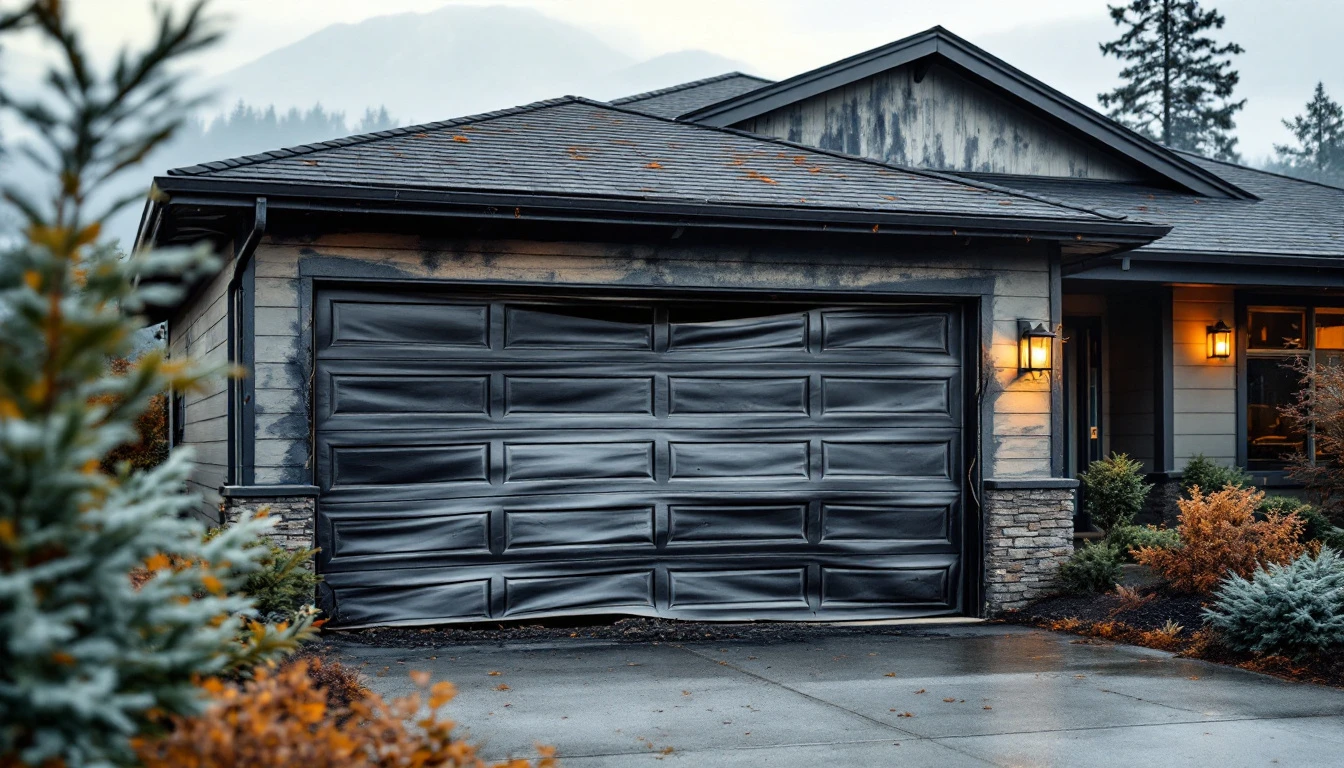
Washington wildfires inflict three distinct types of wildfire garage door damage Washington, each presenting unique hazards that homeowners often can’t identify without knowing the warning signs. Understanding these failure modes explains why the first 48 hours matter so much for your safety and property protection.
Smoke infiltration works insidiously, leaving behind corrosive residue that clogs lift mechanisms and attacks metal springs. You’ll notice dark staining on panels, a persistent acrid smell, and springs that appear discolored or pitted. This corrosion accelerates rapidly, transforming functional hardware into brittle components prone to sudden failure.
Thermal warping occurs when radiant heat bends panels, twists tracks, and distorts the door frame without visible flames. Look for panels that bow outward, tracks that no longer align vertically, or doors that bind and scrape during operation. Warped components create dangerous tension imbalances in the spring system.
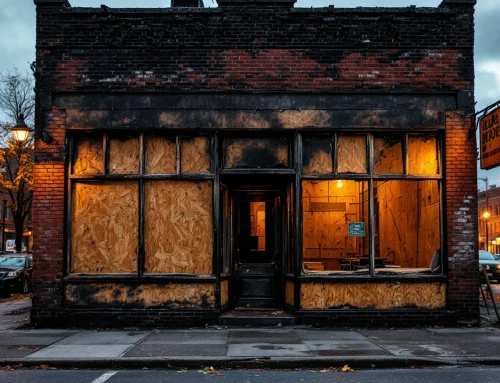
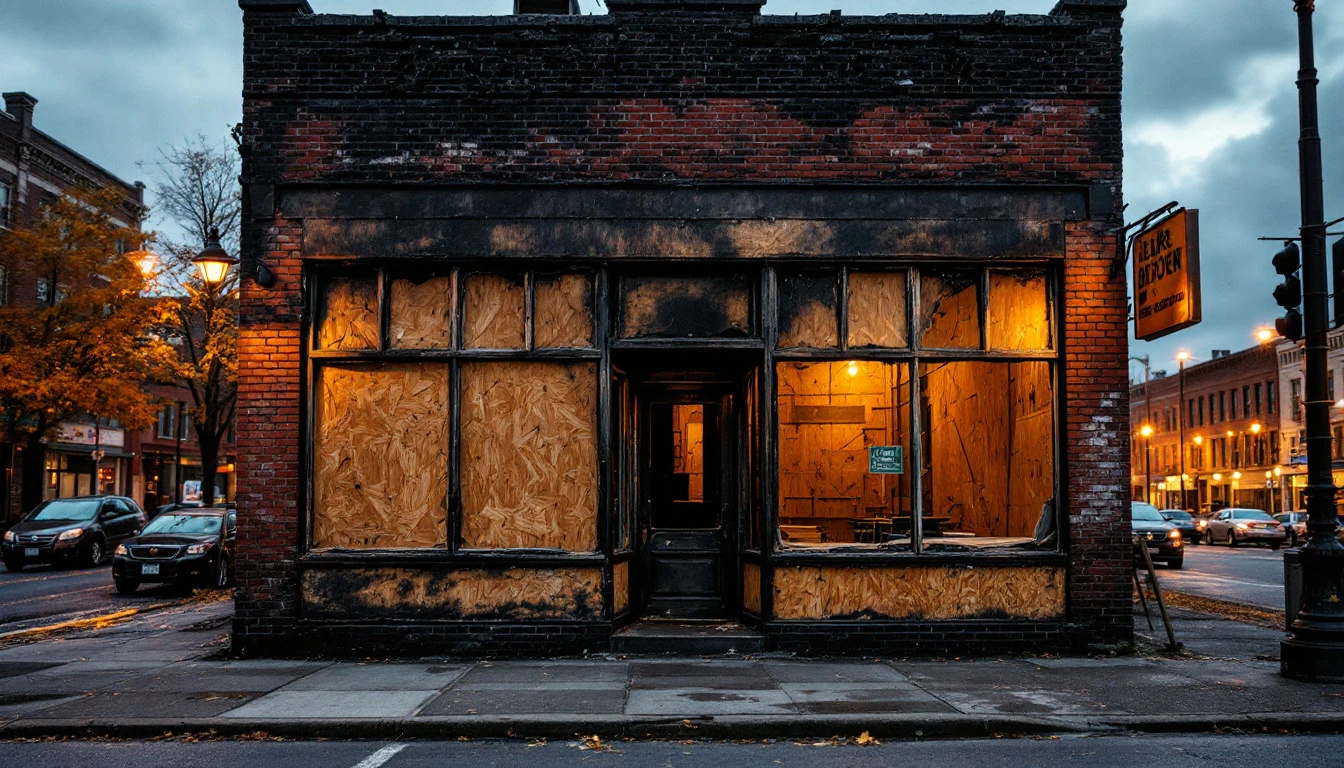
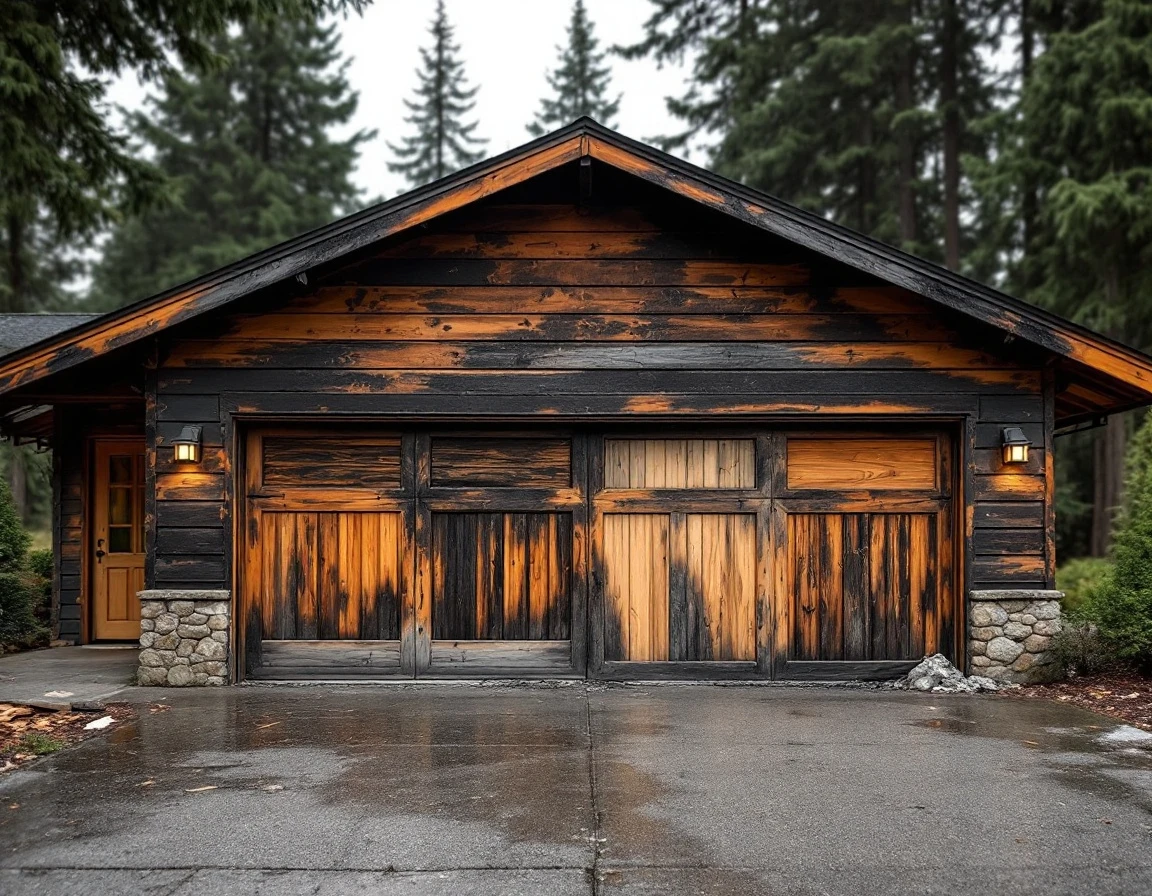
Structural burn-through from direct flame contact compromises the door’s integrity entirely. Charred sections, melted weather stripping, and blackened framing indicate the door can no longer support its own weight safely and demands immediate professional assessment.
72-Hour Safety Assessment Protocol
Before attempting any inspection, wait until local authorities confirm the area is safe to enter. Once cleared, dedicate ten minutes to a careful assessment that keeps you out of direct contact with damaged components.
Start with your visual inspection checklist:
- Look for warped or buckled panels, visible scorch marks, blistered paint, and ash accumulation in track channels
- Check weather sealing for melted rubber or charring
- Examine the springs above the door for discoloration or sagging—heat exposure weakens these critical components even when they appear intact
Next, test door operation safely without walking beneath it. Press your garage door opener and listen carefully. Grinding noises, jerky movement, or doors that stop mid-cycle indicate alignment problems or damaged rollers. If the door moves smoothly, watch the gap along the bottom—uneven spacing signals warped tracks.
Red flags requiring immediate professional lockout include any visible burn-through of panels, springs that appear stretched or corroded, tracks pulled away from framing, or doors that won’t open at all.
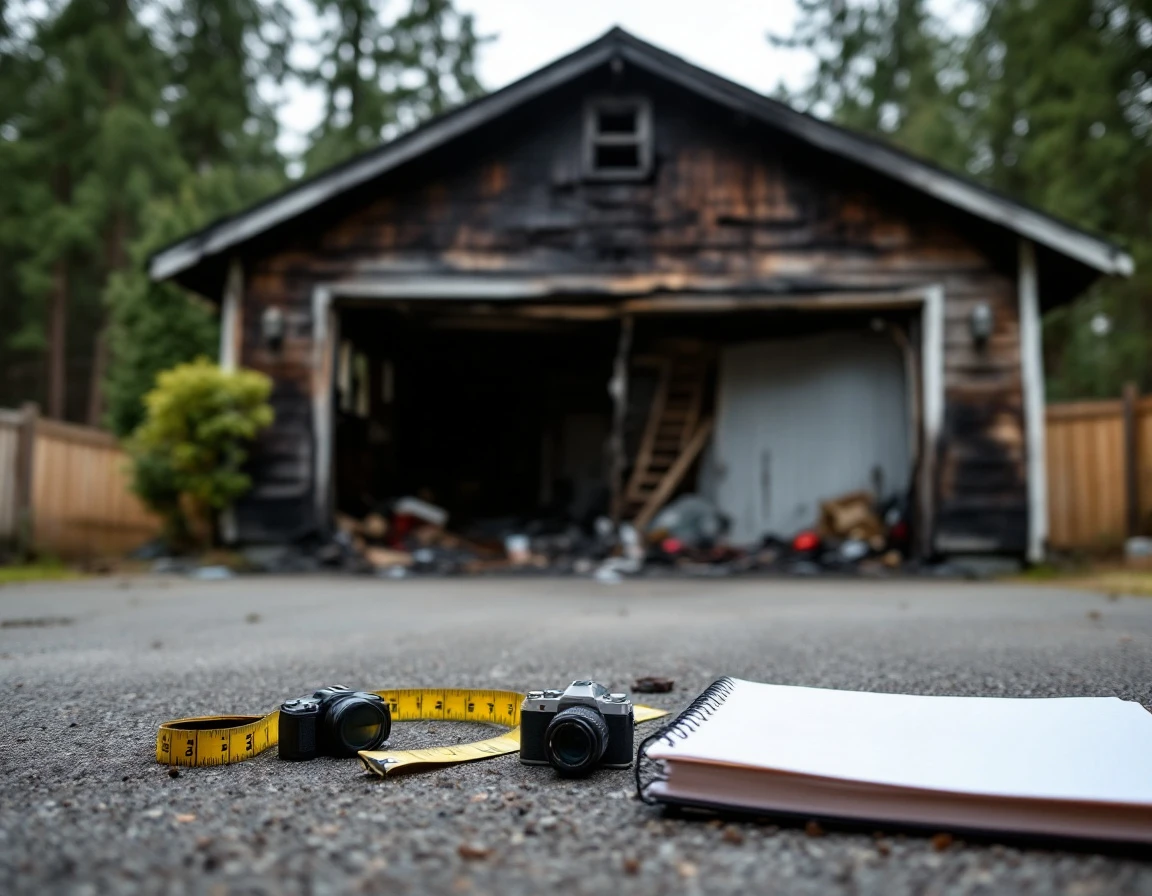
Document everything with photos from multiple angles for your insurance claim, but don’t attempt repairs yourself—this assessment determines whether you need emergency stabilization or can wait for scheduled service.
Emergency Stabilization vs. Full Restoration
Once you’ve completed your safety assessment, you face a critical decision: should you pursue quick stabilization or full restoration? Understanding the practical differences helps you match the response to your recovery priorities and timeline.
Stabilization focuses on making the garage functional for emergency access and insurance documentation. This might mean manually operating the door, removing damaged opener chains, or temporarily sealing gaps to prevent weather infiltration. A homeowner with thermal warping might stabilize by disconnecting the automatic opener and using manual operation for three to five days while arranging full panel replacement. Someone dealing with wildfire smoke garage door damage might need immediate spring replacement to prevent door collapse—a safety priority that can’t wait.
Cost and timeline differences are substantial. Stabilization typically runs $200–500 and takes 24–48 hours, while full restoration—complete panel, spring, and opener replacement—ranges $2,500–8,000 and requires 5–14 days. Your choice depends on fire damage severity, insurance processing speed, and whether you need immediate vehicle access during recovery.
Washington Contractor Availability & September
September 2026 marks peak wildfire recovery season across eastern and central Washington, with garage door contractors in Spokane, Grant, Walla Walla, and Pacific counties reporting 7–14 day wait times for standard service calls. Regional specialists like Precision Door Service Spokane and Overhead Door Company of Tri-Cities prioritize post-wildfire emergencies and can often secure 48–72 hour slots for homeowners who call within 24 hours of fire passage.
When you contact contractors, request an emergency garage door repair after fire appointment and explain that you need repair cost estimates for your insurance claim. Documented timelines and itemized damage reports strengthen claim submissions and accelerate approval processes. Companies like A&H Garage Door Services serving Grant County provide detailed documentation specifically formatted for insurance adjusters.
Early outreach improves your chances of emergency scheduling. Contractors allocate priority slots to homes with active safety hazards, so clearly describe structural damage, exposed openings, or inoperable mechanisms when you call.
Insurance Documentation & Next Steps
Within the first 48 hours after assessment, capture photo and video evidence of all visible damage—warped panels, compromised tracks, melted weatherstripping, and soot infiltration. This documentation becomes the foundation of your insurance claim and helps adjusters understand the full scope of thermal and smoke damage.
Contact a qualified contractor immediately to provide a written estimate. Insurance carriers require this professional assessment as coverage documentation, and many policies separate emergency stabilization costs from full restoration expenses. Getting that first estimate filed quickly can mean the difference between coverage approval and denial.
Have your contractor install temporary structural sealing to prevent secondary smoke and ash damage while you wait for parts and scheduling. This protective measure stops ongoing corrosion and keeps your garage functional during the recovery window, protecting both your property and your insurance position.