Three-Car Garage Maintenance Hillsboro: Multi-Car Systems vs Standard Garages
Three-car garage maintenance in Hillsboro’s master-planned communities demands different priorities than traditional two-car setups, particularly before Pacific Northwest weather intensifies seasonal wear.
Three-car garages have 1.5x the track length
Three-car garage systems in Hillsboro’s master-planned communities like Orenco Station and Tanasbourne require 50% more track length than standard two-car setups. This extended track network demands heavier-duty springs and more durable lifting mechanisms to handle the wider spans.
Multiple opener systems create independent failure points. When you’re managing two or three separate door openers, each unit operates on its own maintenance schedule. One opener might be running perfectly while another develops motor problems or sensor malfunctions.
Master-planned communities in Hillsboro often use
Master-planned communities in Hillsboro often use identical garage door systems throughout entire neighborhoods. When you live in developments like Orenco Station or Tanasbourne, this standardization creates a unique advantage: pattern failures become predictable. Our team regularly sees the same components wearing out across multiple homes built during the same phase.
Extended three-car doors experience greater stress during Tualatin Valley’s fog-induced moisture cycles. The longer track spans and heavier door panels absorb more condensation during October through March, when dense fog settles across the valley floor. This moisture accelerates wear on springs, rollers, and weatherstripping compared to standard two-car configurations.
Three Critical Spring Inspection Points
Spring systems represent the single most common failure point in three-car garage spring replacement scenarios, and the timeline to failure runs shorter than most Hillsboro homeowners expect. The springs in your three-car system carry double or more the load per cycle compared to two-car doors—meaning a 16×7 door section weighs around 150 pounds, while your wider panels can exceed 300 pounds. Every opening and closing cycle stresses those coils, and with three cars generating more daily cycles than a typical two-car household, the math works against you.
Moisture creates the real threat to spring longevity in the Tualatin Valley. Morning fog that settles across Orenco Station and AmberGlen doesn’t just dampen concrete—it condenses on metal spring coils night after night. Freeze-thaw cycles during winter mornings create micro-fractures in the steel. Weakening the coil structure from the inside out. You’ll see the evidence as rust streaking down the coil or white corrosion deposits forming on the spring surface, both signs that failure is approaching.
Your May inspection checklist should cover four specific checks. Listen for squeaking when the door operates—this indicates the coating has worn through and metal is grinding on metal. Look for rust streaking or white corrosion deposits on the coils themselves. Test the tension balance by disconnecting the opener and manually lifting the door halfway—it should stay in place without drifting up or down. Finally, verify that left and right springs show similar wear patterns, because uneven tension accelerates failure on the weaker side.
A single broken spring in your multi-car garage maintenance plan leaves one bay completely inoperable while the others function normally, creating the illusion that everything’s fine when you’ve actually lost one-third of your garage capacity.
Spring replacement runs $200-$400 per door when done proactively during May maintenance, but emergency weekend service after a failure? You’re looking at premium rates and the inconvenience of a blocked vehicle. Inspect now, before summer use adds more cycles and fall weather returns with its damaging moisture.
Extended Garage Track Maintenance for Fog
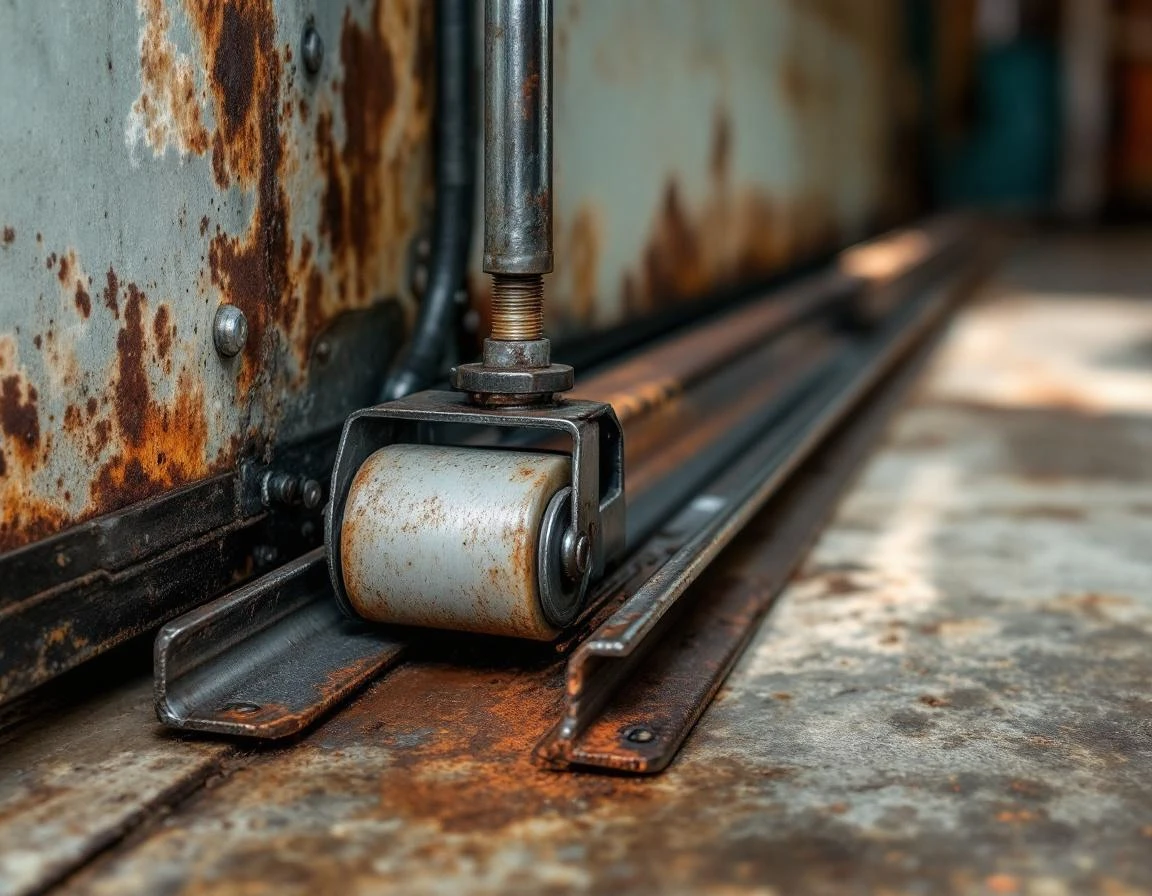
Three-car garage systems span 16-20 feet compared to the standard 12-14 feet in two-car configurations, creating 6-8 feet of additional surface area where extended garage track maintenance becomes critical in Hillsboro’s fog-heavy climate. Condensation doesn’t distribute evenly—it pools in track crevices and roller channels, creating rust deposits that often don’t become visible until late summer when the damage has already spread.
A May track inspection should start with a soft brush to remove debris along the full span. Check specifically for white rust deposits or pitting along the vertical sections where fog settles overnight. Test door movement by manually lifting and lowering across the entire track length—binding or grinding at any point signals misalignment that needs immediate attention.
Why does this matter before fall? Corroded or misaligned tracks force your opener motor to work harder with every cycle, accelerating wear on components that will face their heaviest stress once October rains intensify moisture and temperature cycling. A dirty, corroded track in May becomes a catastrophic failure point when winter weather arrives.
Most homeowners can handle basic cleaning: wipe tracks with a clean cloth dampened with household cleaner, then apply a silicone-based lubricant to rollers and hinges. If you detect binding during manual testing, that’s the signal to call for professional alignment—misaligned tracks damage rollers and can burn out opener motors within weeks.
Multiple Openers and Their Vulnerabilities
When your three-car garage features three separate opener systems, you’re managing three independent sets of batteries, limit switches, and sensor pairs—each aging on the same timeline under the same environmental stress. In Hillsboro’s master-planned communities like Orenco Station and Tanasbourne, where homes were built in concentrated development phases, these openers are experiencing identical conditions simultaneously.
The Tualatin Valley’s persistent fog creates a particularly challenging problem for opener electronics. Moisture penetrates motor housings through ventilation slots, corroding battery contacts and sensor connections inside the units. This fog-driven corrosion reduces opener lifespan compared to drier climates, and when one opener begins showing symptoms—grinding sounds, hesitation during operation, or intermittent sensor failures—the other two are likely approaching the same failure point.
Take action this May by testing all three openers for smooth operation and listening carefully for any grinding or hesitation. Replace batteries in all three remotes and wall buttons even if only one seems weak. This proactive approach prevents the frustrating scenario of staggered failures through fall and winter, when technicians face heavy demand and emergency service calls become expensive. Addressing all three systems now means one service visit instead of three emergency calls when the weather turns wet.
Seasonal Timing: May Prep for Fall Weather
The Tualatin Valley’s climate creates a two-phase stress cycle that makes May the critical maintenance window for large garage door repair planning in Hillsboro. From June through August, dense valley fog settles overnight, depositing moisture on springs, tracks, and opener mechanisms. Then October and November bring heavy fall rains and occasional freezing temperatures that multiply stress on components already weakened by summer corrosion.
Why does May matter? Scheduling maintenance now gives you four to six months for replacement parts to arrive before emergency season hits. Supply chains for commercial-grade springs and extended track sections can require extended lead times, especially for the heavier-duty components that three-car systems demand. Owners who delay inspections until September or October face inflated emergency repair costs, week-long wait times for parts, and the very real risk of being stranded with an inoperable door during an ice event or heavy downpour.
Three-car systems are more critical to daily household operations than two-car garages. More vehicles mean more frequent door cycles, and summer travel season increases garage access demand. A broken door in winter isn’t just inconvenient—it’s disruptive to multiple drivers and vehicles simultaneously.
Your May maintenance checklist: Test spring tension and listen for squeaking. Inspect tracks for rust accumulation and alignment. Run all three openers through complete cycles. Verify that safety sensors respond correctly. If you spot rust streaking, corrosion deposits, or hear unusual sounds, schedule professional service now.