How Temperature Changes Affect Garage Door Performance
Spring weather creates a unique mechanical challenge for garage doors. When March temperatures swing from 60°F afternoons to freezing nights, metal and rubber components respond at different rates. Steel springs contract in cold, increasing tension, while rubber seals become brittle and crack. Understanding how temperature changes affect garage door components helps you prevent costly failures. During warm days, metals expand and hardware loosens in pre-drilled holes.
This freeze-thaw cycle repeats nightly throughout early spring, creating cumulative stress. Torsion springs typically fail first. Followed by weather seals and metal track alignment issues. Why does April see peak repair calls? Because March’s temperature swings silently weaken components that finally break when homeowners resume heavy usage for spring projects and lawn equipment storage.
Understanding which parts are most vulnerable lets you catch problems before they trigger emergency repairs.
Four Critical Spring Inspection Points
Before warmer weather arrives and you start using your garage door daily, walk through these four inspection points. Each targets a component that’s most likely to fail after winter temperature stress.
-
1. Torsion Springs: Look for Gaps and Rust
Stand inside your garage and examine the torsion spring mounted above the door. Look for gaps between the coils—these indicate the spring has stretched or begun separating. Check for rust buildup, especially near the end cones where moisture accumulates. If you spot either condition, don’t operate the door manually. Springs under tension can cause serious injury when they fail, so this is a job for professionals.
-
2. Tracks and Rollers: Check Alignment and Clear Debris
Run your finger along the inside of each vertical track. Metal tracks that expanded unevenly during winter may now have slight bends or gaps where rollers catch. Clear out any debris that’s accumulated in the track channels. If the door hesitates or makes grinding sounds during operation, the tracks likely need professional realignment.
-
3. Rubber Seals: Inspect for Cracks and Shrinkage
Press gently on the bottom weatherstripping and examine all four sides of the door frame. Rubber that went through freeze-thaw cycles develops cracks, becomes brittle, or pulls away from its mounting channel. Replace any seals showing visible damage—this prevents water intrusion and pest access during spring storms.
-
4. Opener Balance: Listen and Watch Operation
Disconnect the opener and manually lift the door halfway. A properly balanced door stays in place. If it drops or shoots upward, the spring tension needs adjustment. Reconnect the opener and listen for straining motor sounds. These symptoms indicate your opener is compensating for balance problems that will shorten its lifespan. For detailed guidance on spring maintenance, check out our garage door spring care guide.
Spring Inspection Tasks
Start your spring inspection by standing several feet back from the torsion spring—never approach or touch active springs that carry lethal tension. Look for rust spots covering more than one-quarter of the spring surface, which signals moisture damage from temperature cycling. Scan for gaps between coils or uneven spacing that indicates metal fatigue.
Listen carefully while operating the door. Creaking or grinding sounds mean spring degradation has begun. Examine cable attachments for separation or fraying where metal meets the drum—these connections weaken first under thermal stress.
Call a professional immediately if you spot any gap between spring coils, rust covering more than 25% of the surface, or cable separation. Your job is to observe and document, not repair. Springs store enough energy to cause fatal injuries.
Track Alignment and Roller Condition
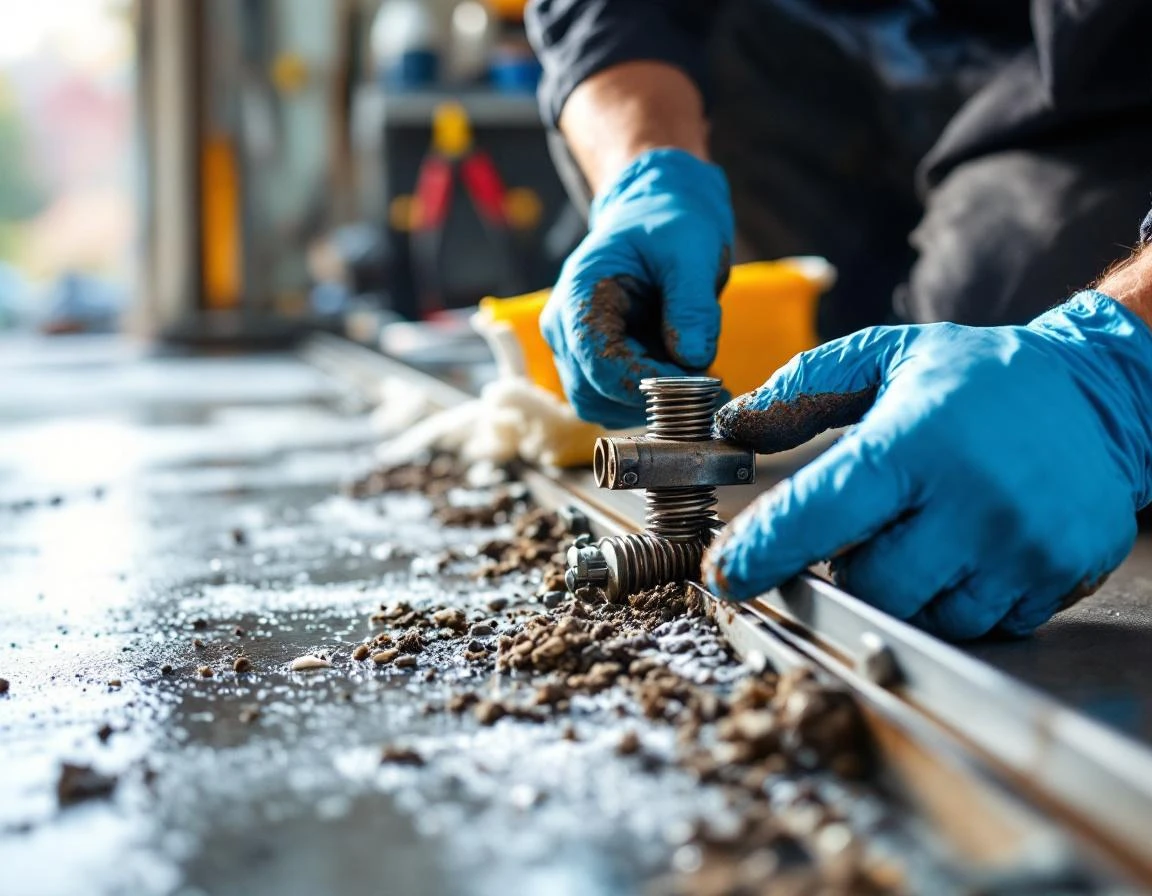
Temperature expansion can push tracks out of alignment by 1/8 inch or more, creating gaps that trap debris and force rollers to bind. The freeze-thaw effect compounds this damage: water seeps into tiny gaps, freezes overnight, expands, and forces tracks further out of true. Combined with winter’s dirt accumulation, this thermal stress causes rollers to crack or wear flat from uneven pressure during cold-warm cycles.
Here’s a simple check: close the door halfway and listen for grinding or binding sounds. If the door doesn’t glide smoothly or makes noise, track misalignment from temperature stress is likely. Look for visible gaps between track and rollers, discoloration on metal surfaces, or flat spots on the rollers themselves. These signs indicate professional alignment services are needed before the binding causes motor strain or complete failure.
Maintenance Actions Before April Arrives
Now that you’ve completed your March inspection, it’s time to act on what you found. Homeowners can safely handle several maintenance tasks themselves:
- Clean debris from door tracks using a stiff brush
- Apply silicone-based lubricant to rollers and hinges (avoid WD-40, which attracts dirt)
- Tighten visible bolts and brackets with a socket wrench
- Check weatherstripping for cracks or gaps
These simple actions directly address the stress points created by garage door temperature swings. Lubrication reduces friction on components that expand and contract with each thermal cycle. Fresh weatherstripping prevents water penetration that accelerates rust and corrosion. Tightening hardware counteracts the loosening effect of repeated expansion and contraction cycles.
When should you call Garage Harmony instead of tackling repairs yourself? If you spot rust on torsion springs, tracks that won’t align after cleaning, torn rubber seals, or a door that binds when moving. Professional service is necessary. A $150 tune-up in March prevents a $500+ emergency repair call in May when service demand peaks and wait times stretch longer.
These four checks take twenty minutes and directly prevent the costly spring failures we outlined earlier. Schedule your professional inspection today before warmer weather arrives.