How Snow and Ice Garage Door Damage Occurs in Central Oregon
Central Oregon’s winter weather creates a perfect storm of conditions that can cause snow and ice garage door damage to your system. Understanding these damage mechanisms is the first step toward effective prevention.
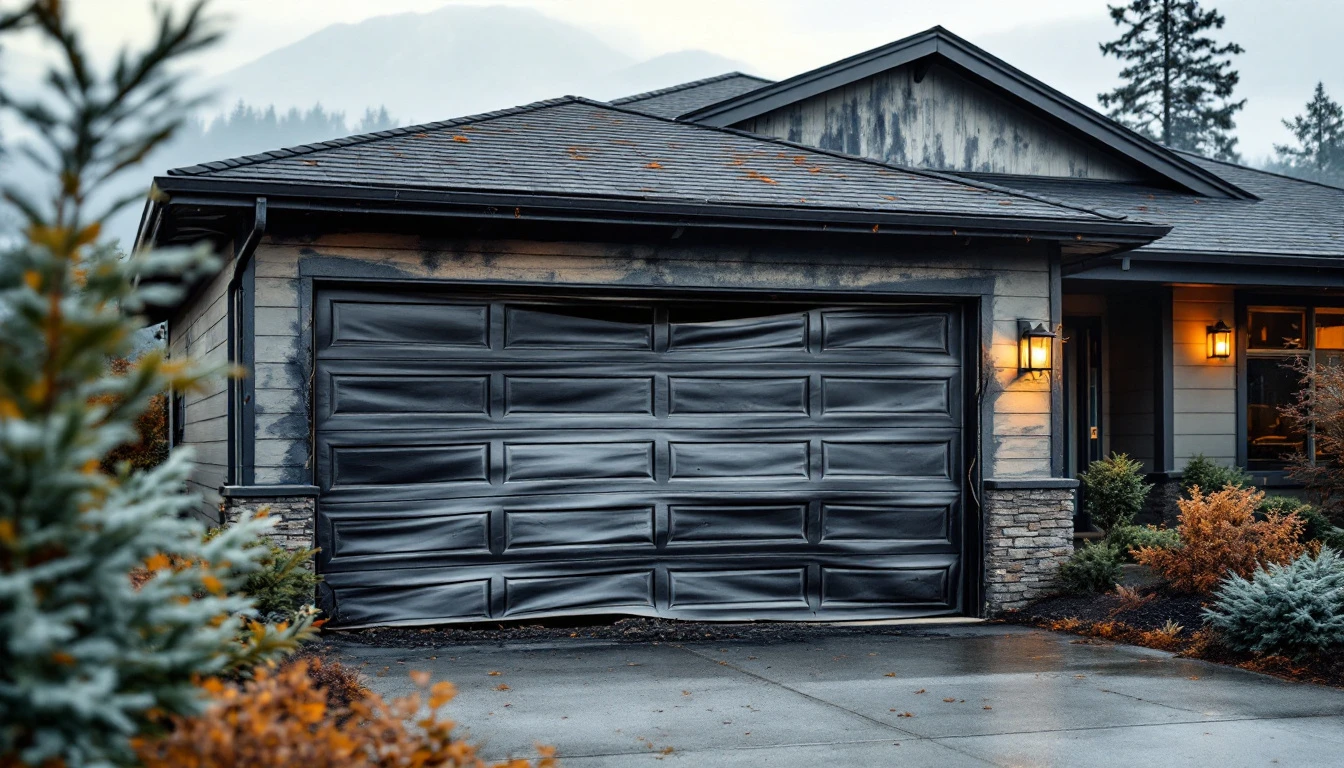
Ice and snow accumulation might seem harmless, but when it builds up on your garage door panels, it adds significant weight that your springs can’t handle. A layer of wet snow can add 20-…”30 pounds of pressure, forcing springs to work overtime and accelerating their wear. This weight also stresses door panels, potentially causing warping or dents that affect smooth operation.
When temperatures drop below freezing, frozen tracks and rollers become a major problem. Ice forms inside the tracks where moisture collects, creating friction that prevents your door from moving smoothly. Your opener motor strains against this resistance, which can burn out the motor or snap cables under the increased load.
Perhaps most damaging is Bend’s notorious freeze-thaw cycle. When daytime temperatures climb into the 40s before plummeting overnight, your garage door components expand and contract repeatedly. This constant movement cracks weather seals, weakens panel joints, and gradually degrades the structural integrity of your entire system. At Bend’s 3,600-foot elevation, these temperature swings are particularly pronounced, making preventative maintenance essential rather than optional.
Pre-Winter Maintenance: Three Essential Steps
Before Bend’s first hard freeze arrives—typically in late October or early November—investing just an hour or two in preventative maintenance can save you from emergency repair calls when temperatures plummet. These three essential tasks address the exact vulnerabilities that Central Oregon winters exploit, helping prevent garage door ice buildup problems and winter weather damage.
Modest investments in preventative maintenance completed before the first freeze can save you from expensive emergency repair calls when temperatures plummet.
Step One: Clean and Lubricate All Moving Parts
In late fall, before temperatures consistently drop below freezing, thoroughly clean your garage door tracks, rollers, and springs. Remove dirt, debris, and old lubricant that can trap moisture and freeze solid. Apply a silicone-based lubricant specifically designed for garage doors—never use WD-40 or general-purpose oils, which can gum up in cold weather. Pay special attention to the springs, as these bear the door’s weight and face the greatest stress when ice adds extra pounds to your door.
Step Two: Inspect and Replace Weatherstripping
Check every inch of weatherstripping around your door’s perimeter and along the bottom seal. Look for cracks, gaps, or compressed sections that won’t bounce back when pressed. Even small gaps invite moisture infiltration, which freezes overnight and expands, damaging seals and creating larger openings. Replace any compromised weatherstripping now, while temperatures are still moderate and materials remain flexible enough to install properly. Quality weatherstripping costs $20-40 but prevents hundreds in freeze damage.
Step Three: Test Door Balance and Operation
With your garage door in good working condition, establish a performance baseline before winter stress begins. Disconnect the opener and manually lift the door halfway—it should stay in place without rising or falling. If it moves, your springs need professional adjustment. Test the door’s full operation cycle, listening for unusual sounds and watching for jerky movement. Document how your door performs now, so you’ll immediately notice winter-related changes that signal developing problems.
These three steps take minimal time but address the specific failure points that winter garage door maintenance in Bend targets. Complete them before the first freeze, and you’ll dramatically reduce your chances of dealing with a frozen, inoperable door on a subzero morning. For detailed maintenance guidance and visual instructions, contact us today for our complete winter preparation checklist.
Track Cleaning and Lubrication
Your garage door tracks accumulate dirt, leaves, and debris throughout the year, creating friction points where ice can form and expand during winter. Start by using a stiff brush to scrub the inside of both tracks, then vacuum out all loosened material with a shop vacuum.
Here’s the important part: never use oil-based lubricants in freezing temperatures. Oil thickens when cold, actually increasing friction and attracting more debris. Instead, apply silicone-based lubricant to the tracks, rollers, and hinges—silicone maintains its consistency in sub-zero conditions.
After lubricating, manually raise and lower your door several times. It should glide smoothly without jerking or resistance. This simple 20-30 minute task prevents ice-related malfunctions throughout winter.
Weatherstripping and Seal Replacement
Bend’s dry climate accelerates weatherstripping deterioration, making rubber seals brittle and cracked faster than in humid regions. Examine the bottom seal and side weatherstripping for gaps or cracks—these openings allow moisture to enter the door frame, where it freezes and locks the door shut.
Replacing damaged seals costs just $20–$50 for basic weatherstripping materials, compared to $300–$500 for emergency service calls when protecting garage door from snow and ice failures occur. For homes facing severe winter conditions, heated cables or strip heaters offer an optional upgrade that prevents ice formation entirelyThough most Bend homeowners find quality weatherstripping sufficient protection.
Early Warning Signs of Ice
Catching ice damage early makes the difference between a quick fix and a costly spring replacement. Your garage door will tell you when winter weather is taking its toll—you just need to know what to watch for.
- Door sticks or requires extra force to open: If your door hesitates during cold mornings or needs extra muscle to lift, ice is likely binding the rollers or tracks. This strain overworks your opener motor and can snap weakened springs. Clean visible ice immediately and check if lubrication needs reapplication.
- Visible ice buildup: Ice forming at the bottom seal, along side tracks, or around frame edges signals that moisture is penetrating your weatherstripping. This buildup adds weight and creates friction points. Minor accumulation responds to DIY removal, but recurring buildup means your seals need professional replacement.
- Grinding or creaking noises: Frozen rollers and tracks produce distinct grinding sounds when operating. These noises indicate metal-on-metal contact that wears components rapidly. Apply silicone lubricant if temperatures are above 20°F; below that, call Garage Harmony for professional assessment.
- Misalignment after freeze-thaw cycles: A door that won’t close fully or sits crooked suggests track warping or spring tension changes. This requires professional adjustment to prevent panel cracking.
DIY Solutions vs. When to Call a Professional
When your garage door shows signs of winter damage, knowing what you can safely handle yourself versus when to call a professional can save you both money and potential injury. Fortunately, several garage door frozen shut solutions are perfectly manageable with simple DIY interventions.
You can safely tackle minor ice problems by de-icing your garage door frame with warm (not boiling) water and applying ice-melt products around the base of the door. These simple steps are affordable and prevent minor ice buildup from escalating. You can also clear light snow accumulation from the door’s surface and keep tracks free of debris.
Spring replacement, panel repair, and garage door opener malfunctions require professional attention. Garage door springs operate under extreme tension—attempting DIY repair without specialized tools and training can result in serious injury.
However, spring replacement, panel repair, and garage door opener malfunctions require professional attention. Garage door springs operate under extreme tension—attempting DIY repair without specialized tools and training can result in serious injury. Similarly, bent or damaged panels affect the door’s balance and structural integrity, creating safety hazards that only licensed technicians should address.
Here’s the cost reality: modest investments in preventative maintenance and minor DIY fixes generate substantial savings by preventing significant emergency repair expenses. Garage Harmony’s team understands Central Oregon’s unique winter conditions and carries winter-ready equipment specifically designed for Bend’s climate challenges. When you’re unsure whether a problem requires professional help, contact us today—we’d rather provide free guidance than see a small issue become a costly emergency.