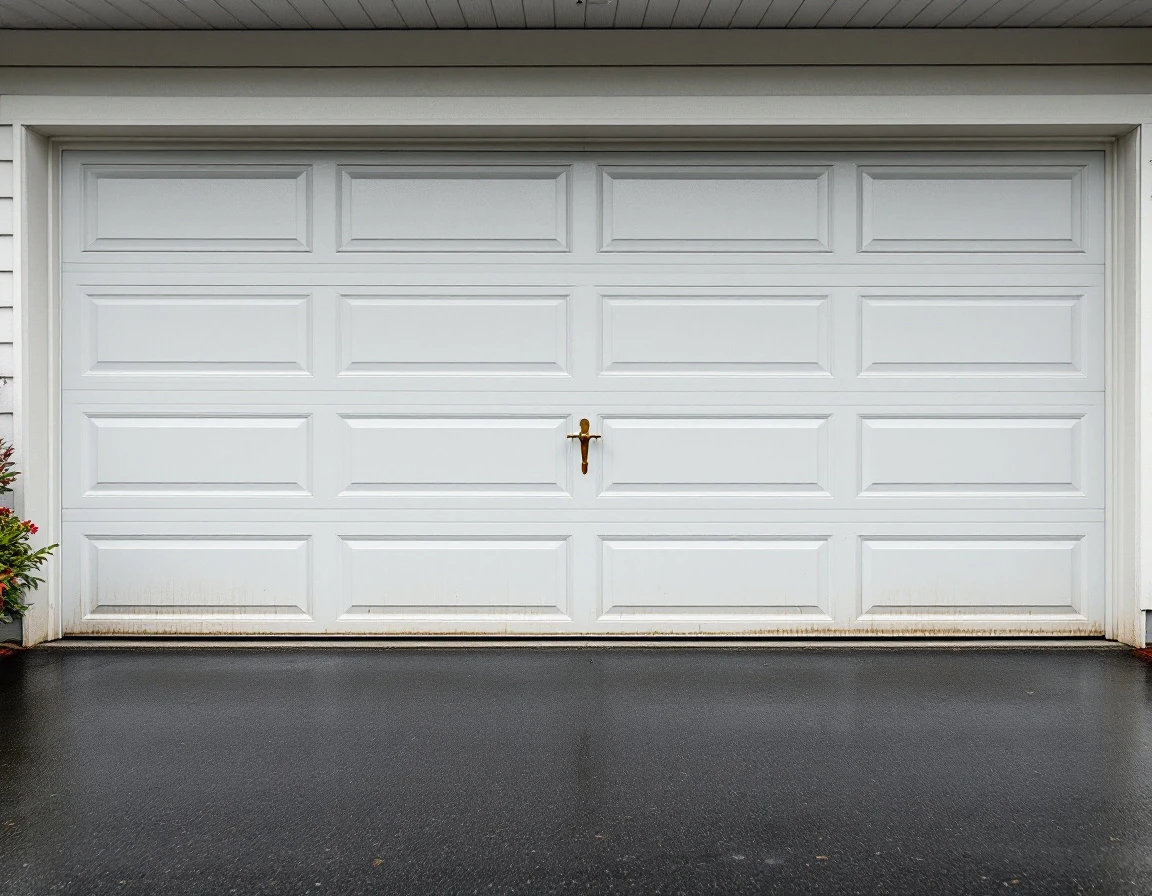
When Repair Makes Financial Sense
Repairing your garage door costs less than replacing it when the door is relatively young and damage is limited to minor issues. Understanding when to repair vs replace garage door components helps Portland homeowners avoid costly mistakes.
“Panel repairs require a professional investment that varies based on damage severity and repair complexity.”
Individual panel replacement in the Portland metro area typically runs between $150 and $400 per panel. Depending on the door’s material, style, and whether the panel is readily available from local suppliers. This cost includes both the panel itself and professional installation.
If your garage door is less than 10 years old and only one panel is damaged—perhaps from a basketball impact or a fender bender—repair makes clear financial sense. Newer doors have better panel availability, and the surrounding panels likely still have years of service life remaining. Why replace an entire door when a single panel repair restores full function at a fraction of the cost?
Structural integrity of door frame
Before any technician quotes a panel replacement, they’ll examine your door frame’s structural integrity. Why does this matter? Even a perfectly intact replacement panel won’t function properly if the frame is bent, rusted, or pulling away from the wall.
When our team inspects Portland-area garage doors, we check whether the vertical tracks remain plumb and the header is level. A compromised frame often signals that the door has sustained impact damage beyond what a simple panel swap can fix. In these cases, replacement becomes the only viable option.
Labor costs for panel replacement typically run $100–$200 in the Portland metro area, but that assumes your frame can support the new panel. A technician needs about two to three hours to remove the damaged section, align the new panel with existing tracks, and restore proper balance to the door system.
Door Age and Replacement Threshold
As your garage door ages, the math changes. Doors between 12 and 15 years old enter a declining return-on-investment zone where repair costs start competing with replacement prices. At this stage, you might spend $300 repairing a panel today, only to face spring replacement next year and weather seal issues the year after. These cumulative expenses add up quickly.
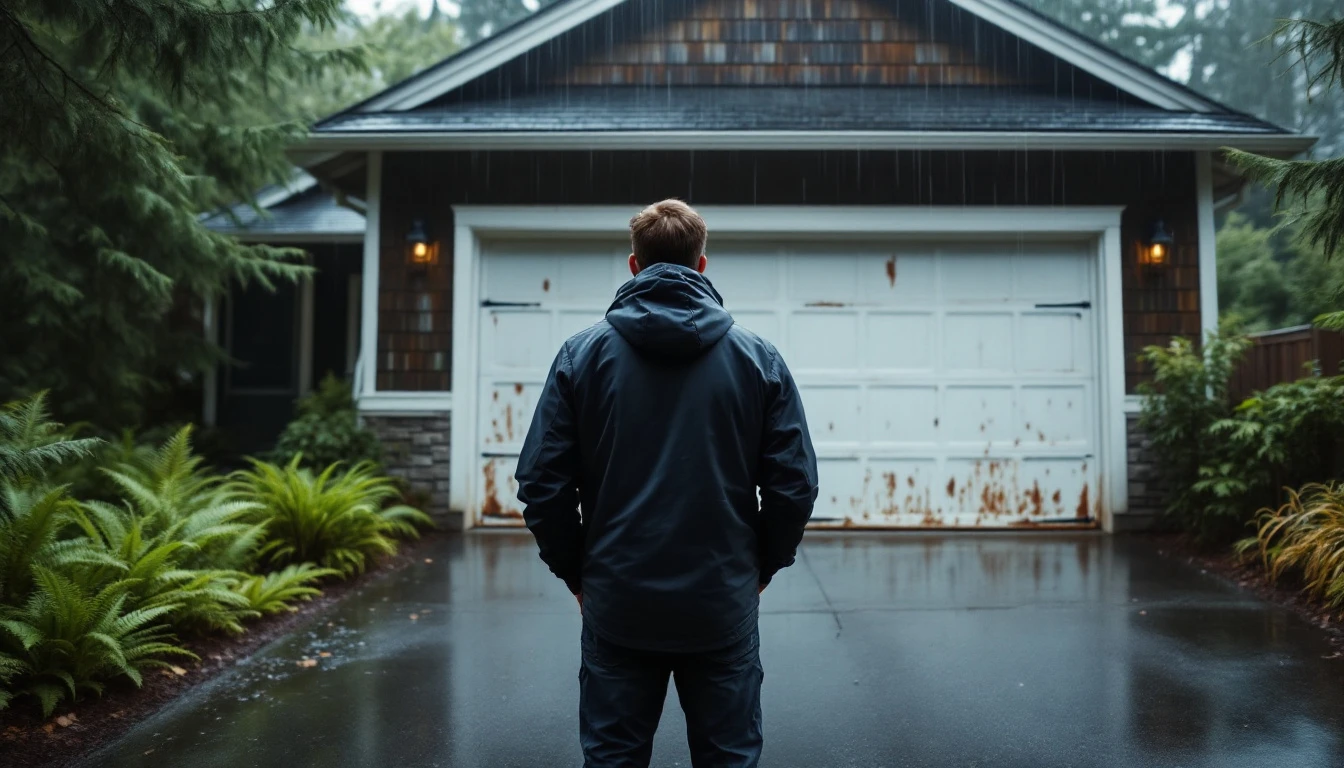
Once a door crosses the 18-year threshold, panel repairs rarely make financial sense. Older doors lose weather-sealing efficiency—a critical concern in Portland’s wet climate where rain can penetrate worn seals and damage interior garage contents. The constant moisture exposure in the Pacific Northwest accelerates rust on metal components and warps wooden door sections, leading to more frequent maintenance visits.
Here’s another factor: your garage door opener may actually outlast the door itself, or vice versa. If your 20-year-old door needs panel work but has a 7-year-old opener, you’re investing in a mismatched system. Similarly, pairing a brand-new panel with an aging opener creates uneven longevity expectations.
New doors deliver measurable energy efficiency improvements through modern insulation and tight weather seals. In Portland’s climate, where heating costs matter during cool, damp winters, a well-insulated replacement door reduces heat loss through your garage.
This energy savings continues year after year, offsetting the higher upfront investment compared to temporary panel repairs.
Panel Damage Severity Assessment
Not all panel damage creates the same replacement urgency. Minor dents, superficial scratches, and small cosmetic imperfections are affordable to repair in Portland and keep your door functional for years. These surface-level issues respond well to garage door panel repair Portland when the door is otherwise sound.
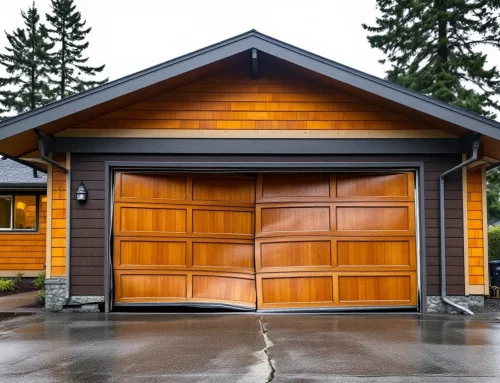
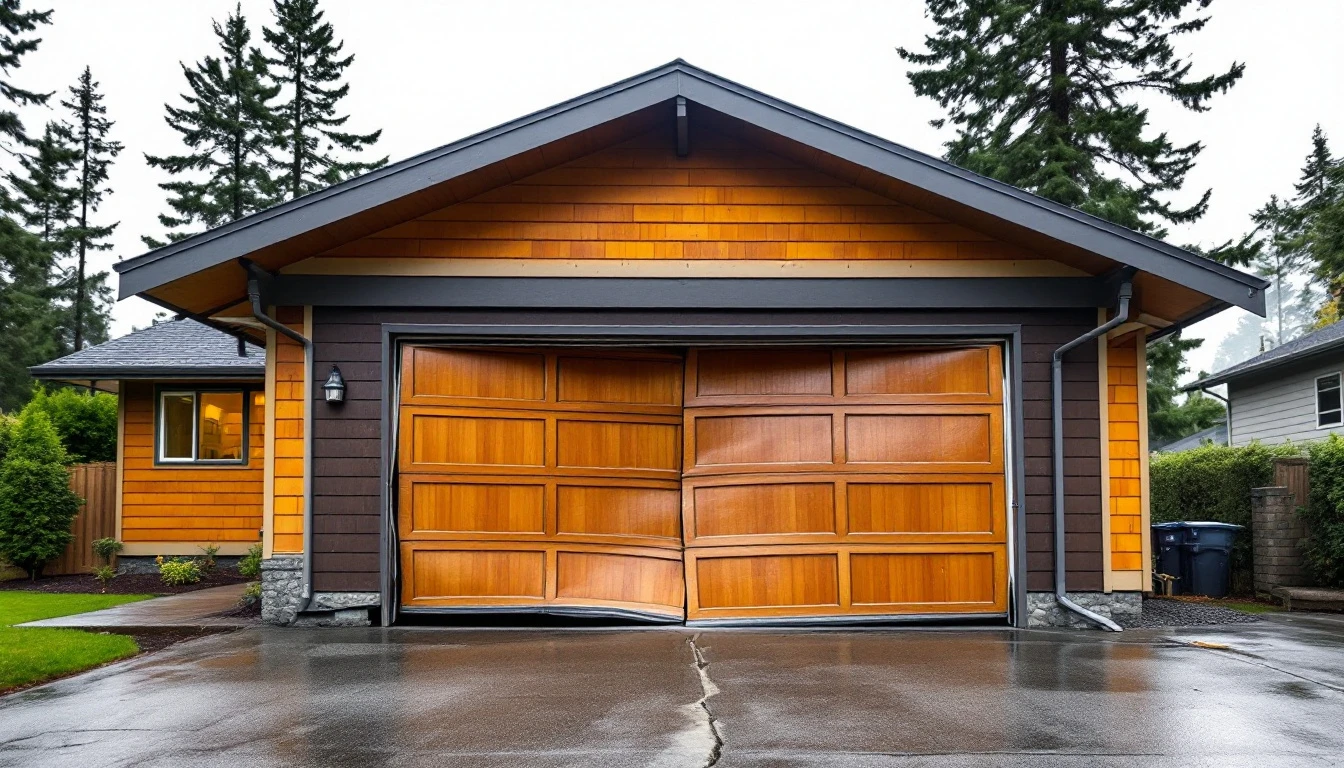
Structural damage tells a different story. When you notice cracks radiating from panel corners, warping that prevents proper closure, or buckling across multiple sections, you’re seeing signs that the door’s integrity has declined. In the Pacific Northwest, moisture absorption in wooden panels accelerates warping, while freeze-thaw cycles stress metal panels until they crack. These conditions don’t affect just one panel—they indicate systemic degradation.
Here’s the practical test: if three or more panels show damage, or if you’ve already replaced panels twice in the past year, the door has crossed into replacement territory. Sequential repairs on a failing door cost more than a new installation. When springs break or the structural frame shows distortion alongside panel damage, you’re looking at a complete system failure that makes replacement the only cost-effective choice.
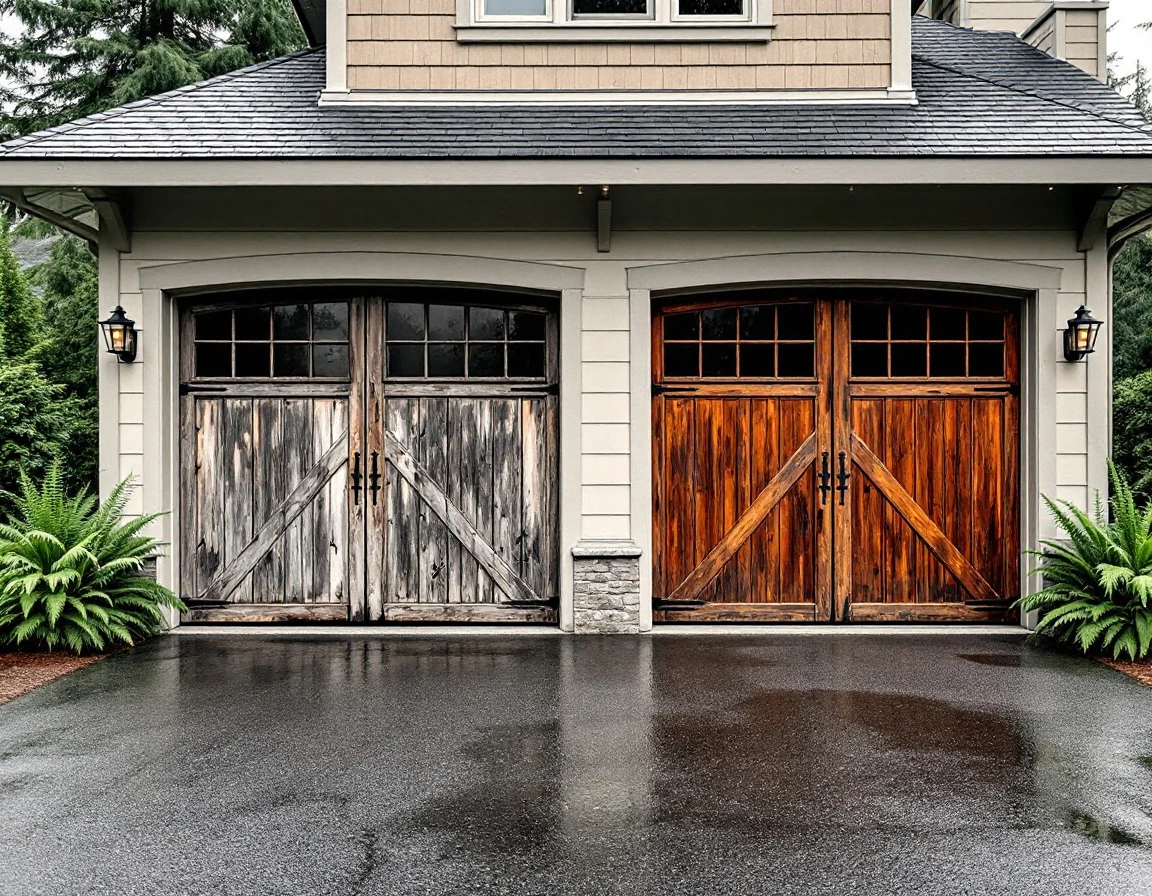
Garage Door Repair or Replacement Cost Comparison
Understanding the crossover point between repair and replacement starts with concrete numbers from the Portland metro market. A single panel repair typically runs $250 to $500 installed. Depending on panel size and material availability. When you’re facing damage to two panels, you’re looking at $500 to $1,000. Add a third panel, and repair costs climb to $750 to $1,500.
Compare that to a new standard steel garage door installation, which runs $1,200 to $2,000 in the Portland area. An insulated replacement door—which provides better energy performance for Pacific Northwest winters—costs $1,800 to $3,200 installed. These figures include labor, which runs $100 to $200 per panel replacement in our region.
The math becomes clear: once you’re repairing three or four panels, you’ve reached or exceeded the cost of a new door. At that point, you’re paying replacement-level money for a patched-together door that’s still aging out.
The new garage door vs repair decision becomes obvious when replacement delivers a full warranty, modern energy efficiency, and no risk of additional panel failures next season.
For Portland homeowners, this cost grid reveals the financial tipping point. Single-panel repairs make sense on newer doors. But when damage spreads to multiple panels—especially on doors approaching 15 years old—replacement delivers better long-term value.
Energy Efficiency and Long-Term Savings
How much does that old garage door cost you every winter? In Portland’s heating-dominant climate, older garage doors lose their insulating properties and allow constant thermal transfer, forcing your HVAC system to work harder during our cool, wet months. Non-insulated doors and aging insulated doors with degraded seals create a direct pathway for heat loss into your garage space.
New insulated garage doors rated R-12 to R-16 cut garage heat loss measurably compared to older non-insulated or deteriorated doors. For Portland-area homes, this translates to $10–$25 per month in heating and cooling savings—real money that adds up over the door’s lifespan. When you calculate the numbers over a 15-year payback window, replacement becomes competitive with ongoing repair cycles.
Should I repair or replace my garage door? If your door is 12+ years old, the long-term efficiency ROI often justifies replacement over repeated repairs, especially if your current door lacks insulation. The Pacific Northwest climate amplifies insulation returns because we heat homes seven to eight months annually. Energy efficiency transforms replacement from an expense into a long-term investment that pays dividends through lower utility bills and improved home comfort.
Decision Framework: Repair or Replace
Portland homeowners can apply a simple decision framework using three inputs: door age, damage severity, and cumulative repair costs. Start by assessing your door’s age—this single factor often determines the most financially sound path forward.
- Under 10 years old with single-panel damage? Repair makes sense. A $250–$500 panel replacement protects your investment in a door that should deliver another decade of service.
- Between 12 and 18 years old with multiple panels damaged or structural issues? Replacement usually wins. Once you’re repairing three or more panels, you’re approaching new door pricing ($1,200–$3,200) without gaining the energy efficiency benefits that save $10–$25 monthly in Portland’s wet climate.
- Over 18 years old? Replace in nearly every case, unless damage is purely cosmetic. At this age, even successful repairs buy limited time before the next failure, and older doors lack modern insulation that cuts heating costs.
Ready to confirm your door’s actual condition? Contact us today to schedule a professional assessment. Our team will inspect your door’s structural integrity, measure panel damage, and provide binding estimates for both repair and replacement options—giving you the concrete numbers you need to choose the right financial path for your home.