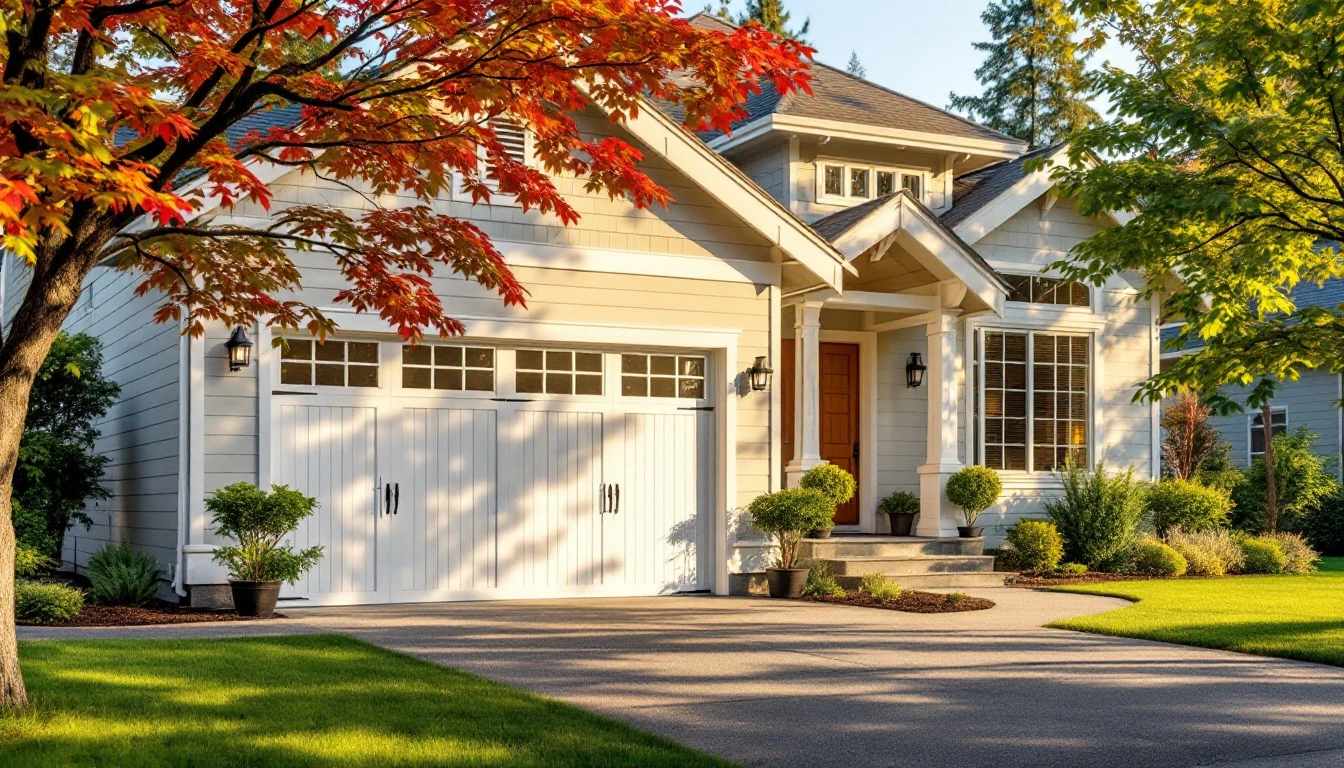
Why Portland Homes Lose Energy Through Garage Doors
If your home has an attached garage, there’s a good chance it’s your largest uninsulated thermal boundary. While most Portland homeowners invest in insulated walls, windows, and attics, the garage door often gets overlooked—even though it can span 150-200 square feet of your home’s exterior. Upgrading to insulated garage doors in Portland is one of the most effective ways to address this energy loss and reduce your heating and cooling costs.
Portland’s climate creates a double challenge for energy costs. Our cool, wet winters (typically 35-48°F) demand consistent heating, while summer heat waves occasionally push temperatures above 100°F, triggering air conditioning use. Single-layer garage doors do nothing to buffer these temperature swings, allowing cold air to seep into attached living spaces during winter and hot air to infiltrate during summer.
The result? Your HVAC system works overtime to compensate for energy loss through the garage. Every time conditioned air escapes through an uninsulated door, your furnace or air conditioner kicks on again, driving up utility bills. You’ll notice the symptoms immediately: drafts in rooms adjacent to the garage, temperature fluctuations, and increased noise from street traffic.
When your heating system runs more frequently to counteract garage-related heat loss, those extra cycles add up significantly on your monthly energy bills throughout Portland’s extended heating season.
Energy Savings Breakdown: How Much You’ll Save Annually in Portland
Let’s talk numbers. Upgrading to an insulated garage door typically reduces heating and cooling losses by annually for Portland metro homes with attached garages. For a typical household spending on heating and cooling, that translates to -250 in annual savings—enough to notice on your utility bills without transforming your entire budget.
Portland’s mild climate means your savings won’t match what homeowners in Minneapolis or Phoenix might see, but consistency matters. You’ll save money every single month, with the most noticeable reductions during winter when your furnace works overtime. Expect -30 monthly savings from November through February, tapering to -12 per month during summer when you’re running air conditioning less frequently than hotter regions.
How quickly does this investment pay for itself? A quality insulated garage door typically costs between and installed. Divide that by your annual savings, and you’re looking at a 5-7 year payback period. If you choose a door with a higher R-value (R-16 or R-18 versus R-8), you’ll see faster returns—particularly if your home’s HVAC system runs frequently or if Portland’s utility rates continue their upward trend.
These calculations use Portland metro’s typical utility rates for electricity and natural gas. Your actual savings will vary based on your current door’s condition, your garage’s size, and how you use the space. A heated workshop will show more dramatic improvements than a storage-only garage, but every insulated door delivers measurable benefits year after year.
Understanding R-Value: Choosing the Right Insulation for Portland Winters
When evaluating garage door insulation benefits, you’ll encounter R-value—a measure of thermal resistance. Higher R-values mean better insulation performance and greater resistance to heat transfer through your door. For Portland’s climate, with winter temperatures typically hovering between 35-48°F and occasional dips below freezing during ice storms, choosing the right R-value determines how effectively your garage maintains comfortable temperatures.
What R-value does your Portland garage actually need?
- Entry-level insulated doors typically offer R-9, which provides basic thermal resistance and represents a significant upgrade over uninsulated doors
- For best performance in our wet, cool winters, R-12 to R-18 delivers the best results
- These higher R-values create a more effective thermal barrier during those long stretches of damp, cold weather
The two primary insulation materials—polyurethane and polystyrene—offer different performance profiles. Polyurethane foam delivers higher R-values (typically R-16 to R-18) by completely filling the door panels, but comes at a premium price. Polystyrene panels provide moderate R-values (R-9 to R-12) at a more accessible price point, offering solid performance for most Portland homes.
R-12 to R-16 offers the best cost-benefit balance for Portland metro homeowners. This range provides excellent thermal performance during our winters without over-specifying—and overpaying—for insulation capacity you won’t fully use.
Remember, higher R-values can significantly reduce energy bills, but there’s a point of diminishing returns. For most attached garages in our moderate climate, the mid-range sweet spot delivers best value.
Additional Benefits Beyond Energy Savings: Noise Reduction & Comfort
While energy savings drive the financial case for insulated garage doors, Portland homeowners gain valuable secondary benefits that enhance daily living. Insulated doors dampen operating noise by 10-15 decibels compared to non-insulated models—a significant difference when your garage sits below a bedroom or in close proximity to neighbors. That 6 a.m. departure for your commute or late-night arrival becomes far less disruptive to family members and nearby homes.
Beyond noise reduction, benefits of insulated garage doors extend to measurable comfort improvements. Reduced drafts mean your garage maintains more stable temperatures year-round, which matters when you’re using the space as a workshop or storing temperature-sensitive items. Adjacent rooms—often mudrooms, laundry areas, or bonus spaces above the garage—stay warmer in winter and cooler during Portland’s summer heat waves.
These comfort upgrades also protect your investment in tools, seasonal equipment, and stored belongings. Temperature fluctuations and moisture infiltration can damage everything from power tools to holiday decorations. Insulated garage doors also provide improved durability and longevity, which means fewer repairs and replacements over time. While harder to quantify than energy savings, improved livability and equipment protection add real value that reinforces why the 5-7 year ROI calculation tells only part of the story.
Best Insulated Garage Doors for Portland Metro: Brands & Price Comparison
When shopping for the best insulated garage doors Portland metro has to offer, you’ll find several reputable brands offering excellent options:
Each brand dominates the local market with models ranging from budget-friendly to premium performance, offering solid insulation options backed by local dealer networks throughout Multnomah, Washington, and Clackamas counties.
For a single-car garage door (9×7 feet), expect to pay installed for an R-12 to R-16 insulated door. Double-car doors (16×7 feet) typically range from installed, depending on the R-value and design features you choose. These prices reflect Portland metro market rates and include professional installation by local experts.
Here’s what makes mid-range doors such smart investments: models in the range deliver 80-many premium door performance at only 60-many the cost. You’ll get solid polyurethane or polystyrene insulation, weather sealing, and durable construction without paying for luxury finishes you may not need. This sweet spot maximizes your energy savings while keeping upfront costs reasonable.
Working with local Portland-area installers provides distinct advantages beyond competitive pricing. They understand our region’s wet winters, occasional ice storms, and temperature swings. They stock popular models for faster installation and provide warranty service without long waits. When you’re ready to upgrade, local expertise ensures your insulated door performs optimally in our Pacific Northwest climate.
Is an Insulated Garage Door Right for Your Portland Home? Next Steps
Not every Portland home needs an insulated garage door. Attached garages see the most dramatic benefits because they share walls with your heated living space. Detached garages in neighborhoods like Sellwood or Alberta Arts won’t affect your home’s energy bills, making insulation a poor investment from a utility-savings perspective.
Homes already experiencing high heating or cooling costs are ideal candidates. If your winter NW Natural bills are substantial or you run your air conditioning frequently during Portland’s summer heat waves, you’ll see faster ROI. A professional energy audit can identify whether your garage door represents a significant thermal weak point or if other upgrades should take priority.
Ready to get specific numbers for your situation? Local Portland metro installers offer free consultations that include personalized savings projections based on your home’s age, garage configuration, and current utility costs. Installation typically takes just one to two days with minimal disruption to your routine.
Schedule a consultation today to receive a concrete ROI estimate tailored to your specific home. Our team can assess your current garage door, recommend the right R-value for your needs, and provide transparent pricing that helps you make an informed decision.