1920s Garage Moisture Crisis
Longview’s legacy as a planned lumber town creates a unique problem for homeowners with historic garages needing historic garage door repair Longview services. Built in the 1920s to house vehicles for Long-Bell Lumber Company workers. These structures were designed for quick construction and functionality—not weather protection. The region’s 40 to 50 inches of annual rainfall didn’t factor heavily into design decisions when lumber was cheap and replacement was expected.
Today, that persistent Pacific Northwest dampness targets every vulnerable component in these single-car detached garages. The primary moisture vulnerabilities in historic garages include:
- Wood rot that spreads through untreated door frames and sills where moisture pools
- Rust acceleration on original hinges, springs, and tracks that were never coated for wet climates
- Door seals that once kept out dust now harbor mold in their cracked rubber
The construction methods tell the story: original garages lack vapor barriers, proper drainage, or weather-resistant materials. They were built during an era when replacing rotted lumber cost pennies. Modern homeowners face a different reality—structural repairs run into thousands of dollars once moisture penetration reaches framing members.
The spring maintenance window from April through June becomes critical timing.
This period, after winter’s heaviest rainfall but before summer humidity sets in, offers the best conditions for protective treatments. Addressing moisture vulnerabilities now prevents the exponential damage that occurs once rot or rust establishes itself in these historic structures.
Spring Weatherstripping Assessment
As Longview emerges from another wet winter, spring offers the perfect window to inspect your garage door weatherstripping before summer projects begin. Walk around your garage door perimeter and look for telltale signs of failure:
- Cracks in the rubber seals
- Hardened or compressed bottom strips
- Visible gaps where daylight or moisture can penetrate
Run your hand along the sides and top of the closed door—if you feel air movement or see water stains on the interior frame, your weatherstripping has failed.
Original felt or foam weatherstripping in 1920s garages deteriorates rapidly in our humid climate. These materials absorb moisture, compress permanently, and break down within a few years. A weatherstripping upgrade for historic homes in Longview with modern rubber or silicone seals resists the constant dampness that plagues our region, maintaining their flexibility and seal integrity through wet winters and mild summers.
Replacing weatherstripping yourself requires basic materials and a few hours on a Saturday morning. You’ll need adhesive-backed seals for the sides and top, plus a bottom seal that slides into the door’s retainer channel. This hands-on project creates your first line of defense against the moisture that causes wood rot in door frames and rust on adjacent metal hardware.
Proper sealing also prevents mold growth inside door frames—a common problem we see in Longview garages where trapped moisture creates ideal conditions for decay. By stopping water intrusion at the threshold, you protect the structural components that would cost thousands to replace.
DIY vs Professional Door Replacement
After addressing weatherstripping, the next decision for Longview garage owners is whether to tackle the work themselves or bring in professionals. The answer depends on the scope of your project and the condition of your 1920s garage structure.
Weatherstripping replacement is solidly in DIY territory for most homeowners. With basic tools and a free afternoon, you can complete the installation for $150-300 in materials. The process involves removing old seals, cleaning surfaces, and applying new rubber or vinyl strips—no special skills required. If you prefer professional installation, expect to add $200-400 in labor costs. Though the materials and techniques remain the same.
Full door replacement is a different story entirely. This is professional-only work, and for good reason. Your 1920s garage frame needs structural assessment before any new door installation. The original lumber may have shifted, rotted, or settled over the decades, requiring reinforcement or repair. Professional installation costs $1,200-2,500 for moisture-resistant composite or steel doors that eliminate wood rot risk permanently. These modern materials stand up to Longview’s relentless rainfall without the decay cycle that plagues original wood doors.
Historic wood doors don’t have to be replaced immediately if you’re not ready for that investment. Professional restoration with penetrating sealant treatments runs $400-800 and can extend door life for several years. This interim approach buys time while still protecting against moisture intrusion that accelerates rust on hardware and rot in surrounding framing. Whether you choose DIY weatherstripping now or professional replacement later, both paths prevent the cascading damage that defines Longview’s moisture problem.
Rust Prevention & Spring Maintenance
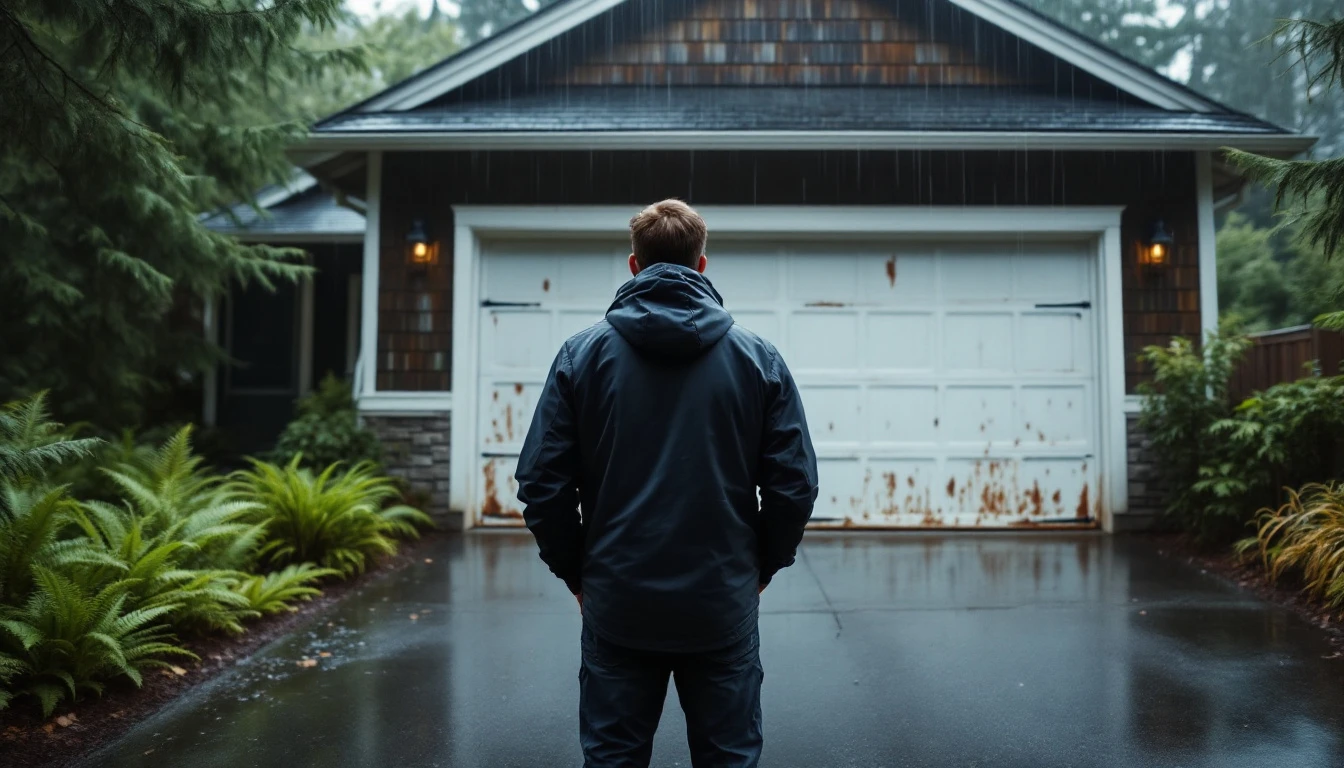
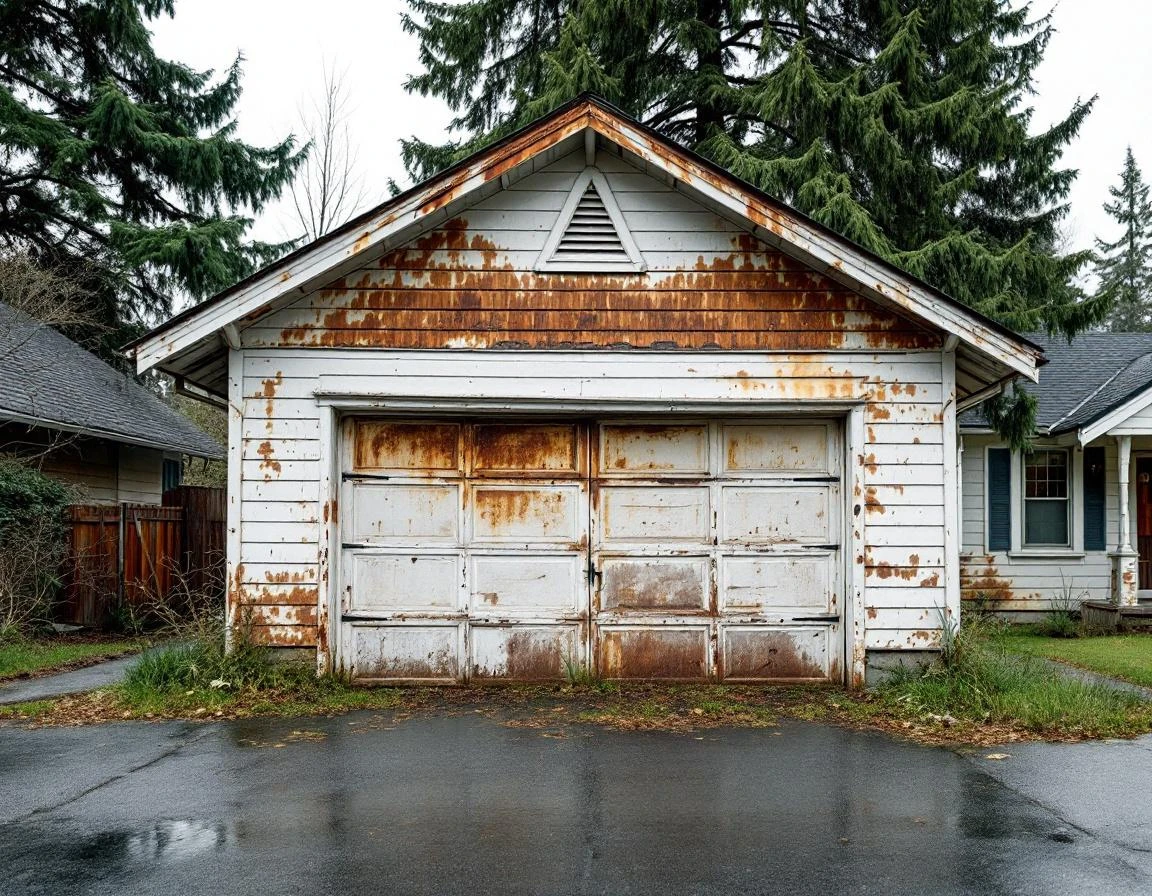
Visible rust on your garage door hinges or springs isn’t just cosmetic—it’s a warning sign that moisture has already penetrated protective coatings. In Longview’s wet climate, where winter rain transitions into spring showers, metal components face constant exposure. April through June offers the ideal window for 1920s garage rust prevention Longview WA before summer projects begin.
Rust prevention requires multiple protective steps:
- Apply rust-inhibiting primer to any bare metal you discover during inspection
- Follow with an anti-corrosion topcoat on exposed hinges, springs, and mounting brackets
- Check for peeling paint around hardware—these spots create entry points where rust accelerates rapidly
- Clean your tracks and rollers monthly during wet season months to prevent corrosion buildup
This simple maintenance takes fifteen minutes monthly but protects expensive spring assemblies from premature failure.
Water pooling at your door’s base accelerates rust damage from the ground up. Install drain holes or channels in the door frame threshold to redirect standing water away from metal components. This small modification prevents the moisture contact that transforms surface oxidation into structural damage requiring spring replacement or opener repairs—costs that mount quickly when rust spreads unchecked.
Wood Rot Warning Signs
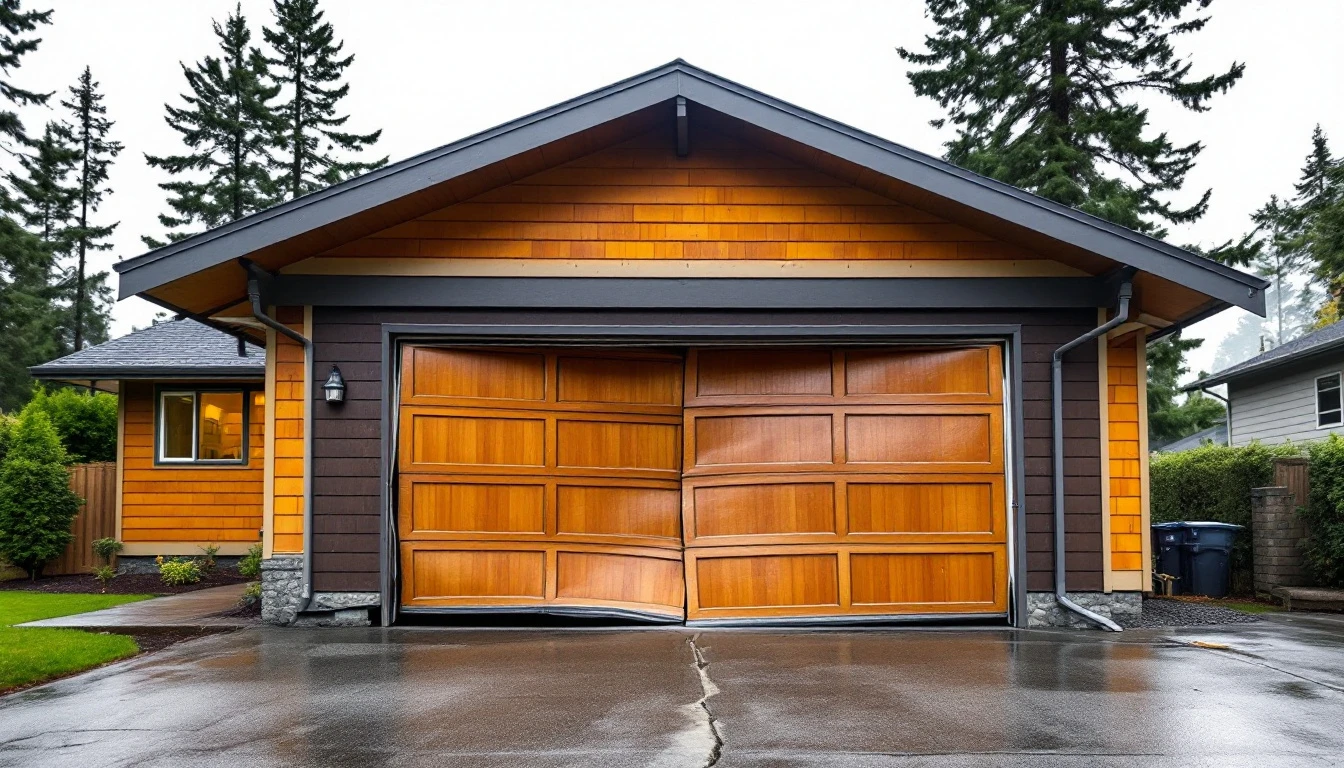
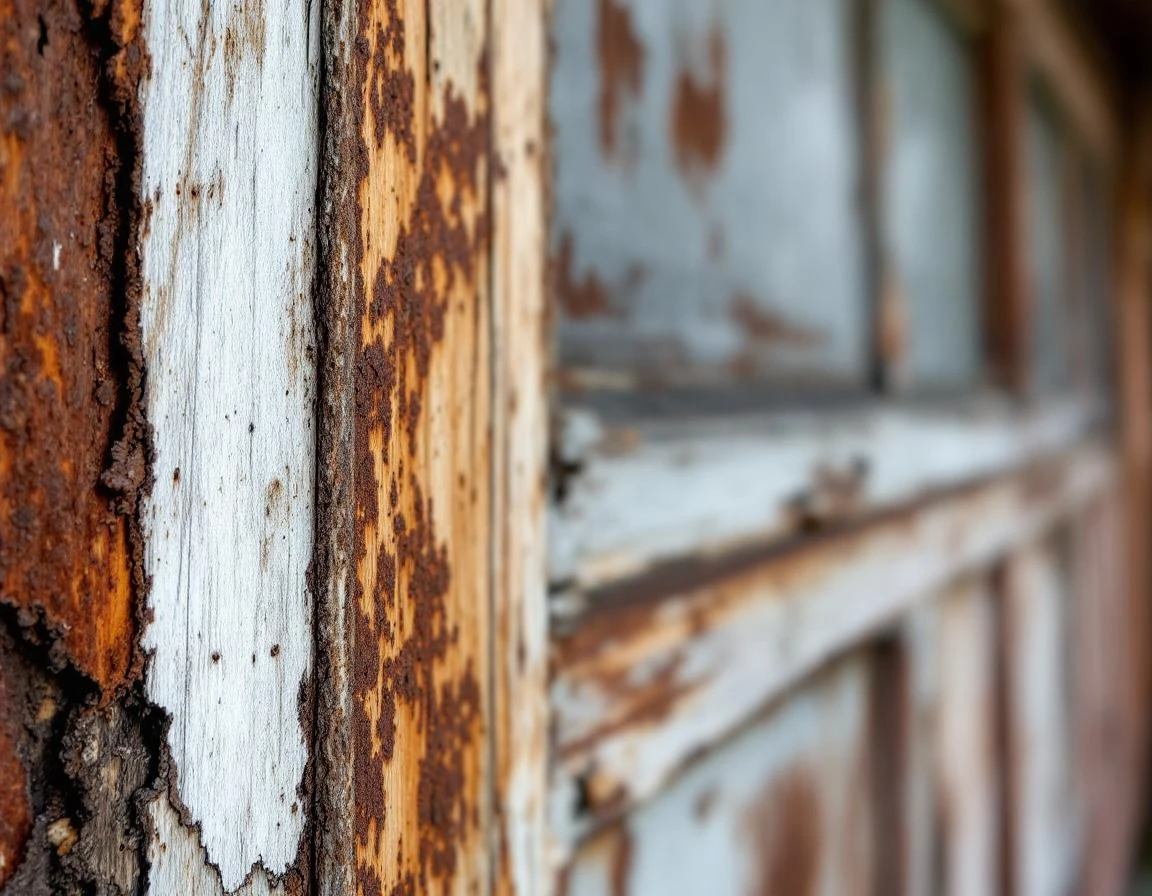
Press your finger into the wood around your garage door frame, especially near the ground. If the wood feels soft or spongy rather than firm, you’ve found active rot that demands immediate attention. This moisture damage typically starts at the sill where rain splashes collect, then creeps up the sides of the frame. What begins as a small soft spot can spread through entire sections if left unchecked.
Look for visible mold or mildew on your interior door panels—black, green, or white spots indicate moisture trapped inside the sealed frame. Combine this with peeling paint and swollen wood grain on the exterior, and you’re seeing moisture penetrating deep into the structure. In Longview’s wet climate, these warning signs progress quickly from surface issues to structural failures.
The financial stakes are clear: surface rot caught early costs $200-400 for sealant treatment, while wood rot garage repair requiring frame replacement runs $1,500 or more. Spring inspection after winter’s 40-50 inches of rainfall isn’t optional for 1920s garages—it’s protection against thousands in repair costs.
Professional assessment during spring identifies rot before it spreads.
Moisture-Resistant Materials Guide
Upgrading from 1920s materials to modern moisture-resistant alternatives eliminates the core vulnerabilities that plague Longview’s historic garages. Modern moisture-resistant options include:
- Composite and steel doors that solve wood rot permanently—composite materials resist water absorption entirely, while steel doors with proper coatings withstand decades of Pacific Northwest rain
- Aluminum-frame options that add corrosion resistance for moisture resistant garage doors Kelso and nearby areas in flood-prone zones near the Cowlitz River
- EPDM rubber and silicone seals that maintain flexibility through wet winters and dry summers, conforming to door gaps year-round
- Galvanized or powder-coated hinges, tracks, and rollers lasting 20+ years in wet climates, while standard hardware corrodes within 5-7 years
Original felt and foam weatherstripping stiffens when exposed to moisture cycles, creating gaps where water infiltrates. Modern synthetic materials adapt to temperature swings without degrading.
Hardware upgrades provide protection measured in decades. The coating acts as a permanent barrier between metal components and humidity—preventing the surface rust that spreads to structural damage.
Budget for full door replacement with moisture-resistant materials as a core investment. These upgrades enhance standard options, and the investment prevents wood replacement and structural repairs that compound costs over time. In Longview’s climate, moisture-resistant materials aren’t premium features—they’re maintenance prevention that pays dividends through decades of protection.
Historic Garage Door Repair Longview: April-June Action Plan
Your spring protection cycle follows a three-month timeline:
- April—Inspection Month: Walk through your garage when rain is falling to expose every weatherstripping gap and water intrusion point. Check for soft spots in door frames, examine hinges and springs for rust, and clean debris from tracks. Document what you find with photos so you can track changes year over year.
- May—Repair Window: Temperatures in the 50s make DIY weatherstripping replacement comfortable, and materials bond better than they do in freezing winter conditions or humid summer heat. Replace worn weatherstripping yourself, or schedule a professional assessment if you discovered rot or rust during April’s inspection. Catching structural issues now prevents emergency repairs that cost thousands when doors fail completely.
- June—Completion Phase: Finalize any door replacement projects before summer humidity accelerates wood deterioration. Apply rust-prevention coatings to hardware while conditions are dry. This timing matters: completing upgrades before July means new materials cure properly rather than trapping moisture during installation.
Set an annual reminder for next April.
This three-month cycle transforms reactive crisis management into proactive maintenance, protecting your 1920s garage from the moisture damage that destroys untreated structures in Longview’s wet climate.