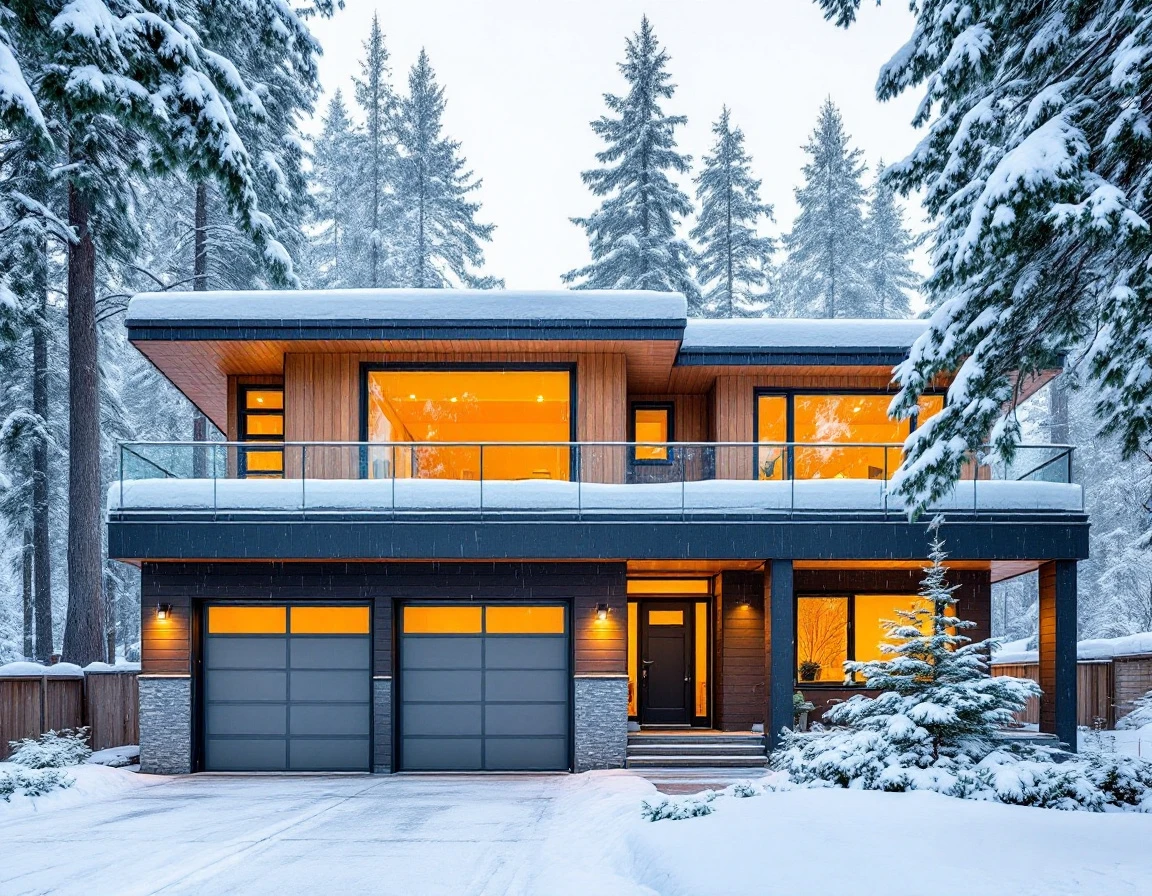
High-Elevation Winter Demands in Sandy
Sandy’s position at 1,000 feet elevation creates garage door challenges that don’t exist in Portland’s metro core. Proper garage door insulation in Sandy Oregon becomes essential when the Mt. Hood corridor experiences winter conditions more severe than communities just 20 miles west—heavier snowfall, longer freeze periods, and ice accumulation that tests every structural component of your garage door system.
What happens when a generic garage door faces Sandy’s winter? Uninsulated doors turn attached garages into cold zones that pull heat directly from your home. Every time that metal door chills to outdoor temperatures, your heating system works overtime to compensate. The thermal bridge created by a standard steel door without insulation allows cold to penetrate your home’s envelope, creating comfort problems and driving up utility bills throughout the heating season.
But energy loss isn’t the only concern. Clackamas County’s freeze-thaw cycles—where daytime melting refreezes at night—create ice dams, warped panels, and mechanical failures in doors not rated for snow loads common to foothill elevations. When snow accumulates on a door without proper structural support, springs strain, tracks bend, and opener motors burn out from the added weight. In Sandy and Estacada, these aren’t rare failures—they’re predictable outcomes of mismatched equipment.
Understanding R-Value Ratings for Garage Door Thermal Protection
R-value measures a material’s thermal resistance, or how effectively it prevents heat from passing through. For garage doors, this rating directly translates to how much warmth your door retains during Sandy’s cold winter months. An uninsulated door acts like an open window, allowing heated air to escape and frigid air to seep in, forcing your HVAC system to work harder to maintain comfortable temperatures in attached spaces.
At Sandy’s 1,000-foot elevation, winter temperatures regularly drop into the 20s and 30s, with prolonged cold snaps that test inadequate insulation. For year-round efficiency, Sandy properties should install doors rated between R-13 and R-18. R-13 represents the baseline for basic winter protection, suitable for detached garages or unheated spaces. R-15 offers balanced performance for most attached garages, while R-18 delivers premium insulation for properties prioritizing energy savings.
The insulation core material matters as much as the R-value number.
- Polyurethane foam fills every cavity within the door panel, expanding to create a smooth thermal barrier without gaps
- Polystyrene boards provide solid insulation at a lower price point but may leave small air spaces
- Both options outperform older fiberglass batts, which compress over time and lose effectiveness
Regional Pricing and ROI Analysis
Clackamas County installers typically charge $1,200-$1,500 for R-13 doors, $1,400-$1,700 for R-15 models, and $1,600-$2,000 for R-18 options on standard 16×7 installations. An attached garage with an R-18 door can prevent 30-40% of the heat loss compared to an uninsulated door.
Most Sandy homeowners recover the installation premium within three to five heating seasons through reduced propane or electric bills, with the payback accelerating during harsh winters when heating demand peaks.
Snow Load Capacity Specifications
Snow load capacity measures how much weight your garage door can withstand, rated in pounds per square foot (psf) at ground level. This isn’t an optional feature for Sandy properties—it’s a structural necessity. The Mt. Hood corridor regularly sees winter accumulation exceeding 100 inches at elevations above 1,000 feet, and that pristine snowpack translates to crushing weight on horizontal surfaces.
How much weight are we talking about? Fresh powder weighs roughly 7 pounds per cubic foot, while settled snow packs down to 15-20 pounds per cubic foot. A typical two-car garage door measuring 16 feet wide holds approximately 30 cubic feet of snow per foot of accumulation depth. After a heavy Mt. Hood storm deposits 24 inches of snow, your door bears 400-600 pounds of pressure.
Most residential garage doors handle 25-35 psf, adequate for valley properties but undersized for Sandy’s elevation. Commercial-grade doors rated at 50+ psf use thicker steel panels and structural reinforcement across horizontal struts. Properties at or above 1,000 feet should specify minimum 40 psf capacity as a baseline. South-facing installations and areas with roof-drift exposure require 50+ psf ratings for snow load capacity garage doors to prevent panel buckling during sustained winter weather.
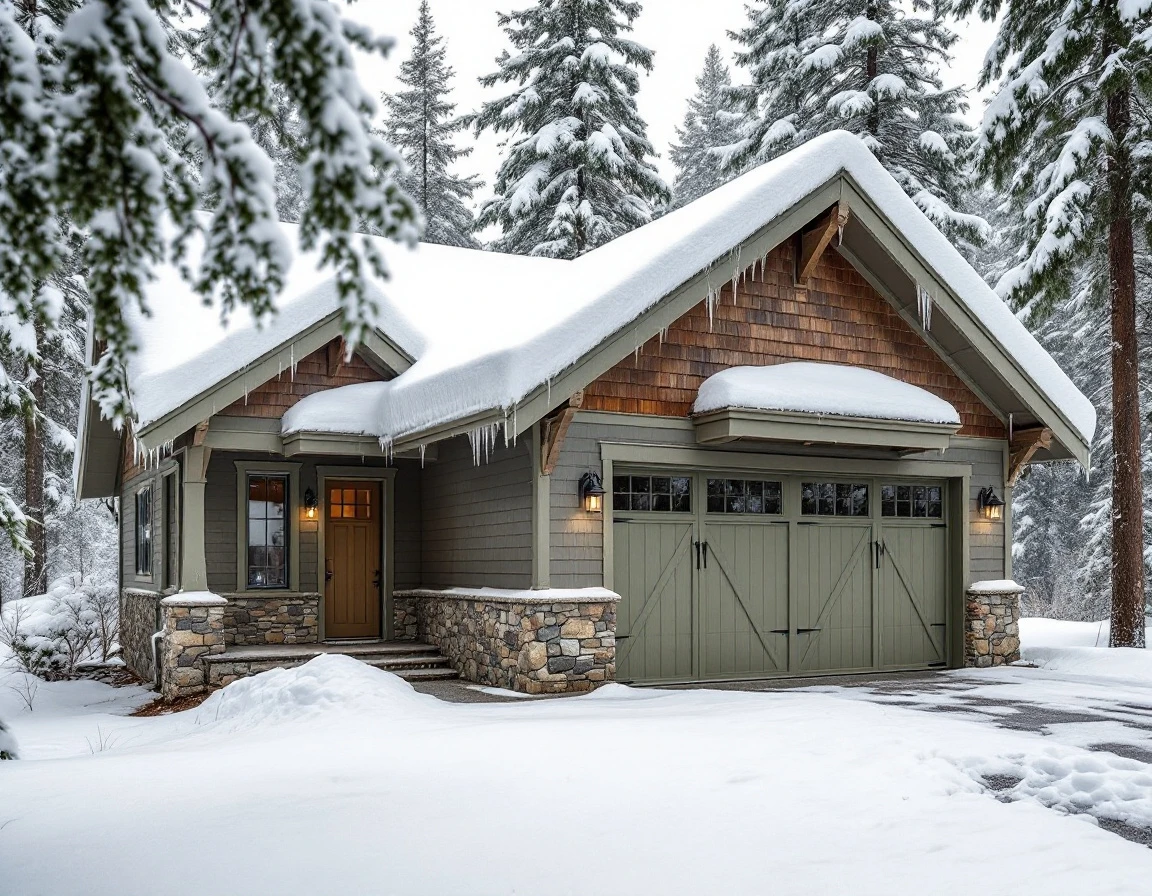
Retrofit vs. Full Replacement: Financial Decision
Should you retrofit your existing garage door with insulation blankets or invest in complete replacement? For Sandy and Clackamas County property owners facing winter 2026, the answer depends on your door’s current condition and your elevation’s demands.
Retrofit insulation kits offer an affordable option for budget-conscious homeowners looking to improve door performance. These blanket-style kits attach to the interior of existing door panels, adding thermal resistance without replacing hardware. However, retrofit insulation compresses over time, reducing its R-value effectiveness after several heating seasons. The blankets also add weight to existing springs and tracks not designed for the extra load.
Full replacement with factory-insulated doors offers superior winter protection for your Sandy home, with options matched to your specific needs and performance requirements. While the upfront investment requires careful consideration, insulated garage doors deliver better long-term performance than standard alternatives. Factory insulation maintains consistent R-value over time, and the entire system—springs, tracks, weather seals—is engineered as an integrated unit that handles your door’s total weight and maintain reliable operation.
When does retrofit make sense? If your door is less than five years old, structurally sound, and operates smoothly, adding insulation can bridge you through winter 2026. But if you’re dealing with corroded panels, weakened springs, or inadequate snow load capacity for Mt. Hood corridor conditions, replacement becomes mandatory rather than optional.
The energy savings from reduced heat loss, combined with improved durability and lower maintenance burden, typically deliver payback within five to seven years for Sandy properties at 1,000-foot elevation.
Installation Timing and Spring 2026 Planning
Reading this article in June 2026 gives you a limited window to schedule installation before winter snowfall returns to the Mt. Hood corridor. Sandy-area installers typically book four months ahead during peak season, which means contacting professionals by late July or early August positions you for September or October completion—the ideal weather window before November precipitation arrives.
Most residential garage door installations take one to two days from removal to final adjustment. After installation, expect a brief adjustment period where weather stripping settles and insulation compresses to its working R-value. This settling period should complete before freezing temperatures arrive.
Commercial property managers face additional urgency. Installing insulated doors with proper snow load capacity before winter 2026 protects operational continuity and reduces liability exposure from weather-related door failures. Does your current door meet structural requirements for this elevation? If not, scheduling installation now prevents mid-winter emergency replacements during peak business periods.
Next Steps: Selecting a Qualified Sandy Installer
Choosing the right installer for garage door insulation Sandy Oregon separates a winter-ready garage door from a costly failure. When reviewing proposals from Clackamas County contractors, demand specific technical details:
- Does the proposal list the exact R-value?
- Does it specify snow load capacity rated for Sandy’s 1,000-foot elevation?
- What warranty terms cover thermal performance degradation or structural damage from heavy snow accumulation?
Request references from properties at similar elevations in the Mt. Hood corridor. A contractor experienced with West Linn homes may lack the expertise Sandy’s winter conditions require. Verify that warranties explicitly cover both insulation performance and structural integrity under snow loading conditions.
The June-August 2026 planning window leaves limited time for installation before winter arrives. Schedule a site assessment by July 2026 to make sure your new door protects your property when snow season begins. Contact Clackamas County specialists familiar with high-elevation installations to start the conversation today.