


Columbia Gorge Wind Stress and Hood River Garage Door Wind Damage Prevention
Hood River sits at the heart of one of North America’s most powerful wind corridors. When storms funnel through the Columbia River Gorge, wind gusts routinely reach 40 to 80 mph. Creating forces that most garage doors cannot withstand. Hood River garage door wind damage prevention starts with understanding these conditions—the Heights and Westside neighborhoods face particularly intense exposure as Gorge winds accelerate over improved terrain, slamming directly into garage doors with relentless pressure.
These extreme gusts don’t just rattle doors—they stress every component. Metal frames flex and bend under repeated wind loads. Extension and torsion springs lose tension as they work overtime to counteract wind pressure. Horizontal tracks shift out of alignment when doors vibrate violently during wind events. Detached garages experience the highest wind loads since they lack the sheltering effect of the main house structure, making them especially vulnerable to damage.
What makes this particularly urgent?
Spring wind season peaks in April and May. Right before most homeowners think about garage door maintenance. By the time you notice a problem—a door that won’t close smoothly, unusual noises, or visible track misalignment—wind damage may have already compromised multiple components.
That’s why pre-spring inspections aren’t generic maintenance advice for Hood River homeowners. They’re targeted protection against the specific wind forces that define life in the Gorge.
Pre-Spring Inspection Priorities for Extreme Wind Garage Door Protection
Before April’s wind peaks arrive in the Columbia Gorge, Hood River homeowners should complete four critical garage door inspections that prevent emergency repairs during peak gusts. These proactive checks address the specific vulnerabilities that Gorge winds exploit, catching problems while they’re still inexpensive fixes rather than waiting until a 60 mph gust tears a door from its tracks.
Track Alignment and Debris Removal
Start by inspecting your garage door tracks for visible gaps between the rollers and track walls. Wind load pushes doors laterally, and even small misalignments allow rollers to jump the track under stress. Remove leaves, dirt, and ice buildup that force rollers out of position. Detached garages in the Heights face cross-winds that amplify this derailment risk.
Spring Tension and Cable Condition
Check your torsion springs for visible gaps in the coils when the door is closed—this indicates weakening tension that will fail under repeated wind cycling. Inspect lift cables for fraying near the bottom brackets where wind-induced vibration concentrates stress. A spring that loses tension gradually won’t balance your door against sudden gusts, leading to bent panels or track damage. Garage door spring reinforcement Hood River helps restore this critical protection before wind season peaks.
Hinge and Bracket Reinforcement
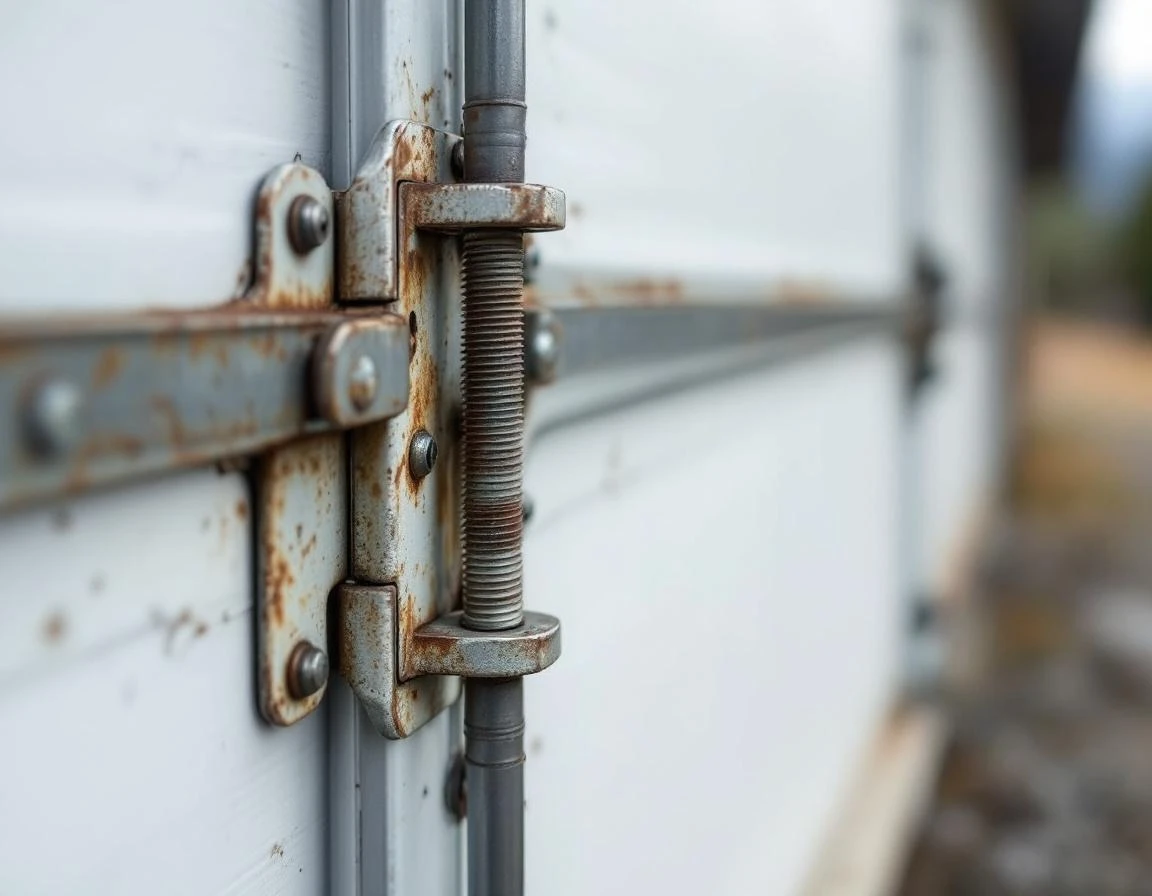
Examine hinges for rust or loose mounting screws, particularly on the wind-facing side of your garage. Gorge winds create frame flex that works fasteners loose over time. Reinforced hinges with through-bolts rather than wood screws reduce this flex on both attached and detached structures.
Wind-Rated Door Standards
Finally, determine if your door meets ASTM A1049 wind load standards designed for high-wind zones. Standard residential doors lack the reinforced end stiles and heavier gauge steel that prevent panel buckling when gusts hit 50+ mph—common during Columbia Gorge spring storms. Columbia Gorge wind rated garage doors deliver the durability your Hood River home needs.
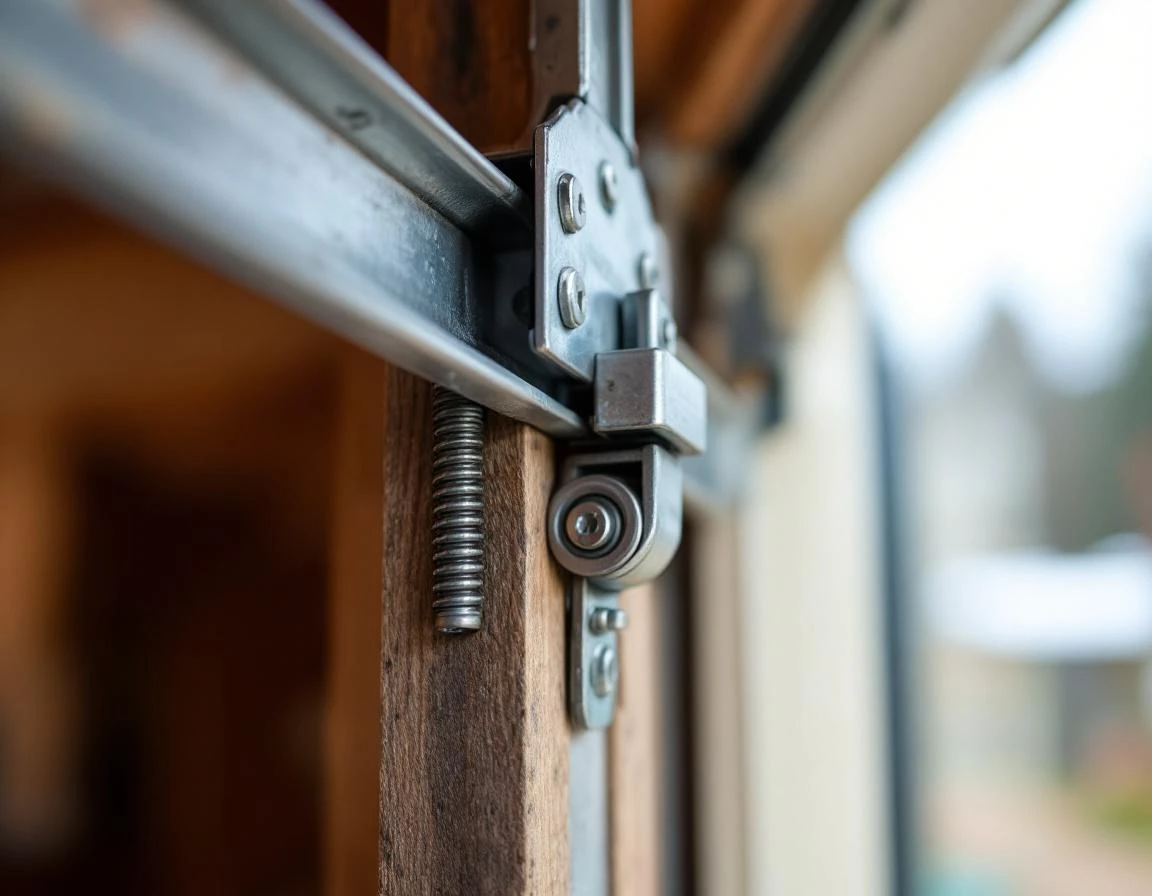
Track Alignment Inspection
Track alignment tops the inspection checklist because misaligned tracks reduce rollers’ ability to track evenly under wind pressure. Causing doors to stick or derail during Gorge gusts. Garage door track alignment high wind protection starts with closing the door slowly and watching for binding or hesitation—smooth movement means proper alignment, while jerking indicates trouble.
Check gaps between rollers and tracks using a feeler gauge or credit card. Visible gaps, rust spots, or crimped sections signal alignment issues. Distinguish minor problems (slight gaps correctable with adjustment) from major damage (bent or twisted tracks requiring replacement).
Detached garages in Heights and Westside neighborhoods face higher risk because they lack the structural bracing attached garages receive from the home’s frame, allowing wind to flex walls and stress tracks. Minor adjustments are typically quick and affordable fixes, while full track replacement represents a more significant investment—but both are worthwhile before April wind peaks arrive.
Spring Reinforcement Assessment
Garage door springs endure invisible punishment during Columbia Gorge wind events. Each gust forces the spring to cycle through tension and release, accelerating fatigue that typically accumulates over years. Extension springs on detached garages rust faster in the Gorge’s humid river climate, showing telltale streaking before failure.
Test your springs safely without touching them: lift the door halfway and release. A healthy spring produces an audible twang and holds the door steady. Springs losing tension allow slow sagging or struggle to support the door’s weight. Look for rust streaking along coils, visible gaps between spring wraps, or sluggish door movement after windy days.
Reinforcement divides into prevention and replacement:
- Cable restraints ($50-100) prevent springs from becoming projectiles during catastrophic failure but don’t restore lost tension.
- Full spring replacement ($300-500) becomes necessary when rust appears or the bounce-back test fails, protecting both your door and preventing sudden garage lockouts during spring wind peaks.
Hinge and Frame Reinforcement Against Wind-Resistant Garage Door Standards
When 40-60 mph Gorge gusts hit your garage door, lateral wind pressure flexes the entire frame, concentrating destructive stress at hinges and corners. For detached garages common in Heights and Westside neighborhoods, this becomes a critical failure point because there’s no home structure to resist the load—the garage stands alone against the wind.
Start your inspection by checking each hinge for loose bolts. Wiggle them by hand—any movement means wind has already begun the loosening process. Next, examine corners carefully for hairline cracks radiating from mounting points. These stress fractures grow with every wind cycle. Finally, test frame flex by pushing firmly on the door frame near corners—excessive give indicates the need for reinforcement.
Reinforcement options include:
- L-bracket installation ($80-150 labor plus materials) anchors frame corners to wall studs, preventing separation.
- Steel corner bracing ($40-80 materials) adds diagonal support where stress concentrates.
- Full frame reinforcement ($200-400) integrates both approaches.
Wind-resistant garage door upgrades protect attached garages that gain structural support from your home’s framing, but detached structures need independent bracing before April wind peaks arrive. Reinforcement prevents mid-season failure and costs far less than post-damage repair.
Wind-Rated Door Upgrade Decision
When should you upgrade instead of repair? Standard residential garage doors are rated for 80 mph gusts. Columbia Gorge regularly sees 40-80 mph winds, with occasional spikes above that threshold. Wind-rated doors meeting ASTM A1049 standards are tested to withstand 120+ mph gusts, eliminating recurring damage from Gorge wind cycles.
The cost-benefit calculation is clear: when repair costs accumulate over several years, upgrading becomes the more economical choice. Wind-rated door installations represent a meaningful investment depending on size and features, but they eliminate the cycle of repeated spring replacements, track realignment, and ice damage repairs that standard doors require.
Detached garages in the Heights and Westside neighborhoods face maximum wind exposure and benefit most from upgrades. Attached garages typically manage well with annual inspection and reinforcement since the house structure provides wind buffering.
Upgrading now in April 2026 means full protection through next winter’s wind season. Contact Garage Harmony today to discuss wind-rated options and installation timing that works for your budget.
April Inspection Checklist for Hood River Garage Door Wind Damage Prevention
Before April wind peaks arrive in the Columbia Gorge, complete your four-point garage door inspection:
- Track alignment and debris removal — check for gaps and clear wind-blown debris
- Spring tension and condition — perform the bounce-back test and inspect for rust
- Hinge and frame bolt tightness — tighten loose hardware and inspect for stress cracks
- Wind-rated door assessment — compare your current door against ASTM A1049 standards
If your inspection reveals minor issues like loose bolts or slight track misalignment, proceed with reinforcement steps outlined earlier. If you discover major damage such as cracked frames, severely rusted springs, or track warping, prioritize professional repair before April winds intensify. Detached garages in Heights and Westside neighborhoods face the highest urgency due to extreme wind exposure.
Budget planning: DIY inspection costs nothing beyond your time, while professional inspections run around $150. Reinforcement upgrades range from $200-$400 for hardware improvements. Full wind-rated door upgrades cost $2,500-$4,500 but prevent repeated seasonal damage.
Contact Garage Harmony today to schedule a professional wind-readiness inspection before the spring wind season arrives.







Leave A Comment