


Spring Storm Risk Assessment
March and April bring powerful wind systems across storm-prone regions, creating perfect conditions for garage door failure. When wind speeds exceed 50 mph, garage doors face enormous pressure differentials—wind pushes against the exterior surface while interior pressure builds, stressing panels and hardware beyond design limits.
Your garage door represents one of the largest structural openings in your home, making it a natural weak point during severe weather. Pre-season hardening addresses this vulnerability by reinforcing tracks, replacing worn hardware, and verifying proper balance before storms arrive. These preventive steps reduce wind damage risk measurably compared to unprepared systems.
Understanding why garage doors fail helps you prepare effectively. Wind pressure can bow panels inward, snap torsion springs, or pull tracks from wall mounts—failures that cascade rapidly once they begin.
Three Pre-Season Hardening Steps
Before March winds arrive, you can complete three hardening measures that address the primary failure points in garage door wind resistance. These steps work together to reinforce the most vulnerable components and align with the risk mitigation strategies outlined in the risk assessment section.
Step 1: Install Wind-Rated Garage Door Braces — These horizontal or vertical reinforcement struts attach to the interior of your door panels, preventing them from bowing inward under pressure. Wind-rated braces typically cost $50-150 per door section, and most homeowners can install them as a DIY project using basic tools. You’ll want professional installation if your door spans more than 16 feet wide or if you’re unsure about structural mounting points. Wind resistance ratings increase from standard residential (no rating) to wind-load ratings of 30-50 psf with proper bracing.
Step 2: Replace or Reinforce Bottom Weather Seal and End Stiles — The bottom seal and vertical end stiles create critical weak points where wind pressure pries the door from the frame. Replace worn rubber seals with new, thicker material ($30-60) and add aluminum or steel reinforcement strips to end stiles ($40-80 per side). This is a manageable DIY task if you’re comfortable with basic measurements and drilling, but call a professional if you need to modify the door frame itself or if you notice structural damage to the stiles.
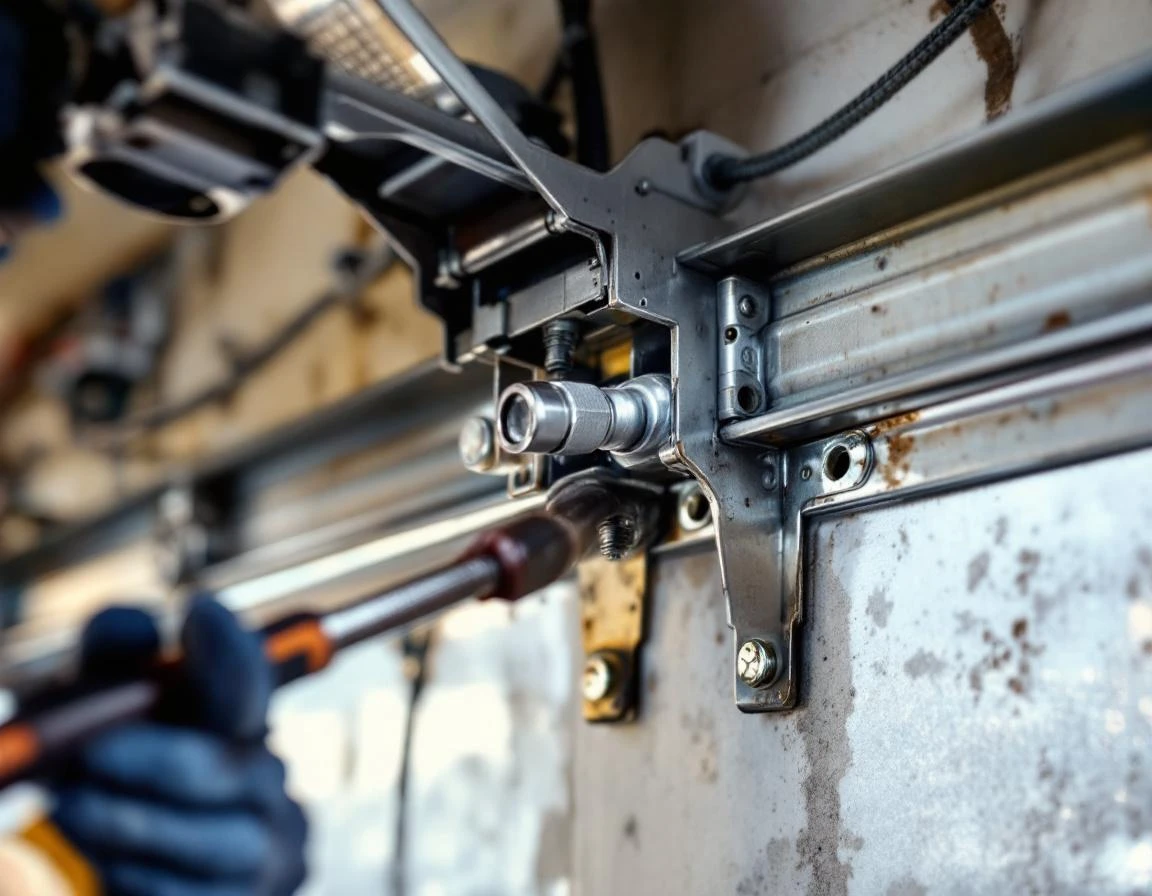
Step 3: Upgrade to Heavy-Duty Track Brackets and Hinges — Standard residential hardware can separate under wind load. Heavy-duty brackets and hinges ($100-200 for a complete set) provide the structural connection your door needs. Professional installation is recommended here because improper bracket mounting can create dangerous failure points. Complete all three steps by mid-February to allow time for professional scheduling if needed.
Wind Resistance Ratings Explained
Wind resistance ratings come from ASTM testing standards that measure how much pressure a door can withstand before failing. These ratings appear on manufacturer labels and documentation as pounds per square foot (PSF) values. Pacific Northwest spring storms typically generate winds of 40-60 mph, creating pressure of 10-20 PSF on exposed garage doors.
Check your existing door’s rating by looking for certification labels along the door’s edge or reviewing the original purchase documentation. Minimum building codes vary by location, but doors facing typical spring weather should meet at least Class II wind ratings. If your current door shows no rating label or falls below regional requirements, replacement becomes a priority hardening step before storm season arrives.
Professional Inspection Decision Framework
When should you call Garage Harmony instead of tackling storm preparation yourself? Age tells the first story. Doors older than 15 years need professional assessment before March winds arrive, especially if you notice uneven opening, grinding sounds, or visible rust on springs and cables.
Watch for these red flags that demand immediate attention: frayed cables, gaps in weather stripping, bent tracks, or doors that drop quickly when closing. Springs and cables become critical safety priorities during high winds—failure under storm pressure can cause catastrophic damage or injury.
Here’s the cost reality: A February inspection provides peace of mind before weather strikes, while emergency replacement after storm damage becomes far more costly and may expose your vehicles and stored items to water damage. Professional assessment identifies hidden vulnerabilities before they become expensive disasters. Contact us today to schedule your pre-season inspection!
Pre-Storm Maintenance Checklist
With March storms approaching, dedicate two weeks to completing critical maintenance tasks that protect your garage door from wind damage. Start by inspecting and lubricating all moving parts—rollers, hinges, and springs—using silicone-based lubricant designed for garage doors. This reduces friction that can cause component failure during high winds.
Next, check track alignment by measuring the distance between tracks at multiple points. Gaps or bends create weak spots where wind pressure concentrates. Test door balance by disconnecting the opener and lifting the door halfway—it should stay in place. A door that falls or rises indicates spring tension issues requiring professional adjustment.
Examine weatherstripping along all edges for cracks or compression. Replace worn seals immediately, as gaps allow wind to pressurize the door from behind. Review the decision framework from the previous section: if you discover loose hardware, track damage beyond minor adjustment, or spring wear, contact Garage Harmony for professional assessment before storm systems arrive.
Next Steps: Protection and Contact
You’ve learned how to identify vulnerabilities, strengthen hardware, and complete pre-storm maintenance. Now it’s time to put these hardening steps into action. The three measures—wind-rated bracing, reinforced seals and stiles, and upgraded hardware—work together to protect your garage door when March and April storms arrive.
Should you tackle these upgrades yourself or bring in professionals? If your door shows warning signs like age over 15 years, visible damage, or worn components, schedule a professional assessment now. February is the ideal time to book service. Before spring storm season creates scheduling backlogs and emergency repair demands.
What happens during a professional wind-resistance evaluation. Our experts examine your door’s structural integrity, test hardware strength, measure track alignment, and assess whether your current system can withstand Pacific Northwest spring winds. You’ll receive a detailed report with specific recommendations and implementation timelines.
Most reinforcement projects take one to two days to complete once materials arrive. By scheduling your assessment this month, you’ll have protection installed before peak storm activity begins. Contact Garage Harmony today to schedule your wind-resistance inspection and protect your garage door investment before severe weather strikes.





Leave A Comment