East Gorge Wind Patterns & Seasonal Risk
Washougal sits at the western mouth of the Columbia River Gorge, where powerful east winds funnel through narrow canyon walls and slam into residential areas with surprising force. Understanding Washougal garage door wind damage patterns helps homeowners protect their homes before storms arrive.
Washougal’s Riverside Location Creates Channeled Wind Acceleration
Washougal sits directly in the East Gorge corridor, where the Columbia River channels wind into a concentrated force that accelerates as it funnels through the narrowing terrain. This geographic positioning creates sustained wind pressure that places constant stress on garage door panels and hardware throughout the year.
Spring and fall bring peak wind stress periods when shifting weather patterns intensify these already powerful Gorge winds. These seasonal transitions test your garage door’s structural integrity, exposing weaknesses in panel connections, track alignment, and weathersealing that may have developed gradually over time.
Understanding seasonal timing helps homeowners
Knowing when to act makes all the difference. Washougal homeowners who schedule garage door reinforcements in late winter—before March winds arrive—prevent damage rather than repair it afterward. This proactive approach targets vulnerabilities while weather remains calm.
Wind damage doesn’t happen all at once. Your garage door weakens gradually through repeated stress cycles during each wind event. Each gust bends panels slightly, loosens hardware incrementally, and fatiguses springs over time. By the time visible damage appears, structural integrity has already declined through months of accumulated stress.
Washougal Garage Door Wind Damage: Three Critical Wind-Stress Zones
East Gorge winds don’t attack your garage door randomly—they concentrate force at three predictable failure points. Learning to recognize damage at these zones indicates whether it’s a weekend touch-up or an urgent structural repair.
Top Panel Corner Seams
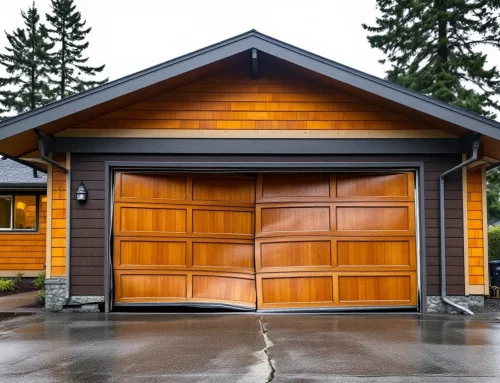
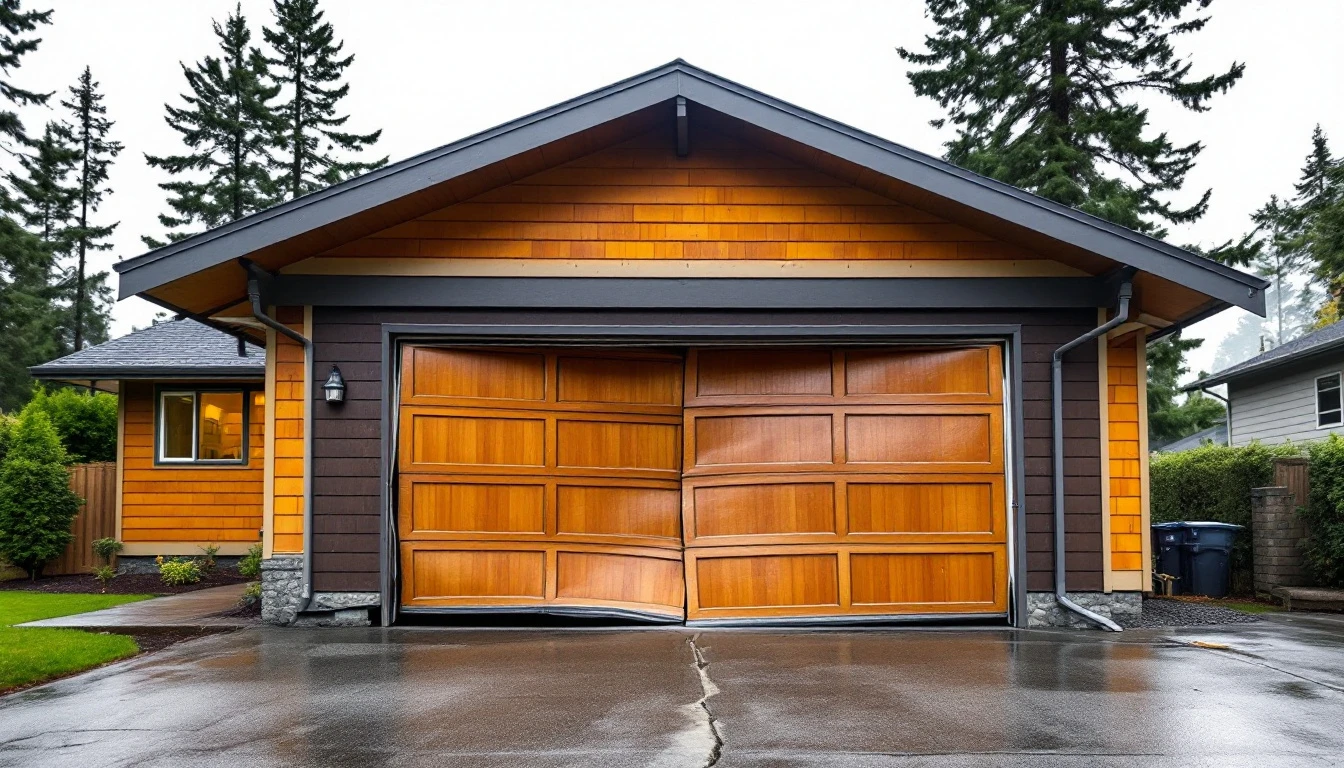
Wind pressure pushes hardest against the top panel corners where your door meets the header. The lateral force pulls fasteners away from the frame over time. Look for buckled corner joints where panels no longer sit flush, gaps between the top section and weather seal, or paint cracks radiating from mounting points.
Ignored corner damage allows panels to shift during operation, creating misalignment that strains your opener motor. What starts as a cosmetic gap becomes a mechanical problem when the door binds in the track.
Bottom Track and Seal Areas
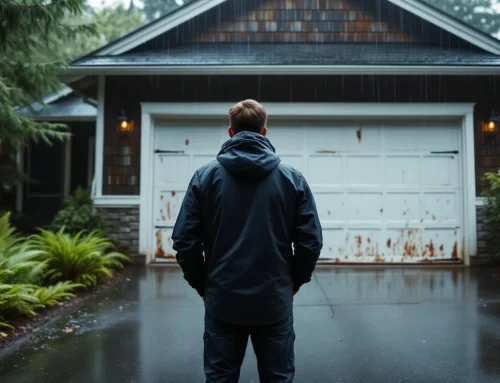
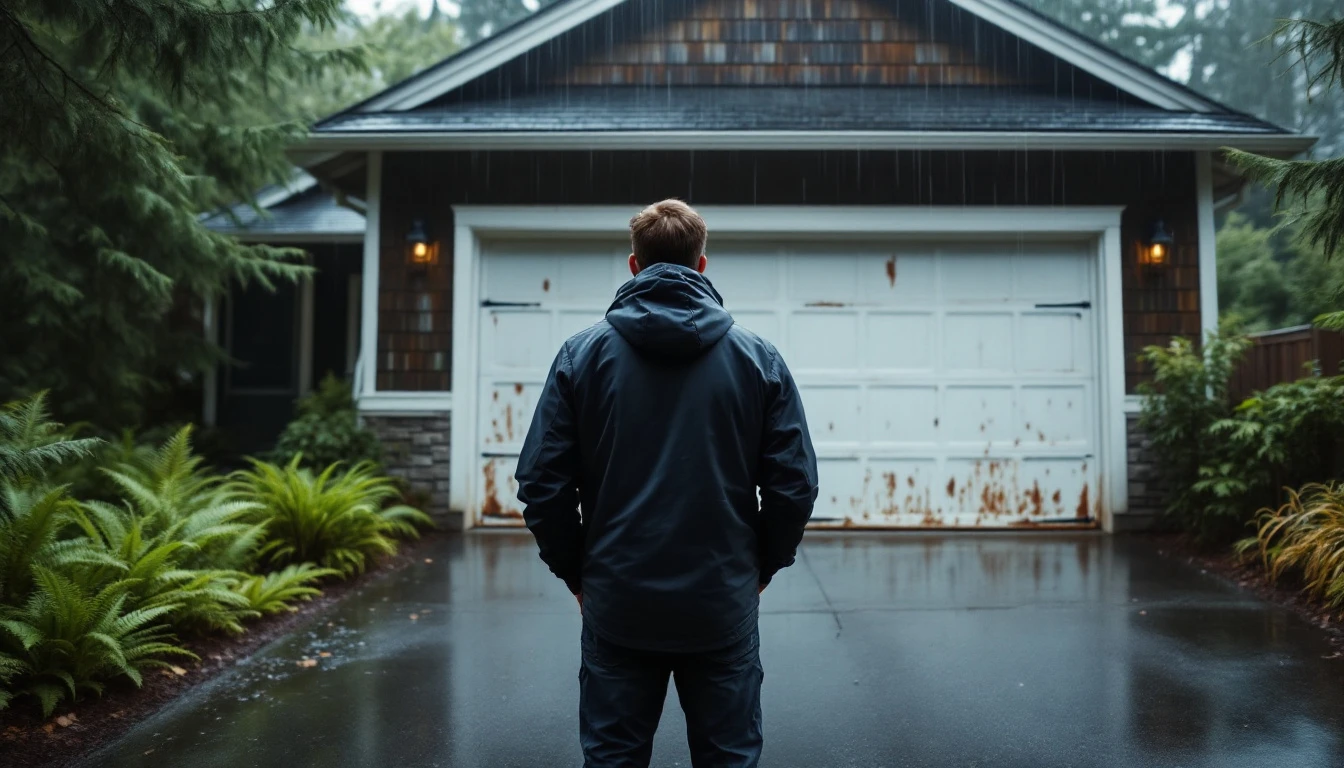
Wind-driven rain funnels under your bottom seal during East Gorge storms, pooling in the track where water meets metal day after day. Check for rust streaks on the inside bottom panel, dark staining where the seal meets concrete, or corrosion inside the horizontal track.
Bottom seal failure doubles your heating costs by creating a wind tunnel under the door. Once rust starts, it spreads upward through connecting panels.
Spring Tension and Roller Assemblies
Repeated wind buffeting creates micro-failures in springs and rollers that accumulate over seasons. Watch for uneven door movement—one side rising faster than the other—grinding sounds from rollers, or visible gaps in spring coils. Springs under constant stress develop fatigue cracks invisible until catastrophic failure.
A failing spring under tension stores enough energy to cause injury. When you notice jerky operation or hear popping sounds during opening, that’s your signal to call Garage Harmony before the spring snaps.
Wind Damage Garage Door Reinforcement: Pre-Storm Techniques
Before May’s East Gorge winds arrive, two simple tasks can protect your Washougal garage door from the kind of stress that leads to emergency repair calls. These preventive measures take less than an hour and are inexpensive to perform, yet they address the specific wind-loading issues that cause panels to flex and hardware to fail.
Replace Weatherstripping and Check All Seals
Worn weatherstripping allows wind infiltration that creates pressure differentials across your door surface. This pressure pushes panels outward while simultaneously creating suction on the interior face—exactly the cycling stress that cracks panels at attachment points. Inspect the rubber seal along all four edges of your door, looking for brittleness, gaps, or compression damage.
Step-by-step: Remove old weatherstripping by pulling it from its track. Clean the channel with denatured alcohol. Measure and cut new vinyl or rubber seal (typically $15-25 at hardware stores). Press firmly into the retaining channel, starting at one corner and working around the perimeter. Safety note: Work with the door fully closed and opener disconnected to prevent unexpected movement.
Tighten All Brackets and Fasteners
Loose fasteners allow micro-movements during wind gusts. Each small shift widens mounting holes and weakens connections—damage that accumulates invisibly until a spring storm causes complete failure. Using a socket wrench, check every bracket bolt connecting hinges to panels and track mounting screws to the wall framing. Tighten to firm resistance without over-torquing, which can strip threads. Keep quality fasteners on hand for replacements as needed.
Completing these tasks in April means your door withstands May’s peak winds without the stress that turns into June emergency calls. When you find stripped mounting holes or bent brackets during inspection, that’s when professional reinforcement becomes necessary—before the hardware fails entirely.

Wind Damage vs Structural Failure
Not every dent requires an emergency call. Understanding the difference between cosmetic damage and structural failure helps you respond appropriately and avoid costly mistakes.
Cosmetic damage includes surface dents, finish loss from blown debris, and minor weatherstrip gaps. If your door opens and closes smoothly without unusual noise, these issues can wait for scheduled maintenance. A panel with a basketball-sized dent that still operates normally falls into this category—unsightly but not urgent.
Structural failure demands immediate attention. Bent tracks that prevent smooth door travel, stretched or broken springs that leave the door unbalanced, and panels separating at their seams all compromise safety and security. These conditions worsen rapidly and can cause complete door failure or create dangerous operating conditions.
Use this three-question checklist to assess severity:
- Does the door operate normally? If it requires excessive force, makes grinding sounds, or won’t stay in position, you have a structural problem.
- Is there rust or water intrusion? Active rust or water pooling inside means seals have failed and moisture is attacking internal components.
- Can you see daylight through panel seams? Visible gaps between panels indicate separation that will accelerate under continued wind stress.
When any answer raises concerns, contact Garage Harmony for professional evaluation. East Gorge wind damage in Washougal rarely improves on its own—early intervention prevents emergency replacements.
Professional Repair & Local Resources
Some wind damage demands professional intervention for safety reasons. Bent springs, damaged tracks, or panel separation create hazards that require specialized tools and training to repair correctly. Springs store enormous tension that can cause serious injury when released improperly, while damaged tracks affect the entire door’s structural integrity.
Spring replacement after wind stress typically costs $200-400. While panel replacement ranges from $150-600 depending on the extent of damage. If multiple panels show stress fractures or separation, full door replacement becomes the more economical choice at $800-2,500.
These costs highlight why the preventive maintenance covered in earlier sections saves thousands compared to emergency repairs.
Washougal and East County Vancouver have experienced specialists who understand Gorge wind damage patterns. However, emergency calls after major spring windstorms often face wait times of several days during peak demand periods. This reality motivates the proactive reinforcement approach outlined in this guide—homeowners who strengthen their garage doors before storm season avoid both the wait and the higher emergency service rates.
Contact us today for a wind damage assessment if you’ve noticed any of the warning signs discussed throughout this article. Our team serves Washougal with same-week scheduling during non-emergency periods.