

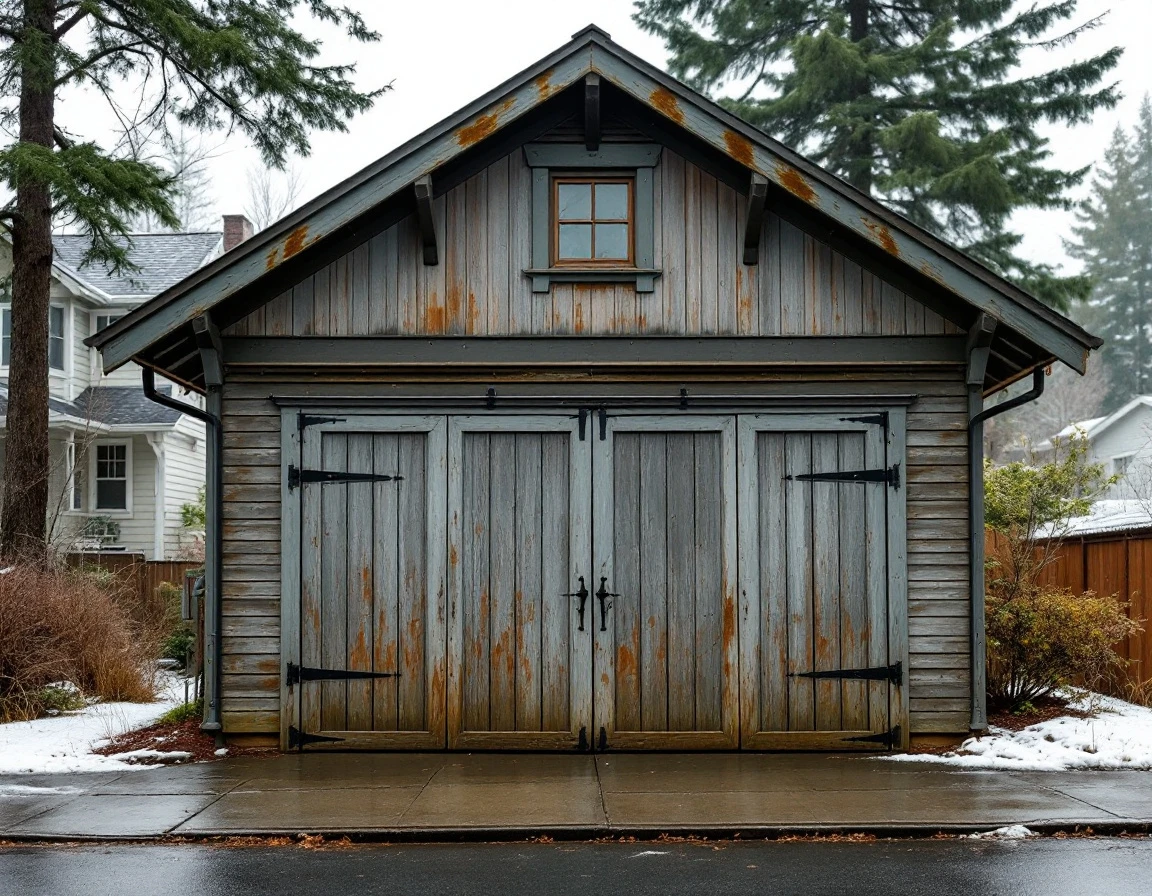
Craftsman Garages in Wet Valley Climate
Walk through Forest Grove’s Old Town neighborhood, and you’ll spot them on nearly every block: detached single-car garages built in the early 1900s alongside Craftsman homes near Pacific University. These vintage structures share common construction features—wooden framing, single-wythe brick foundations, and lap siding—that made them practical and affordable a century ago. Forest Grove vintage garage maintenance has become essential today, as those same features create vulnerabilities in the Tualatin Valley’s wet climate.
From October through April, the valley floor experiences persistent fog and steady rainfall that saturates wooden garage components. Unlike brief summer thunderstorms, this seasonal moisture lingers for days at a time, penetrating sill plates, rotting door jambs, and rusting hardware. The combination of winter rain intensity and poor drainage around aging foundations creates ideal conditions for structural settling.
Foundation settling reveals itself through door misalignment—a gap at the top corner, scraping along the bottom rail, or panels that won’t meet the weatherstripping. Most homeowners notice these symptoms but postpone repairs, assuming the issue is minor. By the time the door refuses to close completely, the foundation has often shifted enough to require expensive intervention.
Addressing three moisture-driven maintenance priorities before October prevents the cascading failures that shorten garage life by a decade or more. Proactive fall preparation protects your investment and avoids emergency repairs during winter storms.
Three moisture-driven maintenance priorities for Forest Grove vintage garage maintenance
Protecting your Craftsman garage from the Tualatin Valley’s relentless wet season means tackling three specific maintenance tasks between June and September. This dry window gives you time to complete inspections and repairs before October rains return. Each priority addresses a different vulnerability point where moisture causes failure in vintage wooden structures.
Priority 1: Wooden Sill Plates and Framing Inspection
Start with the wooden sill plates where your garage frame meets the foundation. These horizontal timbers absorb ground moisture year after year, developing soft spots and early rot that weaken the entire structure. Press a flathead screwdriver into the wood at corners and along the base—if it sinks easily, you’ve found decay.
Look for dark discoloration, crumbling texture, or a musty smell near the foundation line. One Forest Grove homeowner discovered a six-foot section of rotted sill plate beneath peeling paint, causing the entire door frame to tilt. DIY inspection costs nothing beyond your time, but professional assessment involves moisture meter readings that reveal hidden problems you cannot detect with the naked eye. Addressing this now prevents the door frame from shifting when October rains saturate the ground.
Priority 2: Original Hardware Maintenance
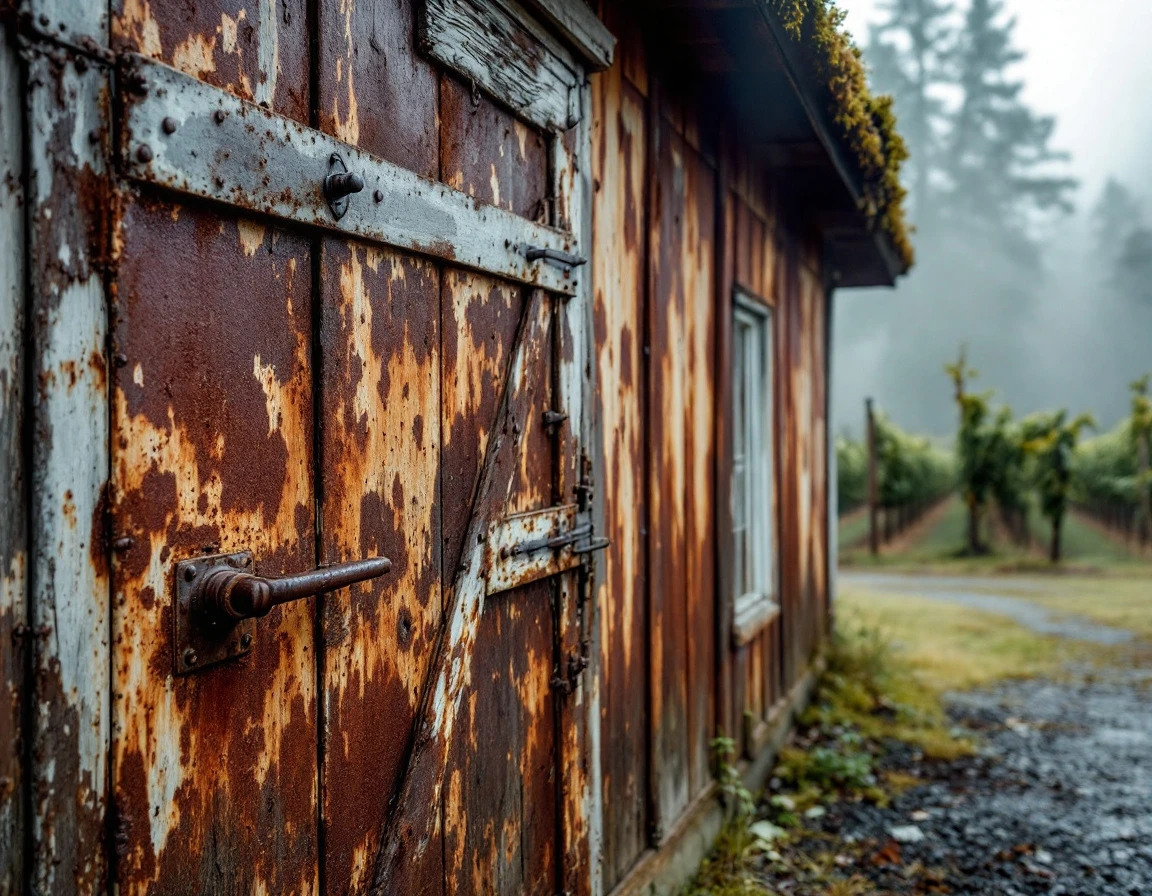
Hinges, latches, and door tracks from the early 1900s develop surface rust in our humid climate, then seize up completely during winter. Remove each hinge and track component, clean with a wire brush, and apply period-appropriate lubricants like three-in-one oil rather than modern silicone sprays that can damage vintage finishes.
Check for pitting on metal surfaces and looseness where hardware mounts to wood. DIY cleaning is a manageable afternoon project using common household supplies. Professional hardware restoration includes replacement of worn mounting screws and proper rust inhibitor application, offering results that justify the investment. Completing this work in summer prevents stuck doors when you need garage access during fall storms.
Priority 3: Foundation and Track Alignment Inspection
Measure the gap between your door and the frame at multiple points. Variations exceeding one-quarter inch indicate foundation settling. Inspect the foundation for hairline cracks or vertical separation where sections have shifted. Place a level across door tracks to detect slopes that cause binding.
DIY inspection requires only a tape measure and level, but professional foundation assessment includes detailed soil evaluation around the perimeter and demands a budget allocation for this service. Foundation repairs vary widely in scope depending on severity, from modest interventions to extensive remediation work. Addressing minor settling now prevents door failure when winter moisture causes further movement.
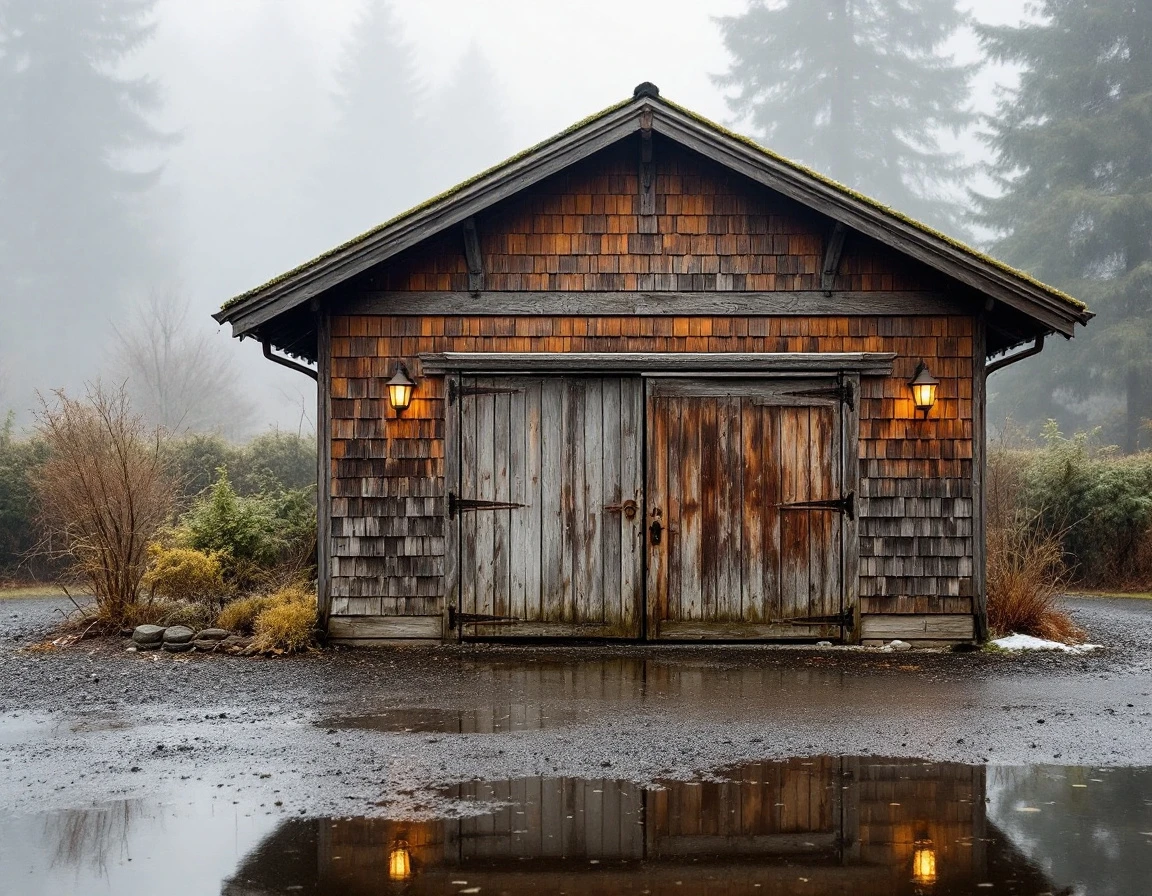
Wooden components and rot detection
Sill plates at your garage foundation, the bottom two inches of door jambs, and corner posts are the highest-risk zones for wood decay in the Tualatin Valley’s wet climate. Moisture accumulates where wood meets concrete or ground level, especially in garages with poor drainage. A Forest Grove garage near Pacific University illustrates the value of early detection: when the owner spotted discoloration during a summer inspection, prompt intervention prevented what could have become costly structural damage.
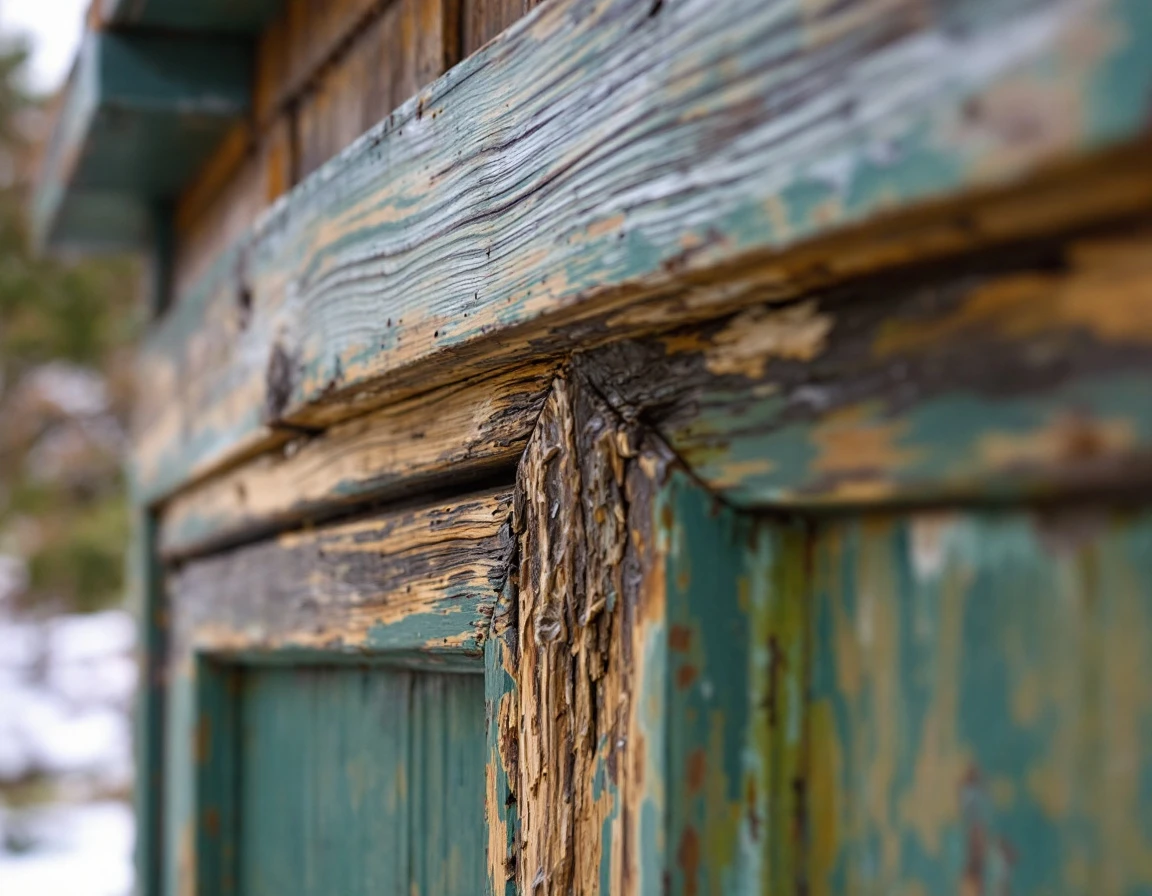
Wood rot progresses from surface damage to structural failure. Look for soft spots that indent when pressed. Dark streaks or discoloration running along the grain, and hairline cracks that widen over time. Advanced decay shows wood that crumbles or feels spongy.
Test suspicious areas with a simple probing technique: press a small screwdriver or awl gently into the wood at a 45-degree angle. Healthy wood resists penetration and feels solid. If the tool sinks more than a quarter-inch. You have structural rot requiring professional replacement. Surface treatment for early-stage damage costs $200–500, while sill plate replacement runs $1,200–2,500 in our region.
Hardware Preservation and Rust Prevention
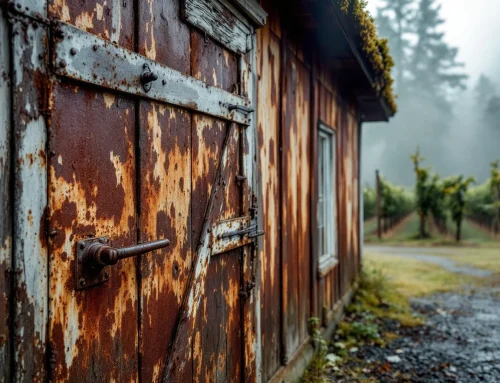
Original wrought-iron hinges, latches, and track hardware on Craftsman garages deserve preservation for both historical authenticity and financial reasons. Replacement hardware matching the Craftsman aesthetic commands premium pricing, while bi-annual maintenance remains economical and accessible. In the Tualatin Valley’s persistent October-through-April fog, unprotected steel corrodes rapidly.
Start hardware maintenance by removing surface rust with fine steel wool and mineral spirits. Apply a traditional paste wax or boiled linseed oil coating—not modern spray lubricants that attract moisture and dust. This protective layer preserves the original patina while preventing further corrosion.
For hardware beyond repair, Forest Grove suppliers like local building salvage yards stock period-correct replacements. Matching original designs maintains your garage’s character and protects property value in Old Town’s historic neighborhoods.
Historic home garage foundation settling and door alignment
Uneven settling in Tualatin Valley’s clay-heavy and loam soils is common in structures over a century old, and Forest Grove’s Old Town Craftsman garages are no exception. These soils expand when wet and contract during summer’s dry months, creating movement that older foundations—often just stacked stone or unreinforced concrete—can’t resist. When settling reaches 1/4 inch or more. It indicates foundation stress that cascades into visible door problems.
Misaligned doors strain hinges and latches, prevent proper closure, and signal foundation cracks that require structural assessment. Before door hardware fails completely, homeowners can detect settling with a simple measurement technique: close the door and check the gaps at the top, sides, and bottom using a ruler. Uniform gaps (typically 1/8 to 3/16 inch) indicate proper alignment, while variation—such as a 1/2-inch gap at one corner and tight contact at another—signals settling.
A structural assessment costs $300–600 and determines whether settling is cosmetic (monitored annually but not urgent) or active structural movement requiring underpinning, which ranges from $2,500–8,000 depending on garage size and access. The June through September inspection window is critical: identifying issues now allows you to plan corrective action before October’s rains return and wet winter months stress foundations further, potentially turning a monitoring situation into an emergency repair.
DIY versus professional repair decision
Hardware cleaning and minor wood treatment are safe DIY tasks for most homeowners, while sill plate replacement and foundation work require licensed contractors. If you can probe wood with a screwdriver and apply protective coating, you can handle basic maintenance. Structural repairs involving load-bearing members, foundation assessment, or door track realignment need professional expertise and insurance coverage.
Local contractors in Forest Grove and Tualatin Valley who specialize in historic homes typically offer free initial assessments. Average costs for full inspection and repair planning range from $500 to $1,500, reflecting higher labor rates in the Portland metro area and the complexity of working with century-old structures in wet climate conditions. These costs are higher than national averages but include expertise specific to Craftsman-era construction.
Check your homeowner’s insurance and warranty coverage before engaging contractors. Foundation settling repairs may be covered, particularly if you document progression through photos and measurements. Verify coverage details to avoid unexpected out-of-pocket expenses.
Scheduling presents a critical challenge: contractors who service historic structures book August and September slots by mid-June. If you wait until late summer, you’ll likely push repairs into October when rain returns. Contact specialists in early June to secure a spot before wet weather arrives.
Print this prioritized action checklist:
- June 1-15: Schedule professional foundation assessment.
- June 15-30: Complete DIY hardware cleaning and wood treatment.
- July-August: Execute contractor repairs.
- September: Final inspection before October rains.
Action checklist for June–September
June is your planning month. Schedule a contractor assessment for structural work—licensed contractors specializing in historic homes book August and September slots quickly in the Tualatin Valley. While waiting for that appointment, spend 2–3 hours performing visual inspections of sill plates and corner posts using the probing test described earlier. Clean original hardware using steel wool and paste wax ($50–150 in materials).
July focuses on decisions. Collect repair estimates from contractors and prioritize repairs by severity: address soft wood and active foundation movement before cosmetic settling. Verify whether your homeowner’s insurance covers foundation work, as policies vary. This takes 2–4 hours of phone calls and document review, with no material costs.
August is action month. Complete hardware maintenance and apply boiled linseed oil to exposed wood surfaces (2–3 hours, $30–80 in materials). If contractors are available, schedule structural repairs for September to wrap work before October rains return.
September closes the window. Finalize any structural repairs, test door operation after foundation work, and establish your October inspection routine. Print this checklist and check off tasks as you complete them—your Craftsman garage will thank you when wet weather returns.



Leave A Comment