


Damage Assessment Framework
Ready to decide: panel replacement or full door replacement? Start with a damage assessment. It’s how you protect both your budget and safety. Understanding exactly what you’re dealing with helps commercial property managers in Salem-Keizer make better decisions.
Start by categorizing damage into three distinct levels:
- Cosmetic damage includes minor dents and surface scratches that don’t affect door operation
- Structural damage encompasses bent panels, track misalignment, or warped sections that impact how smoothly the door operates
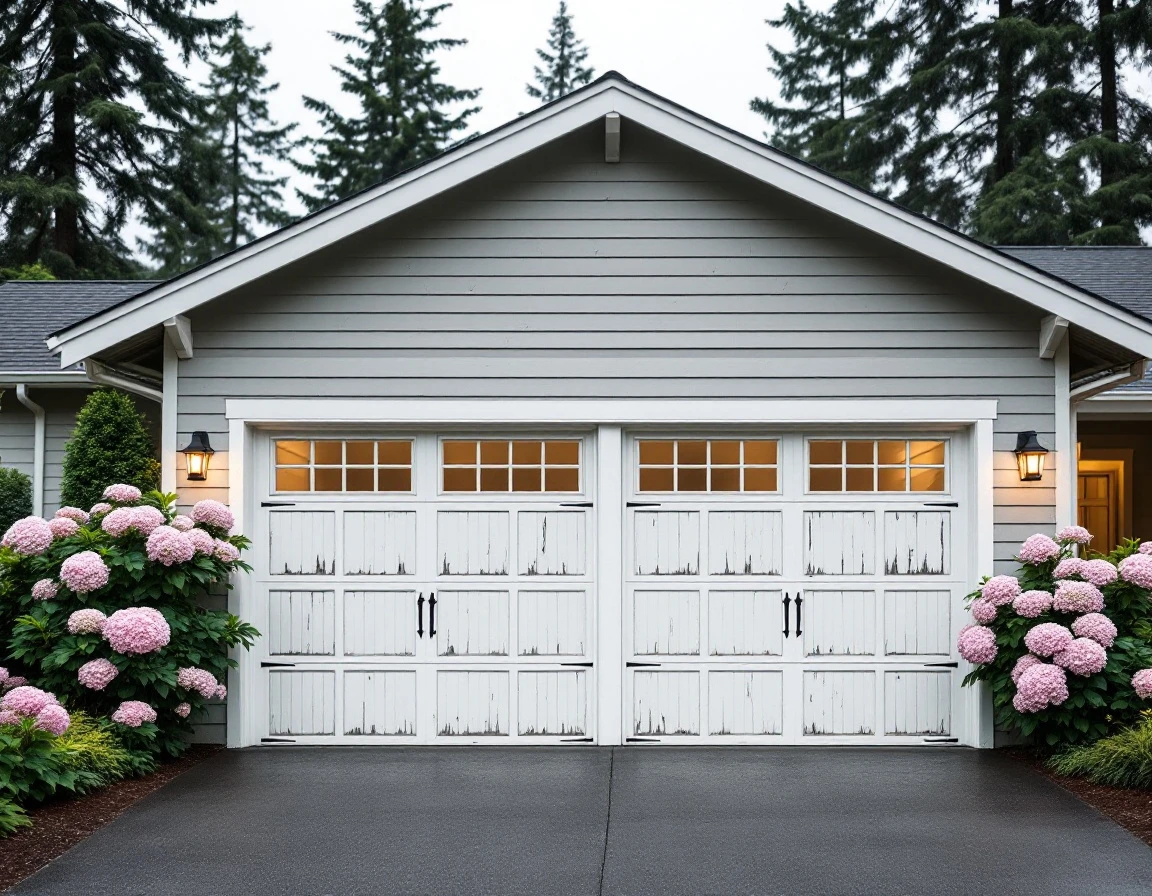
- Safety-critical damage involves broken springs, cable failures, or malfunctioning safety sensors—issues that pose immediate risks to users
Does damage location matter? Absolutely. Lower panels on commercial doors take the brunt of forklift impacts and loading dock activity, making them prime candidates for individual panel replacement. Upper panel damage often signals broader structural issues that warrant full replacement consideration.
Document everything thoroughly. Note which panels are affected, measure the extent of warping or bending, and test all safety features. Salem-Keizer commercial property codes require doors to meet specific safety standards, so any damage affecting sensors, auto-reverse mechanisms, or emergency release systems needs immediate attention. This documentation becomes your roadmap for the cost-benefit analysis ahead.
Panel Replacement Cost Factors
Understanding the financial breakdown of garage door panel replacement helps you weigh your options between repair and full replacement. Material type creates the first cost variable you’ll encounter: steel panels typically range from $150 to $400 per panelAluminum panels cost $200 to $500, and composite panels run $300 to $600. These prices reflect the Salem-Keizer market in 2024, where material availability and regional supplier networks influence final costs.
Labor and service fees are the next piece of your budget. Budget for $150 to $250 for a service call in Salem-Keizer, plus $75 to $150 per hour for labor. A single panel takes 1 to 2 hours. But here’s what changes everything: multiple panels don’t cost three times as much. When you need three or four panels replaced, the math shifts dramatically in surprising ways.
A single panel might cost $550 total (one $200 panel plus $350 labor and service fees). Three panels could run $1,100 to $1,400—not three times the single-panel price, but still substantial. Four panels often approach $1,600 to $2,000, at which point full door replacement becomes financially competitive since complete doors start around $1,800 to $2,500 installed.
Door age matters significantly. Panels for doors over 10 years old often need custom ordering. That adds 2 to 6 weeks to your timeline and increases costs by 20 to 40 percent. Discontinued models may force you toward full replacement regardless of damage extent, making age a critical factor in your total cost of ownership analysis.
Full Door Replacement Cost Breakdown
When panel repairs no longer make financial sense, understanding the complete replacement picture becomes essential. In the Salem-Keizer market, full commercial garage door replacement involves several cost components that property managers need to factor into their decision-making process.
Commercial-grade steel doors are the most common choice for local businesses. Expect to pay $1,500 to $4,000 for the door unit alone. Adding professional installation, opener systems, and needed structural work brings your total to $2,500 to $6,000. The wide range reflects door size, insulation values, and wind-load ratings required for your specific application.
Installation labor in our regional market typically runs $400 to $800, which includes removal and disposal of your existing door. Opener replacement adds another $500 to $1,500 depending on horsepower requirements and smart-access features. Don’t forget miscellaneous hardware like weather seals, track adjustments, and structural reinforcements that can add $200 to $500 to the total.
Here’s where the math gets interesting: compare a substantial one-time investment in replacement against the cumulative costs of ongoing panel repairs. If you’re spending a considerable amount per panel replacement and need multiple panels over several years, you’ve already invested significantly—approaching full replacement cost. Over an extended period with continued repairs, you’ll likely exceed replacement cost while operating an aging door.
The warranty advantage matters. New doors include manufacturer warranties covering 5 to 10 years on materials and workmanship. Panel repairs? You’re typically looking at 90-day to one-year coverage on labor only. That warranty protection provides budget predictability that piecemeal repairs simply cannot match.
Break-Even Analysis Framework
When should you stop repairing and start replacing? The answer lies in a simple calculation that compares your total projected repair costs against a one-time replacement investment.
Start by calculating your cumulative five-year repair projection. Multiply the cost of each anticipated panel replacement by the frequency of damage incidents. For example, if you’re replacing panels every 18 months at $400 per incident, that’s roughly $1,600 over five years. Add estimated downtime costs—each repair day that keeps your loading dock or vehicle bay inaccessible costs you operational efficiency.
Next, factor in your door’s age and condition trajectory. A 10-year-old door with one isolated panel damaged by a forklift impact represents a clear repair scenario—a simple fix on a door with remaining service life. But a 12-year-old door requiring its third panel replacement in two years tells a different story. Those recurring repairs signal systemic wear, and you’re likely approaching substantial cumulative costs with more incidents ahead.
When projected repairs exceed 60-70% of full replacement cost, replacement delivers better long-term value. If full replacement runs $3,500, and you’re facing $2,400 in anticipated repairs over the next few years, replacement makes financial sense. You’ll gain warranty coverage, improved energy efficiency, and eliminate the maintenance cycle entirely.
Consider a newer eight-year-old door with a single damaged panel and no history of repeated issues—repair wins clearly, preserving a substantial portion of your door’s remaining lifespan at a modest cost. But that same calculation shifts dramatically when repair frequency accelerates or when parts availability becomes a recurring obstacle.
Here’s the simple math: add up your expected repairs, compare that total against replacement costs, and see if repairs eat up most of the replacement price. When repair expenses approach that threshold, you’re better off investing in a complete replacement that resets your maintenance timeline and provides modern performance benefits.
Door Age and Lifespan Considerations
Your garage door’s age plays a critical role in determining whether garage door panel repair versus replacement makes financial sense. Commercial garage doors typically last 15-20 years with proper maintenanceBut damage severity can accelerate replacement timelines significantly.
Doors over 15 years old present the toughest decision. Manufacturers often discontinue panel styles, colors, and profiles after 10-15 years, making exact replacements difficult or impossible to source. Special-order panels can cost 2-3 times standard pricing, and the door’s remaining mechanical components are approaching end-of-life anyway. For Salem-Keizer’s older commercial real estate stock—much of which features doors in this 10-15 year range—this creates urgent decision points.
Mid-life doors (8-14 years) offer the sweet spot for panel replacement. Replacing panels is generally less expensive than replacing the entire doorEspecially when the hardware is in good condition. Panels remain readily available at standard pricing, and you’re buying several more years of reliable service. The door’s structural integrity and operating systems still have useful life remaining, making repair investments worthwhile.
Newer doors (under 8 years) should almost always receive panel repairs rather than full replacement. You’re preserving a significant capital investment with plenty of operational life ahead. Unless damage is catastrophically severe or safety-critical, replacement makes little economic sense.
Regular preventive maintenance extends these timelines considerably, helping you maximize return on either repair or replacement decisions.
Downtime and Operational Impact
When choosing between panel replacement and full door replacement, operational downtime often tips the scale in ways that raw material costs don’t capture. Panel replacement is a 2–4 hour service call that minimizes disruption to your daily operations. Full door replacement, however, requires 1–2 full days of installation work, potentially closing off critical access points during business hours.
For Salem-Keizer commercial properties, this distinction matters financially. A loading dock out of commission for two days might delay shipments, force rescheduling of deliveries, or require expensive workarounds. Retail spaces with garage-style entrances could lose customer access during peak hours. Multi-tenant properties face the challenge of coordinating installation around multiple businesses’ schedules.
Emergency repairs force immediate decisions under pressure. When a door fails at 6 AM and you need dock access by 8 AM, panel replacement becomes the practical choice—even if long-term economics favor replacement. Planned replacements, conversely, allow time for proper cost analysis and scheduling during slower periods.
Smart property managers factor these downtime costs into break-even calculations. If replacing your door means $2,000 in lost productivity versus $300 for a quick panel fix during off-hours, that operational impact changes the financial equation significantly—even when the panel replacement is only a temporary solution.
Decision-Making Checklist for Salem-Keizer
Ready to decide? Review this practical checklist—then reach out to Garage Harmony. Our experts will review your specific situation and help you make the right choice.
- Step 1: Damage Assessment Checklist. Document the number of damaged panels, their location (bottom, middle, or top sections), and severity. Note any visible structural damage to tracks, frames, or hardware. Most importantly, identify immediate safety concerns like loose panels, exposed springs, or alignment issues that could cause the door to fail unexpectedly.
- Step 2: Cost Comparison Template. Contact a licensed Salem-Keizer garage door specialist and request binding quotes for both options from the same contractor. This way you’re comparing the same thing from the same contractor, not mixing variables. Ask for detailed breakdowns including materials, labor, disposal fees, and warranty coverage for each scenario.
- Step 3: Break-Even Calculator. Calculate how many years remain until your planned door replacement. If you’re already budgeting for replacement within three years, immediate repair rarely makes financial sense. Apply the 70% rule: if cumulative repairs over the next five years will exceed 70% of full replacement cost, choose replacement now.
- Step 4: Decision Matrix. Consider door age (over 15 years favors replacement), downtime costs (can your operation handle 1-2 days offline?), and warranty protection (new doors include complete coverage versus limited repair warranties). While some doors allow individual panel replacements, widespread damage makes a full replacement the more economical choice.
Don’t make this decision alone. Contact Garage Harmony today! Our Salem-Keizer experts will document your door’s condition and provide binding quotes for both repair and replacement options. Our expert assessment will give you the confidence to choose the most cost-effective solution for your property.



Leave A Comment