


When Panel Repair Makes Financial Sense
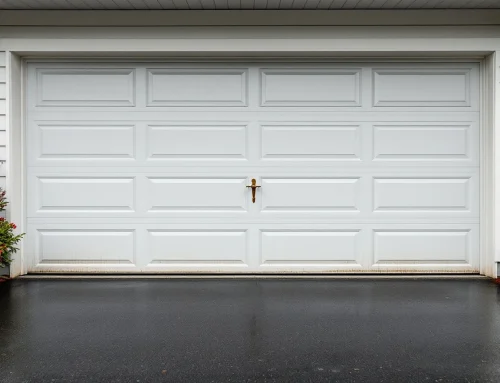
If your garage door has damage limited to one or two panels and the door itself is less than ten years old, panel replacement usually makes the most financial sense. Newer doors typically have readily available replacement parts, and the surrounding structure remains sound enough to support selective repairs without compromising overall performance. Understanding when to repair or replace comes down to comparing costs, age, and repair history—the core of any garage door repair vs replacement decision.
In the Portland metro area, you can expect to pay between $300 and $600 in labor costs for panel repair work, plus the cost of the replacement panels themselves. Panel prices vary widely based on material and design, but a standard steel panel typically runs $150 to $250, while insulated or custom-finish panels can reach $400 or more.
Here’s a simple rule of thumb to guide your decision: if the total repair cost stays below 10 to 15 percent of what a full door replacement would cost. Repair is almost always the smarter choice. For example, if a complete door replacement would run $2,500, keeping your repair bill under $250 to $375 makes panel replacement the clear winner.
Door age and maintenance history play major roles in this calculation. A seven-year-old door with one prior repair and regular maintenance is a strong repair candidate. A twelve-year-old door with multiple previous failures and visible rust or wear may cross the threshold where replacement delivers better long-term value, even if the immediate repair seems affordable.
Total Cost of Ownership: 5–10 Year Analysis
How much will your current garage door cost you over the next decade? Most homeowners focus on the immediate repair bill, but projecting expenses across the next five to ten years reveals a different picture. A 15-year-old door that needs spring replacement today will likely require cables, rollers, sensors, and track realignment within the next few years — each triggering separate service calls and labor charges.
Start by examining your repair history. If you’ve replaced springs once in the past three years, expect another replacement cycle within the next three. Add in worn rollers at $200–$350 per service call, frayed cables at $150–$250 per replacement, and sensor failures at $100–$200 each. In the Portland metro area, where labor runs $300–$600 per visit, these individual repairs stack up quickly. A door approaching 15 years old often accumulates $3,000–$4,500 in total repair costs over the next five years.
Compare that trajectory to replacement. A new garage door installation in the Portland area comes with a 10-year warranty covering parts and often labor. The warranty eliminates those recurring service calls for spring, cable, and roller replacements during the coverage period.
Calculate your breakeven point by dividing replacement cost by your annual repair frequency. If you’re spending $600–$800 yearly on an aging door, replacement pays for itself in three to four years. Doors older than 15 years with multiple recent repairs rarely make financial sense to maintain.
The warranty coverage on a new door shifts your cost curve from unpredictable repair spikes to a single known investment, making budgeting easier and protecting against surprise failures.
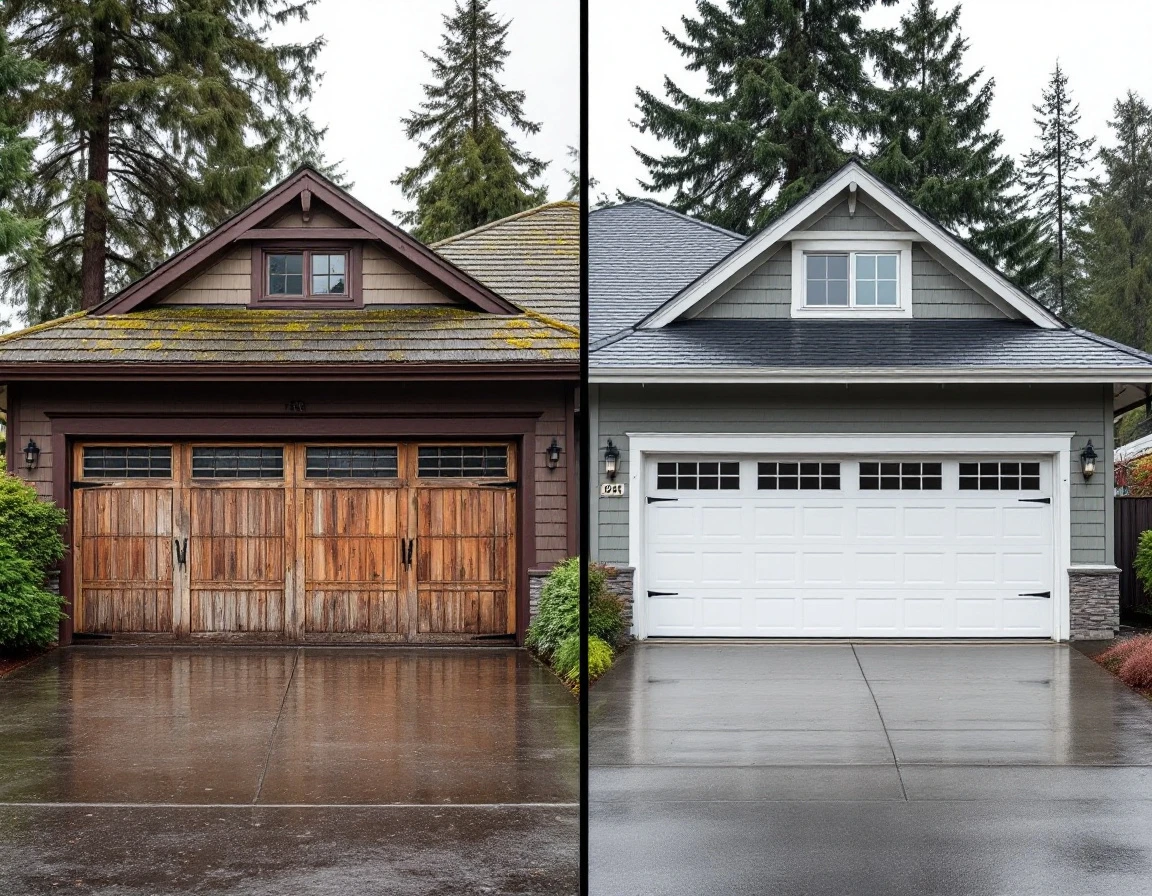
Panel Repair Scenarios: Cost Breakdown
Understanding the actual cost of garage door panel repair helps you make smarter decisions about your garage door investment. Let’s break down what you’ll pay for common damage scenarios in the Portland metro area.
- A dented or crumpled steel panel typically runs $400–$700 in labor plus $150–$300 for the panel itself.
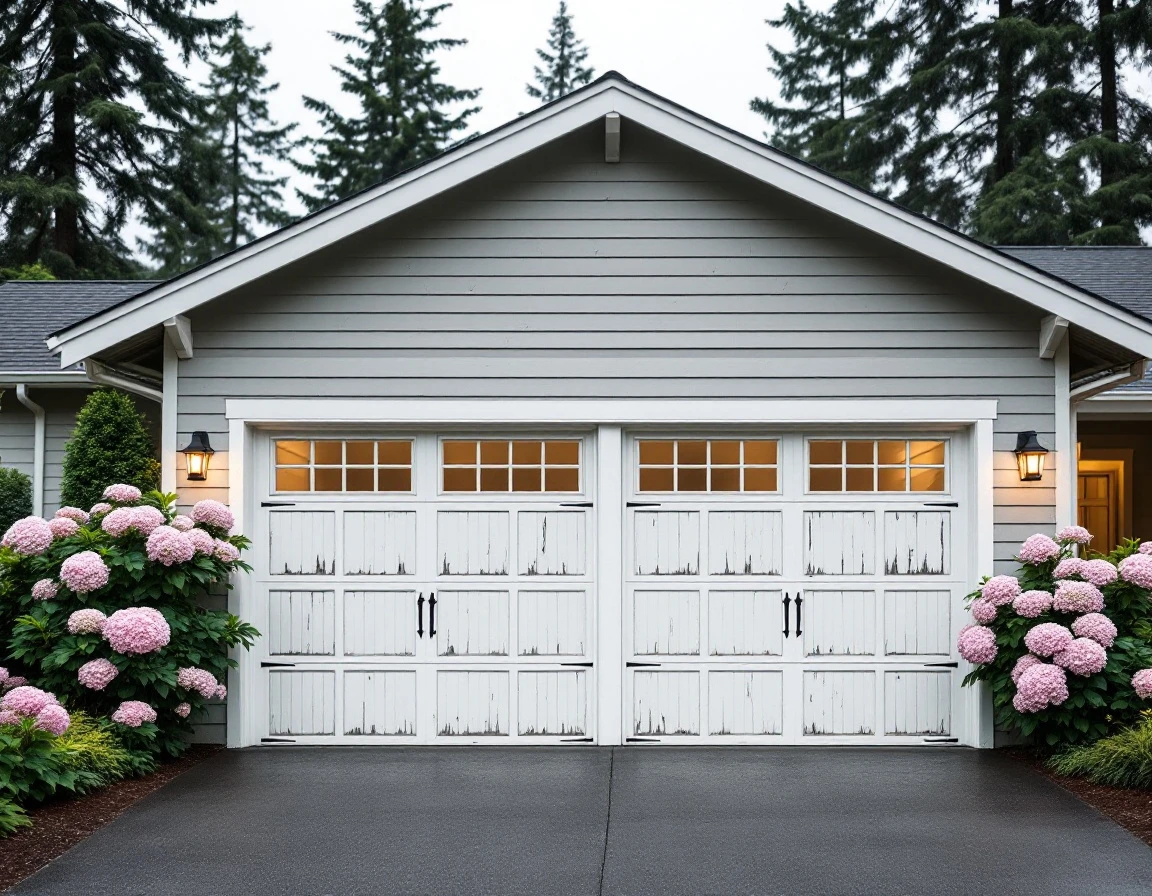
- Weather-damaged wood or composite panels fall into a similar range: $350–$650 for labor and $200–$400 for materials.
- Paint or finish damage with no structural issues costs $150–$300 for cosmetic work.
Notice that labor represents the larger cost component in most cases, reflecting the technical skill required to remove and install panels without damaging the door’s balance system.
When damage affects multiple non-adjacent panels. Repair costs escalate quickly. You might approach the economics of partial section replacement or even a full door upgrade.
Which repairs are worthwhile? Single-panel damage on newer doors makes financial sense. Multiple failing panels on a door that’s already experienced frequent repairs may signal broader system decline, making replacement the smarter long-term choice.
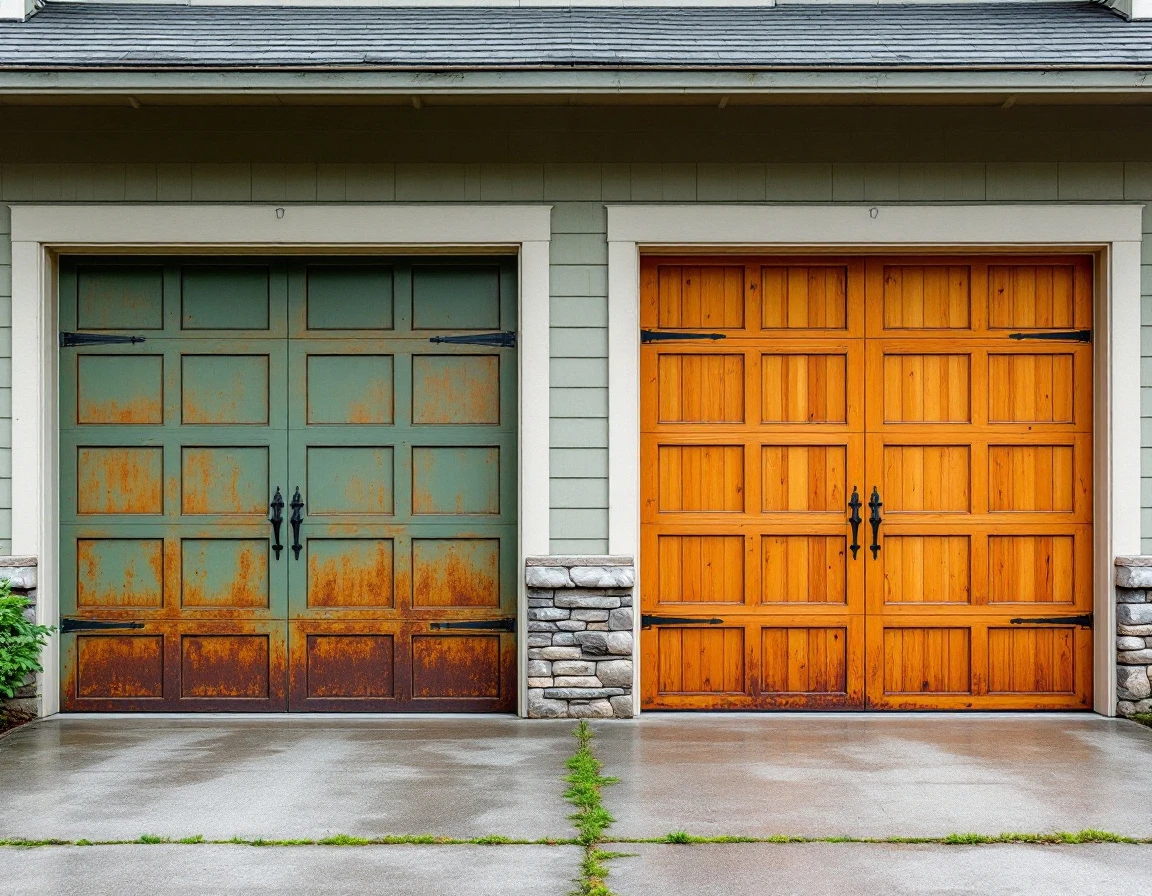
Replacement Economics: Material & Installation
When repair costs start piling up, understanding replacement pricing helps you compare options clearly. A standard steel residential garage door runs $1,200–$2,400 for materials. While insulated or specialty doors in wood. Composite, or glass push that range to $2,000–$4,500. Portland metro installers charge $300–$600 for a standard single-door installation. Bringing total replacement costs to $1,500–$3,000 for most homes.
What makes replacement particularly attractive? Warranty coverage eliminates future repair headaches. Most manufacturers provide ten-year warranties covering springs, cables, rollers, and opener components—the exact failures that plague aging doors. If your door is already approaching its second or third spring replacement, warranty protection means you won’t pay for those repairs again during the next decade.
Compare this against cumulative repair expenses over five years. Doors requiring frequent service often match replacement costs before the warranty period even expires, making new installation the more economical choice. In fact, garage door replacement consistently ranks among the top home improvements for ROI. Making it a financially sound decision beyond just repair savings.
Garage Door Repair vs Replacement: Red Flags for Replacement
How do you know when your garage door has crossed the line from fixable to finished? Certain patterns signal that you’re throwing money at a system that’s fundamentally worn out. When a door reaches 15 years old and requires three or more repair visits in the past two years, you’ve entered the rapid-decline phase where failures cascade faster than you can fix them.
Pay attention to compound failures where multiple systems break simultaneously. When a spring snaps and you discover cracked panels at the same time, you’re not dealing with isolated wear—you’re seeing evidence that the entire door has aged past its functional life. Similarly, if your opener motor fails or sensors misalign repeatedly even after professional repairs, the mounting hardware and structural integrity have degraded to the point where individual fixes won’t hold.
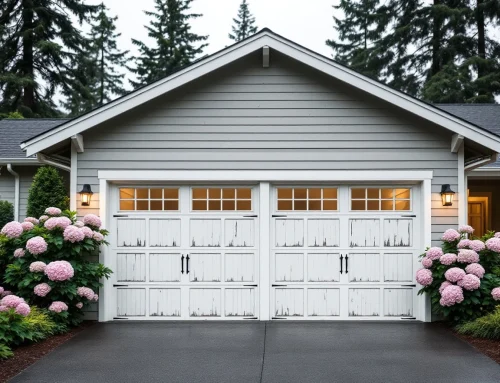
Visible deterioration tells the story most clearly. Rust eating through the frame, rot spreading across wooden panels, or corrosion pitting multiple steel sections means the door’s structural foundation is compromised. No amount of patching can restore a corroded frame or rotted structural components. These conditions make replacement the only option that delivers reliable performance and safety.
Decision Tree: Repair or Replace Framework
Ready to make a clear decision about your garage door? Walk through these four checkpoints to cut through the uncertainty.
- Check the age. Is your door under ten years old? Single or double panel damage almost always warrants repair at this stage. Between ten and fifteen years? Time to dig deeper—look at how often you’ve called for service lately.
- Count recent repair visits. One or two service calls in the past twelve months suggest isolated problems that repair can fix. Three or more visits? That pattern signals broader system decline, and replacement typically makes better financial sense.
- Run the five-year math. Add your current repair estimate to likely costs over the next five years based on your door’s repair frequency. Compare that total against replacement cost minus warranty coverage. When cumulative repair projections approach or exceed replacement cost, the answer becomes clear. As a general rule, if repairs exceed 50 percent of replacement costs. Investing in a new system provides better long-term value.
- Assess compound failures. Are multiple systems failing together—springs and panels and tracks? That’s your door telling you it has reached end-of-life, regardless of age.
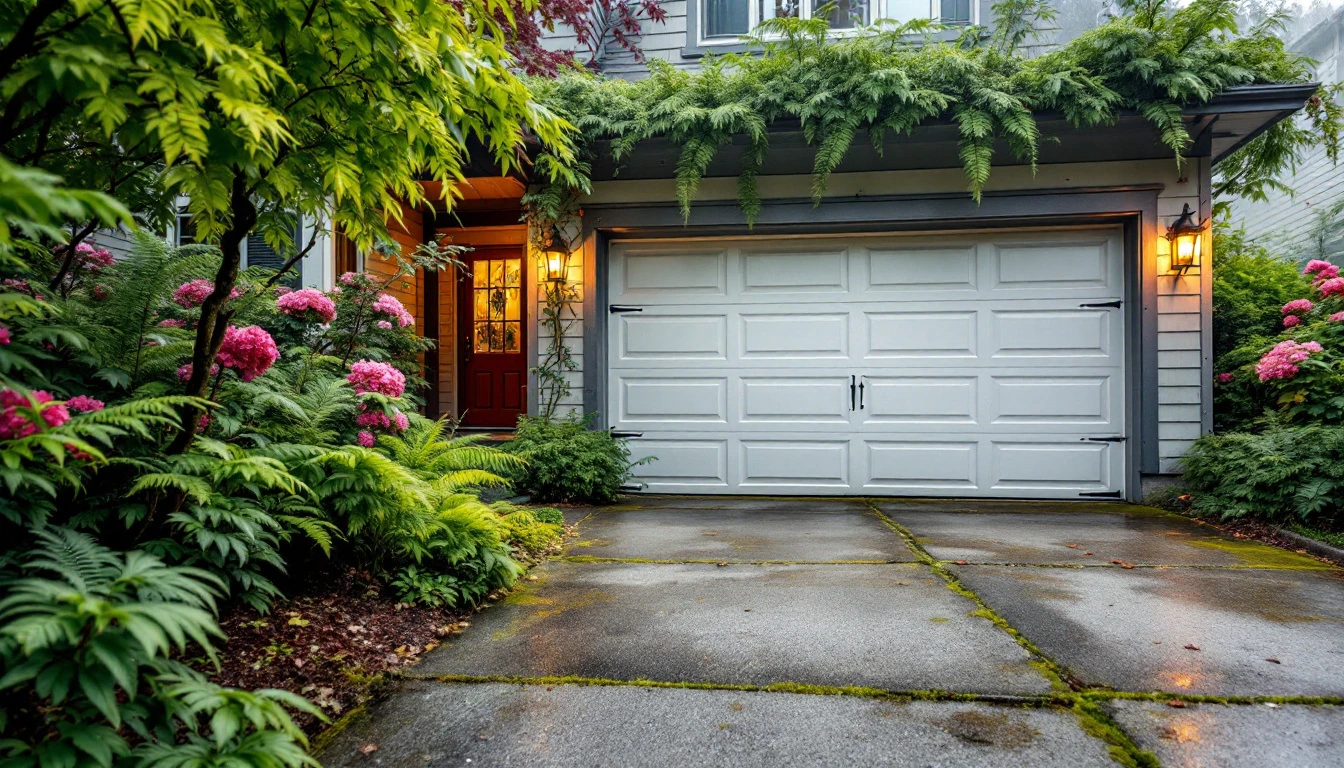
One Portland-specific factor tips this analysis: our rain, freeze-thaw cycles, and UV exposure accelerate aging in older doors. What might last another three years in a drier climate could fail within eighteen months here. Doors over twelve years old face particularly harsh seasonal stress in the metro area, which pushes borderline cases toward replacement rather than continued repairs.

Leave A Comment