Why Foothills Need Snow-Rated Doors
La Center sits at elevations above 1,500 feet, where winter weather patterns differ sharply from Vancouver’s lowlands. While Vancouver might see a few inches of snow per season, La Center and Amboy receive two to three times that amount—and it stays on the ground longer. This sustained snow accumulation creates dangerous loads on garage door panels that standard residential systems can’t handle. Homeowners in this region need La Center snow load garage doors to meet Washington State Residential Code requirements and protect their property from winter damage.
Standard garage doors installed in low-elevation areas use lighter-gauge steel and spring systems designed for mild Pacific Northwest winters. When heavy snow piles up on these doors, the weight exceeds their engineering limits. Panels buckle inward, openers strain and fail, or worse—the entire door can collapse suddenly, trapping vehicles inside or causing injury.
Washington State Residential Code addresses this reality directly. Properties in improved snow zones must meet higher structural requirements, including garage door systems rated for increased loads. Installing a non-compliant door isn’t just risky—it violates state building standards built to protect homeowners.
Failed doors during winter storms mean emergency repairs when technicians are busiest and parts are scarce. These crisis calls typically cost $2,000 to $5,000 or more, compared to planned upgrades completed before the first snowfall.
Upgrading now prevents preventable failures when you need your garage door most.
Snow Load Ratings Explained
Snow load ratings measure the maximum sustained weight a garage door system can support before structural failure occurs. This rating, expressed in PSF (pounds per square foot), isn’t a suggested guideline—it’s a technical specification that directly translates to home safety. When snow accumulates on your garage roof, that weight transfers to the door structure below, testing every component from panel thickness to spring capacity.
Washington State Residential Code defines high-snow-load zones as areas where design loads exceed 50 PSF based on elevation and historical snowfall data. Here’s where foothills homeowners need to pay attention: standard residential garage doors sold for general Vancouver-area use typically carry 20-30 PSF ratings. Which are dangerously insufficient for improved properties. La Center homes at 1,500+ feet elevation typically require 50-75 PSF rated systems to meet code requirements. Snow load rated garage doors Washington State properties require aren’t generic products—they’re engineered specifically for regional snow conditions.
A snow load rating isn’t an optional feature you can add later. It’s a code requirement for your specific location, and installing anything less puts your property at risk.
What makes a door snow-load rated? Several reinforcements work together:
- Thicker steel panels that resist bowing under weight
- Reinforced frame construction that distributes load to structural supports
- Higher-capacity spring systems built to lift the added weight
These aren’t cosmetic upgrades—they’re engineered components that determine whether your door functions safely when winter weather arrives. Snow load ratings are code requirements for your specific location.
Reinforced Door Systems
What makes a snow load-rated garage door different from a standard door? The answer goes well beyond simple weight. Snow load doors use thicker steel panels—typically 25-27 gauge compared to the 24-28 gauge found on standard doors. This increased panel thickness creates a stronger surface that resists bending under pressure when snow accumulates on the roof above.
The real engineering difference lies in the frame structure. Snow load-rated systems incorporate reinforced frames with additional bracing at stress points where vertical and horizontal members meet. These reinforcements distribute weight more evenly across the door opening, preventing the frame warping that causes standard doors to bind or fail when lateral forces increase.
Here’s where many homeowners in La Center and Amboy run into trouble: they purchase a reinforced door but mount it on a standard frame. The door itself might handle the load, but the header beam above must be sized to support the increased weight distribution. A snow load door system weighs more than standard construction, and without proper header reinforcement, the mounting points can pull away from the building structure during heavy snow events.
The insulation properties of reinforced systems also matter in foothills locations. Thicker panels provide improved thermal performance. Reducing heat loss during those cold Cascade foothill winters while maintaining the structural integrity needed when three to four feet of snow settles on your roof.
Opener and Spring Capacity
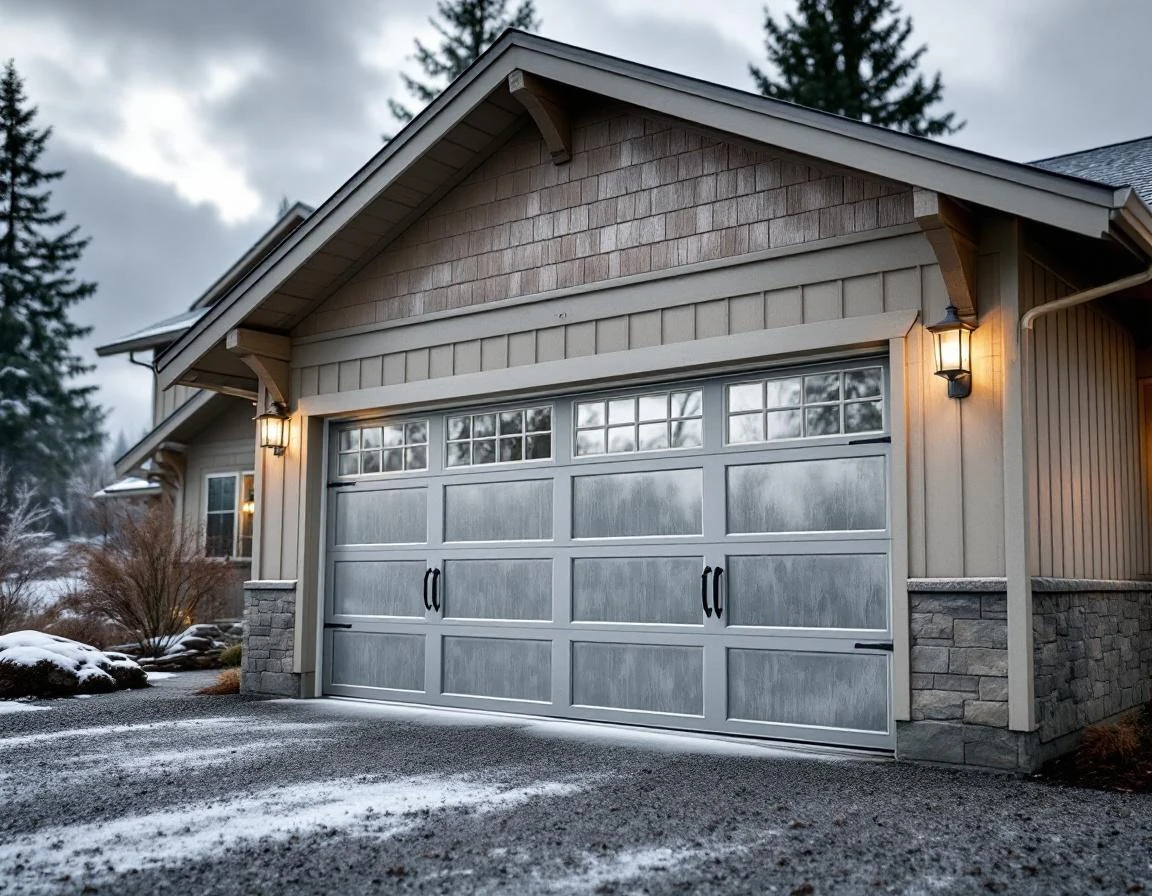
A snow load-rated door panel is only half the equation. Your opener and springs must match the increased weight, or you’re setting up a system destined to fail. Here’s the problem: a standard residential opener—typically ½ horsepower—cannot generate enough lifting force when heavy snow accumulates on your door. The motor strains against resistance it cannot handle, leading to slow operation, overheating, and eventual motor burnout.
Washington State code requires properly matched systems for a reason. If you install a snow-rated door on a standard opener, you’ll notice the struggle immediately—the door creeps upward instead of lifting smoothly, the motor groans under the load, and in cold weather, the system may fail entirely. Reinforced garage door opener heavy snow conditions require ¾ HP or 1 HP openers minimum to handle the extra weight safely.
Torsion springs present an even more critical failure point. These springs must be sized to your door’s rated weight, including the added mass of accumulated snow. Undersized springs become overloaded during winter, and spring failure is the leading cause of door collapse during heavy snow events. When a spring breaks under load, your door drops suddenly—a serious safety hazard. Garage door spring capacity for foothills properties must account for seasonal snow load—when properly matched to your door weight and local climate, your system stays reliable all winter long.
Pre-Winter Preparation Checklist
Before winter storms arrive in La Center and Amboy, homeowners should complete a systematic inspection and maintenance routine to prepare their garage door systems for heavy snow.
Inspect door panels for existing damage or bent
Before snow arrives, walk through a complete visual inspection of your door panels. Look for dents, bent sections, or warped areas that weaken the door’s structure. Even minor damage can become a failure point when snow piles on top.
Test your opener under load by operating the door several times while watching for hesitation or strain. Does it struggle to lift? You need at least ¾ HP capacity for snow-rated systems, with 1 HP preferred for heavier doors in Amboy and improved La Center properties.
Finally, check your spring tension by disconnecting the opener and manually lifting the door halfway. It should stay in place without assistance. If it drops or feels heavy, your springs may be undersized for the door’s weight—a problem that becomes dangerous when winter snow adds hundreds of pounds of additional load.
Clear tracks and lubricate all moving parts
Before winter weather arrives, clean debris from tracks and apply silicone-based lubricant to rollers, hinges, and springs. Ice can bind moving parts that aren’t properly lubricated, causing the opener to overwork or the door to freeze mid-cycle during La Center’s cold mornings.
Next, check that your header beam and frame bracing remain solid. Wiggle each mounting bracket firmly—any movement indicates loose fasteners that won’t hold under heavy snow accumulation. Tighten all bolts now, before winter storms load the system.