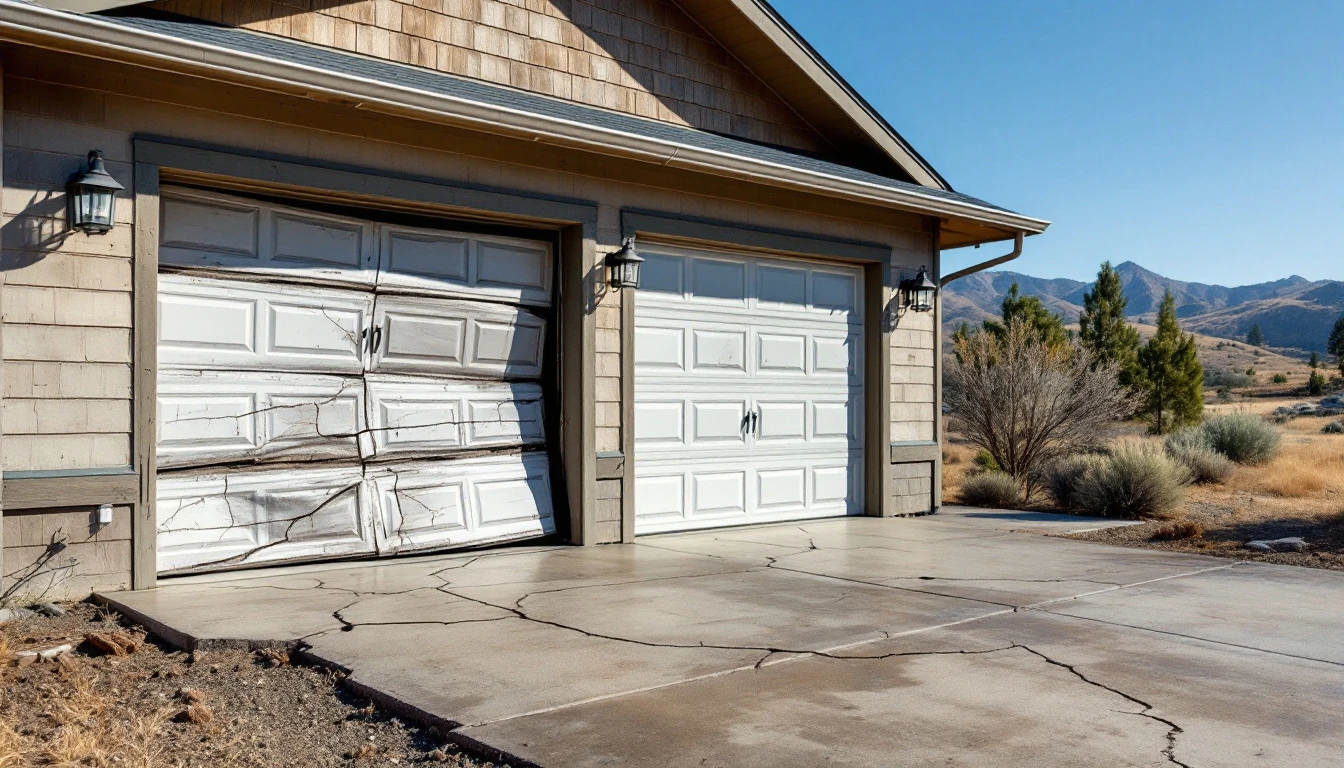
Why Earthquake Damage to Garage Doors in Eastern Oregon Demands Immediate Action
Eastern Oregon sits along active fault lines, including zones near the Wallowa Valley and Blue Mountains, where seismic activity regularly damages structures. The region faces unique earthquake damage to garage doors, particularly because these heavy, spring-loaded systems operate under constant mechanical stress. Even minor foundation shifts from seismic events can compromise their entire operation and safety.
When an earthquake moves your foundation, tracks, or springs by just a fraction of an inch, the door becomes unsafe to operate. What starts as misalignment quickly escalates—panels crack, springs snap, and the door can fall without warning, threatening vehicles, belongings, and anyone nearby.
Post-earthquake inspection within 48 hours prevents this cascading damage and protects your insurance coverage. Delayed inspections often void claims and turn simple adjustments into expensive emergency repairs requiring full system replacement.
Five Critical Structural Damage Types After Seismic Events
When you walk into your garage after an earthquake, knowing exactly what to look for can mean the difference between catching a problem early and facing an emergency repair situation. Here are the five damage types that demand your immediate attention.
Bent or misaligned tracks are often the most visible sign of damage. You’ll see gaps between the track and the wall, or the door won’t roll smoothly when you try to open it. This prevents safe operation and requires professional realignment to avoid further damage to other components.
Broken torsion springs are easy to spot—you’ll notice a gap in the spring coil above the door, often with one end hanging loose. These springs bear your door’s full weight, and a broken spring makes the door dangerous to operate. Never attempt DIY repair on these; call a professional immediately.
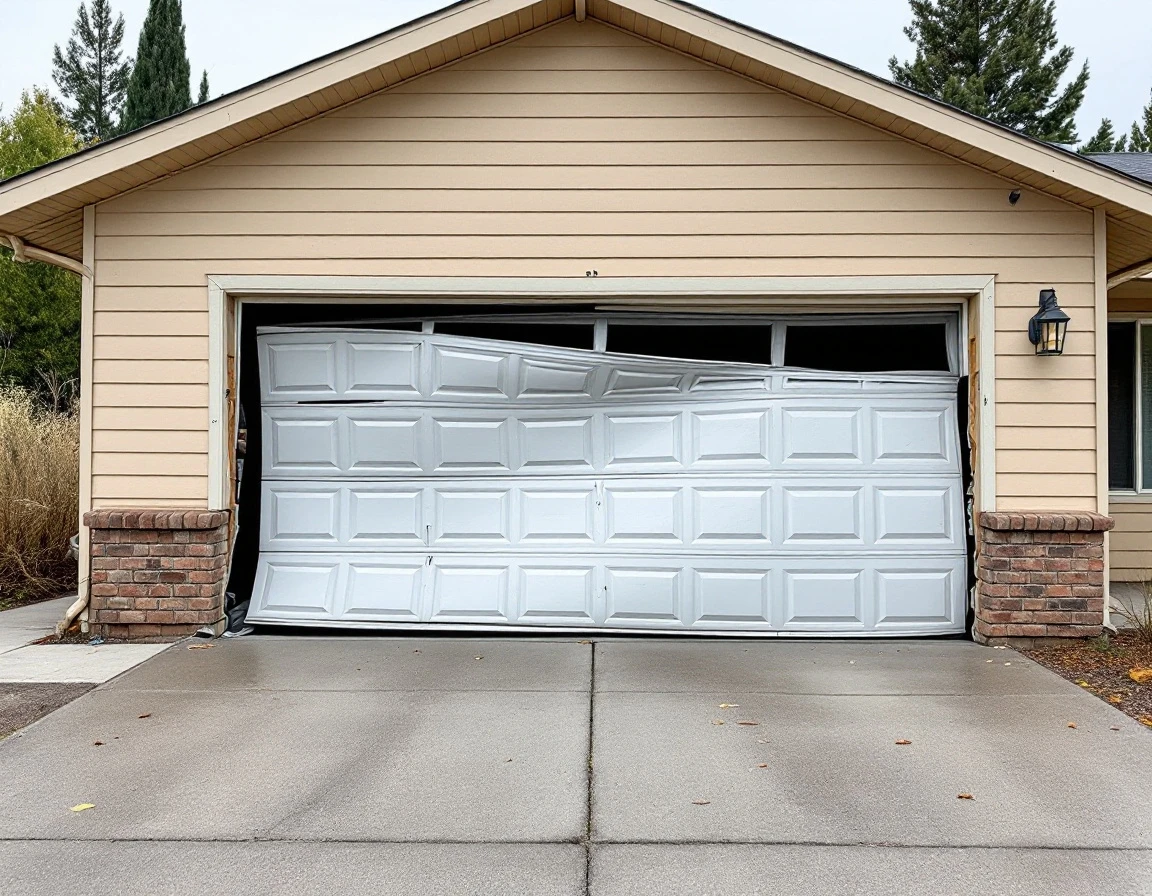
Cracked or separated panels result from lateral foundation movement during shaking. Look for horizontal cracks, sections pulling apart at the seams, or panels that appear twisted. Even small cracks compromise the door’s structural integrity and weather sealing.
Damaged rollers and hinges occur when tracks shift suddenly. You’ll hear grinding noises, see bent hinge plates, or notice rollers that won’t turn freely. These require replacement to restore smooth, safe operation.
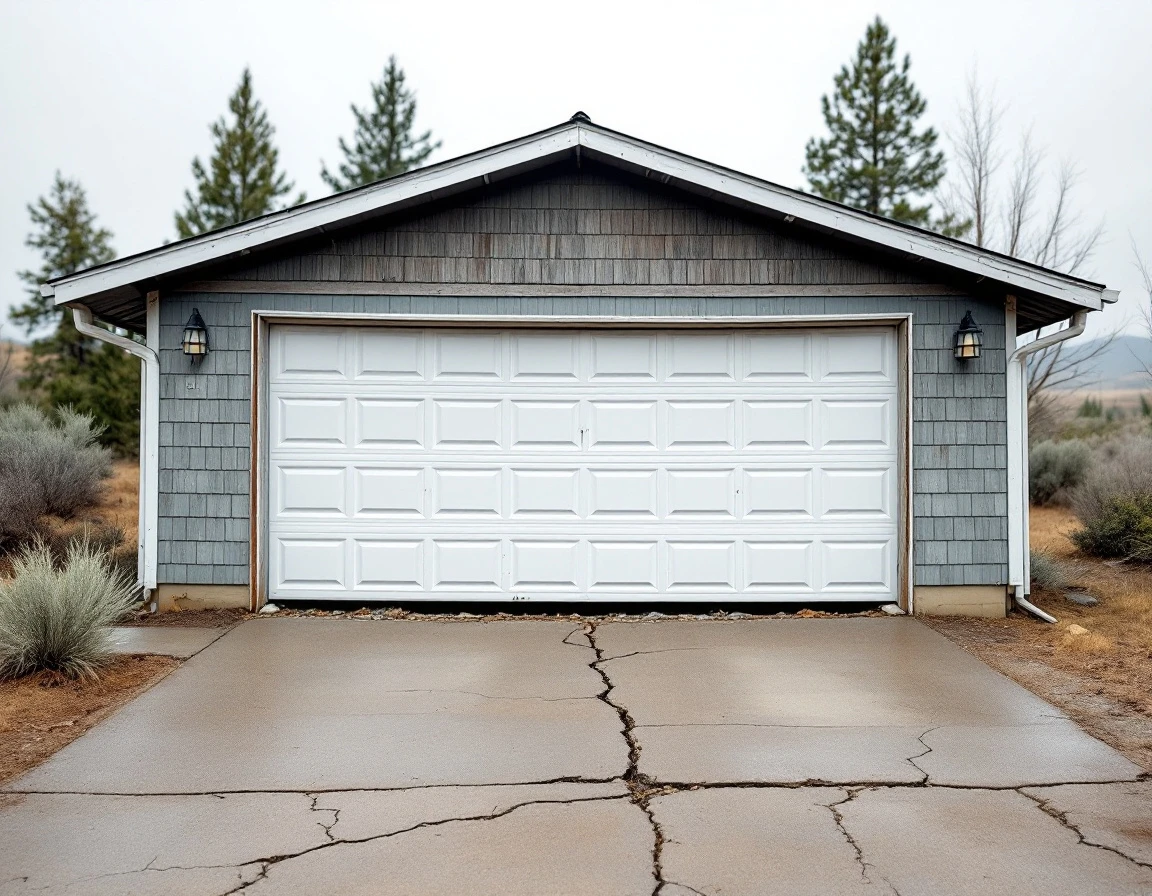
Foundation settling or cracking shows up as new gaps between the door frame and foundation, or visible cracks in the concrete. This shifts the entire door frame and demands immediate professional assessment, as it affects your home’s structural integrity beyond just the garage door.
The 48-Hour Inspection Checklist
Within two days of feeling tremors, grab a flashlight and dedicate 15 minutes to this five-point walkthrough. Start with a visual inspection around the entire door perimeter. Look for misaligned panels, bent frame edges, or fresh cracks in the door surface. Normal panels sit flush with minimal gaps; damaged ones show visible warping, separation at seams, or paint cracks that weren’t there before.
Next, disconnect the opener and attempt a manual operation test. Lift the door slowly to chest height and release. A healthy door stays in place or moves smoothly; binding, jerky motion, or sudden drops signal track or spring damage. If you encounter heavy resistance, stop immediately and call a professional—do not force it.
Examine the metal tracks for gaps where they attach to the frame, visible bends, or sections pulling away from mounting brackets. Even minor separation compromises the entire system’s stability.
Inspect springs and cables for frayed strands, rust patterns that weren’t present before the quake, or visible breaks. Never touch these components—spring tension can cause severe injury.
Finally, check the foundation and threshold where the door meets concrete. New cracks wider than a credit card or uneven settling require structural evaluation before operating the door further.
Safety, Insurance & Professional Repair
Operating a damaged garage door after an earthquake creates serious risks: a weakened system can collapse without warning, trapping vehicles, injuring family members, or blocking your only exit route during aftershocks. When should you call a professional immediately? Any visible damage to springs, cables, bent tracks, or foundation cracks requires expert assessment before you touch the door again.
What can wait? Minor cosmetic panel dents with no structural compromise can be addressed on a less urgent timeline. But here’s what’s absolutely non-negotiable for DIY: spring replacement, track realignment, and foundation repairs demand specialized tools, training, and safety equipment. Attempting these repairs yourself voids warranties and creates life-threatening hazards.
For insurance claims, documentation makes all the difference. Take clear photographs of every damage point, preserve your inspection notes, and secure a professional assessment report within 48 hours. These records establish the earthquake as the cause and prove timely action—both essential for claim approval and accurate recovery of repair costs.