

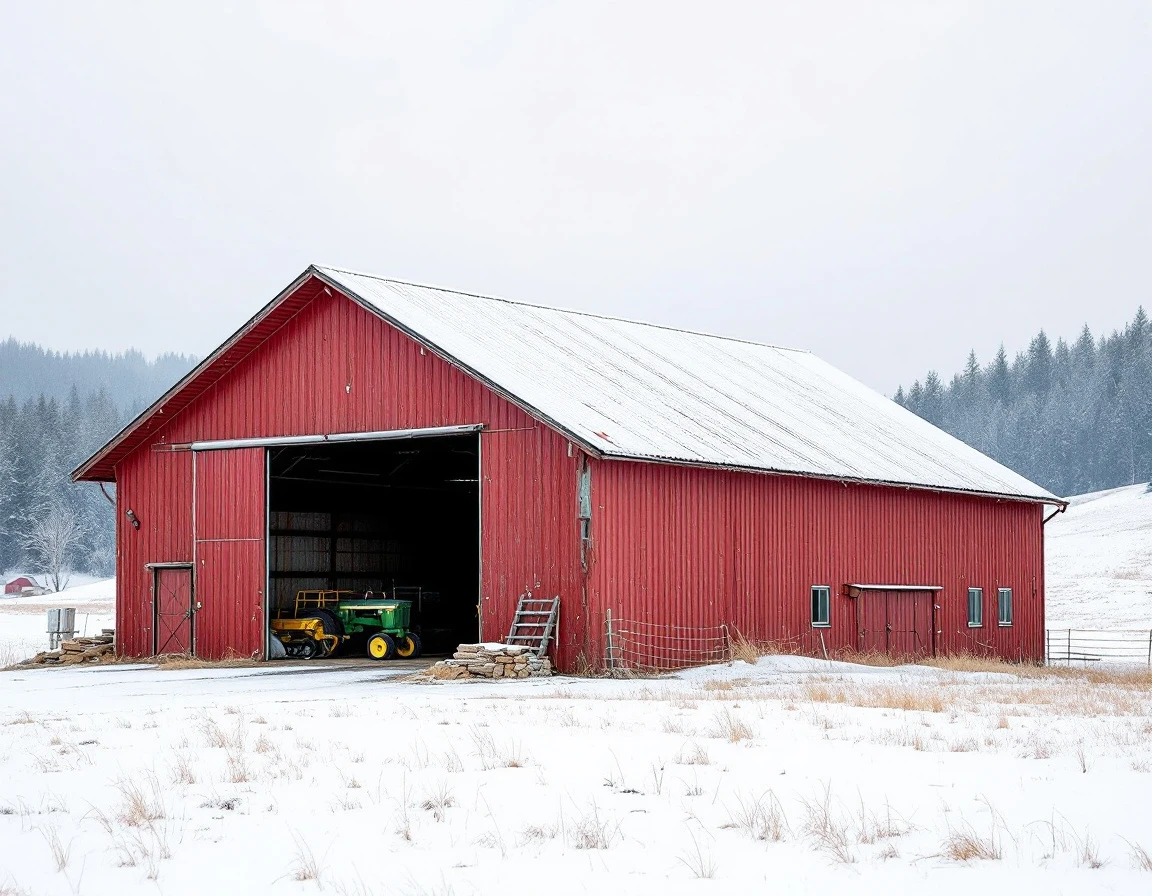
Snow Load & Equipment Storage
Rural properties in the North Clark County foothills face unique challenges that lowland garages rarely encounter. Agricultural garage doors in Amboy and surrounding areas must handle heavy snow accumulation during winter months that demands garage door systems built to withstand greater weight loads than standard residential models.
North Clark County Foothills Receive Significant Winter Snow
Properties in Amboy and the eastern foothills face winter conditions that differ markedly from Vancouver’s mild lowland climate. Snow accumulation stresses standard residential garage doors designed for lighter loads, causing track misalignment and panel buckling. Agricultural operations storing tractors, harvesters, and seasonal equipment need weatherproof protection that prevents moisture damage to expensive machinery.
Heavy-duty garage doors rated for improved snow loads prevent structural failure during winter storms. Reinforced panels and upgraded spring assemblies handle the weight without warping or bending under pressure.
Standard residential garage doors fail
Standard residential garage doors aren’t built to handle the heavy snow loads that accumulate in rural foothills areas near Amboy and other North Clark County acreage properties. When wet, heavy snow piles up on standard doors, the residential-grade springs and tracks bend or break under stress that exceeds their design limits.
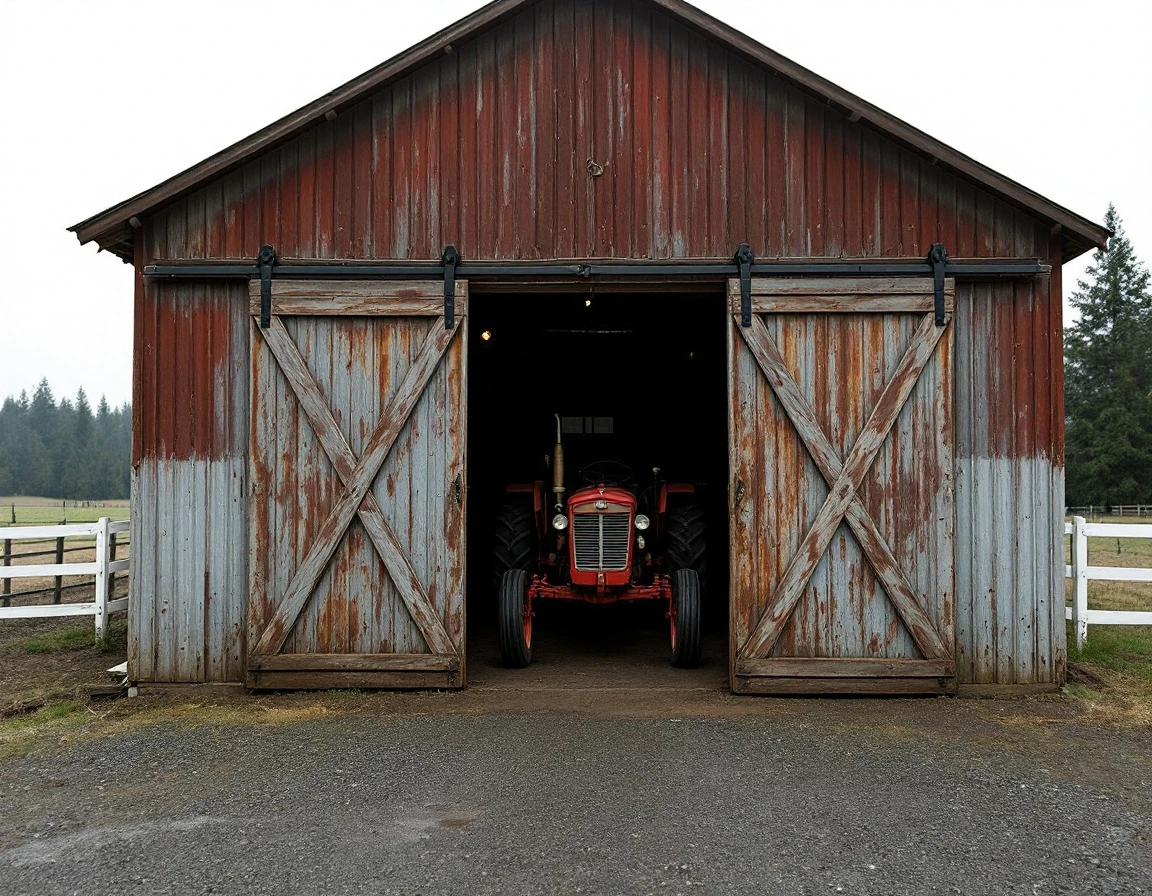
Oversized agricultural shop doors common on farm properties create additional demands that standard hardware can’t meet. These larger doors require reinforced torsion springs specifically rated for both the increased weight and the weather extremes typical of rural Washington winters. Without proper reinforcement, even new standard doors will fail prematurely on agricultural buildings.
Heavy-Duty Spring & Opener Selection for Agricultural Garage Doors
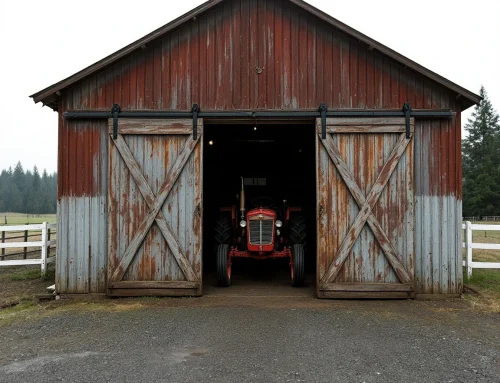
Standard residential garage door components fail quickly on agricultural properties because they’re not engineered for the weight, frequency, and weather extremes that rural acreages demand. When you’re moving tractors, hay equipment, or utility vehicles in and out seasonally, you need commercial-grade systems designed for heavy use.
Heavy-duty torsion springs differ from residential springs in three critical specifications:
- Wire gauge—commercial springs use thicker wire (typically 0.250″ or larger) that resists fatigue from repeated opening cycles
- Cycle ratings—while standard residential springs are rated for 10,000 cycles, agricultural-grade springs should carry 25,000-cycle or higher ratings to handle frequent equipment access
- Load capacity—springs must account not just for door weight but for accumulated snow load on roof sections above the door, particularly relevant in Amboy and other foothill locations where winter storms add hundreds of pounds of pressure
How do you calculate the correct spring size? Start with your door’s actual weight (measure it—don’t guess), then add expected snow load based on your roof pitch and regional snowfall patterns. Our spring maintenance guide provides detailed calculation methods, but professional measurement prevents dangerous undersizing.
Reinforced openers mean more than just higher horsepower, though that matters—look for ¾ HP or 1 HP motors rather than standard ½ HP units. Commercial-duty cycle ratings handle the stop-and-start patterns of equipment storage seasons. Safety features like automatic force adjustment prevent damage when doors encounter resistance from snow accumulation or debris. These systems cost more upfront but prevent mid-winter failures when you need reliable access most.
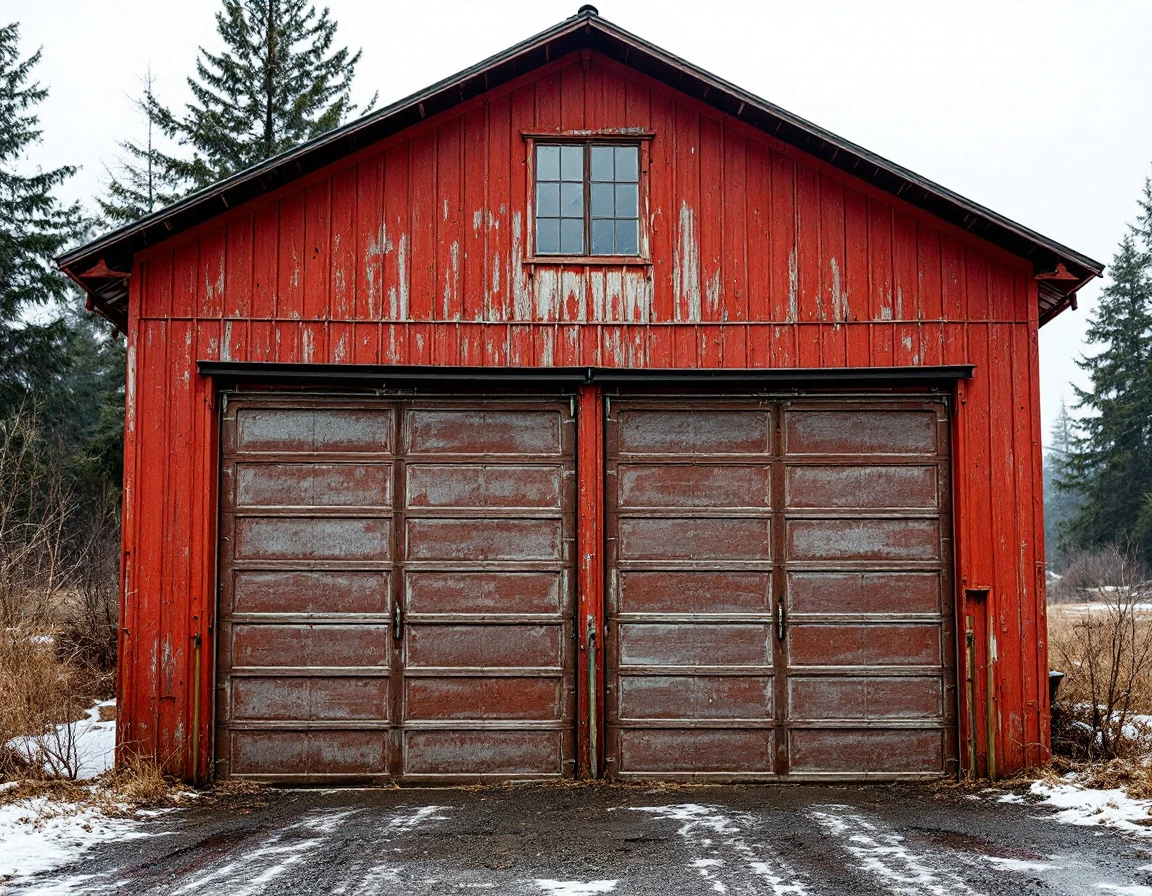
Spring Maintenance & Replacement
May offers acreage owners the perfect window to inspect and replace garage door springs before summer equipment demands intensify. After months of freeze-thaw cycling in the North Clark County foothills, springs that survived winter often show visible damage that will worsen during heavy seasonal use. Replacing compromised springs now—before you’re moving tractors, ATVs, and hay equipment daily—prevents mid-season failures that leave heavy doors stuck open or create dangerous closing scenarios.
Freeze-thaw cycles near Amboy and the East Fork Lewis River area stress springs differently than in lowland Vancouver properties. When temperatures drop below freezing overnight and rise during the day, moisture trapped in spring coils expands and contracts, creating micro-fractures in the metal. This process accelerates corrosion and weakens the spring’s tensile strength. Springs rated for 10,000 cycles in stable climates may fail at 6,000 cycles when subjected to repeated temperature extremes.
Check for warning signs yourself: listen for squeaking or grinding during operation, watch whether the door hesitates or struggles when opening, and look for visible gaps between spring coils. If you notice any of these symptoms, schedule a professional inspection immediately. Never attempt to replace torsion springs yourself—they’re under extreme tension and can cause serious injury when handled improperly.
Professional replacement of heavy-duty springs for oversized agricultural shop doors requires investment in quality installation and materials, depending on door size and spring specifications. Most installations complete within a standard workday. Schedule now while spring damage is obvious but before your busiest equipment season begins.
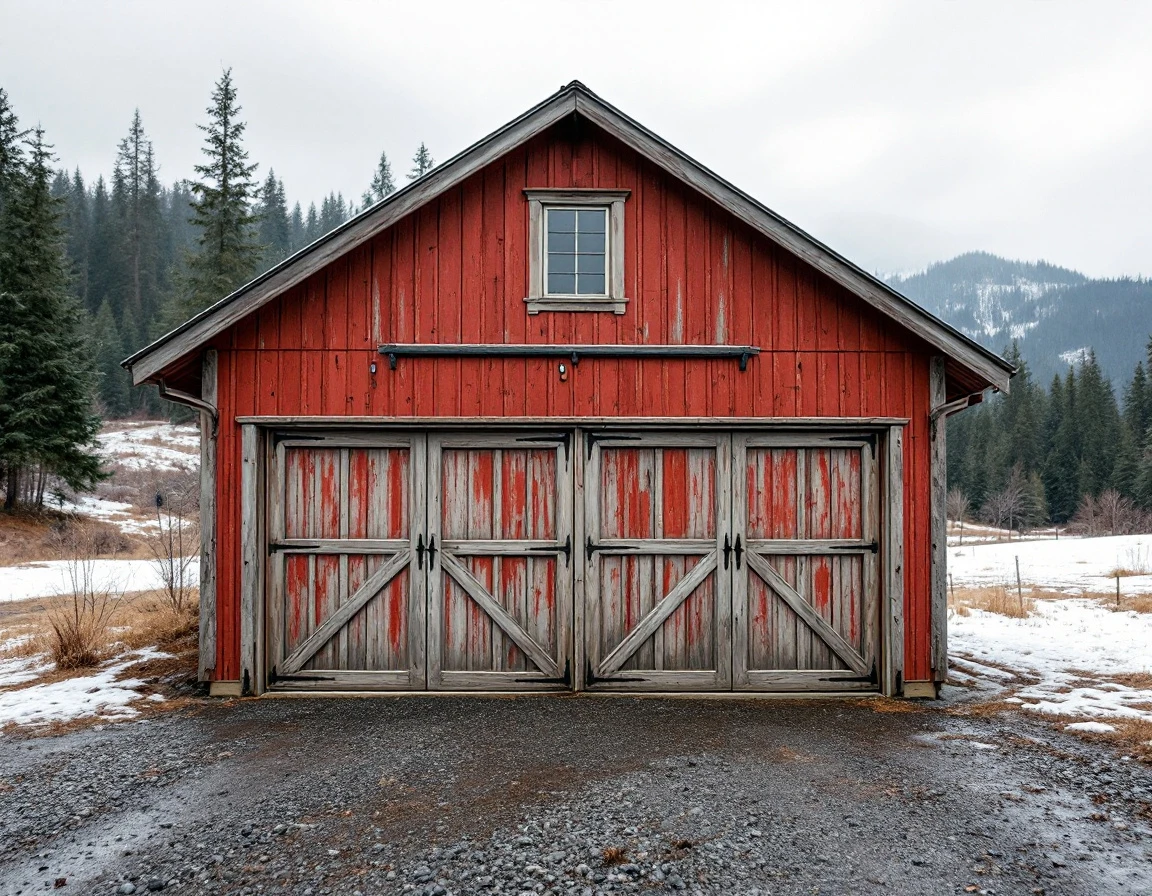
Weatherproofing for Agricultural Use
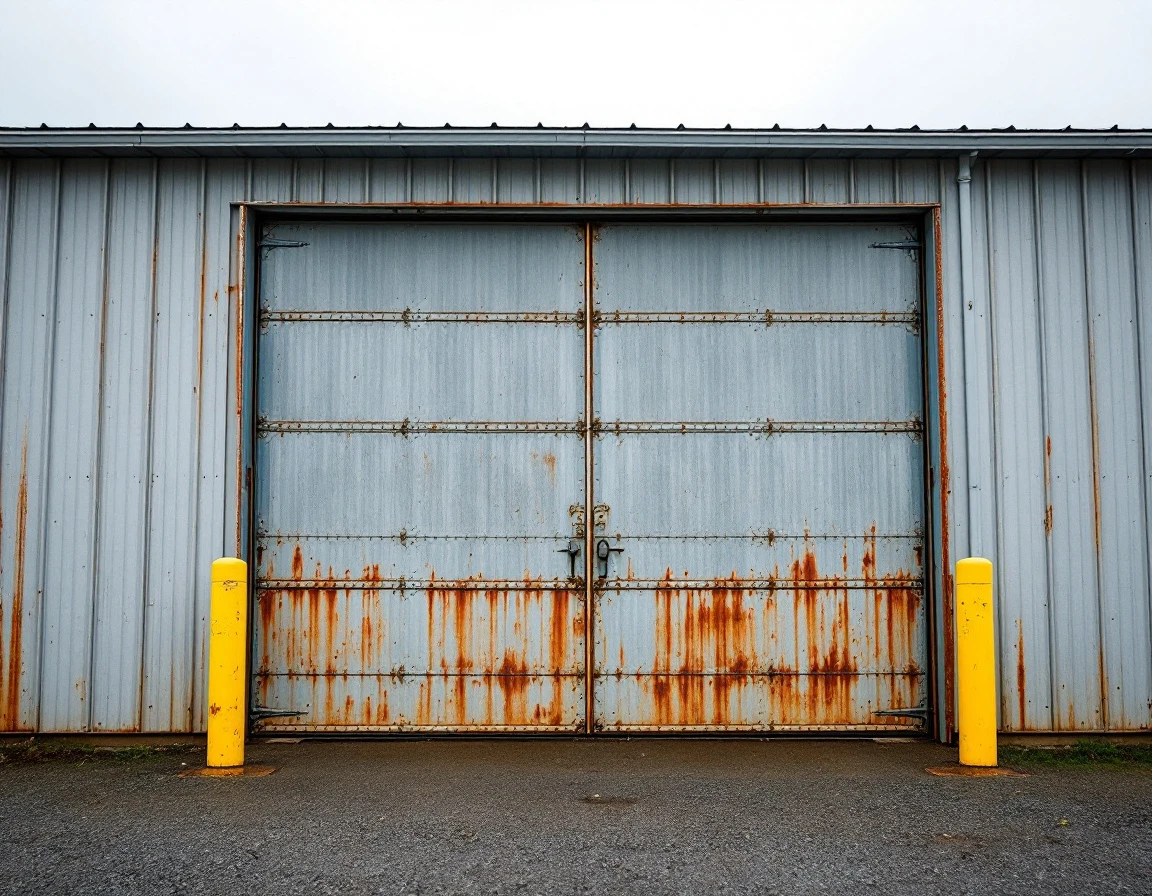
Moisture infiltration through compromised weatherstripping poses a serious threat to expensive agricultural equipment stored in shop buildings. When bottom seals crack or side rail gaskets deteriorate, water seeps inside during heavy rain events common to the North Clark County foothills. This moisture accelerates corrosion on tractors, ATVs, implements, and stored supplies—potentially requiring costly repairs or early replacement of equipment that should last decades with proper protection.
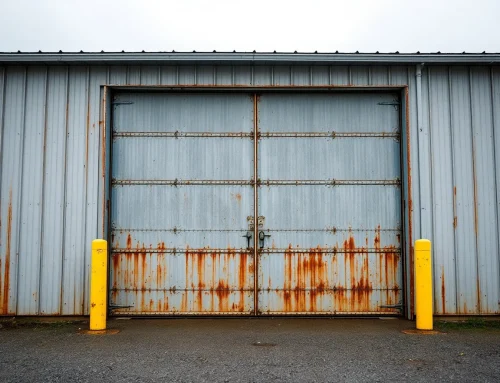
Oversized shop doors measuring 12 feet wide or larger need agricultural-grade sealing systems that differ completely from residential weatherstripping found at hardware stores. Standard vinyl bulb seals designed for 8-foot residential doors simply cannot span the width of commercial agricultural openings without gaps. Weatherproof garage doors for farm equipment storage require custom-cut EPDM rubber gaskets with aluminum retainers along side rails, plus reinforced bottom seals that withstand repeated contact with gravel and debris typical of rural driveways.
Snow accumulation and wind exposure in foothills locations like Amboy accelerate weatherproofing degradation. The freeze-thaw cycles that damage torsion springs also cause rubber seals to become brittle and crack. Inspect three critical points each spring:
- The bottom seal where the door meets the concrete threshold
- The side rail gaskets where the door edges contact the frame
- The top seal if your building has one
May represents the ideal window for weatherproofing inspection and replacement before summer equipment storage demands increase. Professional assessment identifies failure points that aren’t always visible to property owners, and means custom-sized components match your specific door dimensions. Investing in proper agricultural weatherproofing now prevents moisture damage during the wet months ahead.
Professional Installation vs DIY Limits
Understanding which garage door tasks you can safely handle yourself—and which demand professional expertise—protects both your safety and your investment. For agricultural property owners in the North Clark County foothills, basic inspection and maintenance fall well within DIY territory. You can safely check weatherstripping for cracks, inspect tracks for visible damage, and apply lubricant to rollers and hinges. These simple tasks help you catch early warning signs before they become expensive repairs.
What you should never attempt yourself is spring replacement or opener installation. Heavy-duty torsion springs hold immense tension—enough to cause serious injury or death if improperly released. Professional technicians use specialized winding bars and safety equipment designed specifically for this task. Similarly, commercial-grade opener installation requires precise calibration of safety sensors and force settings. A miscalibrated opener on an oversized shop door can create dangerous closing forces or fail to reverse when encountering an obstruction.
Heavy-duty systems demand stricter installation standards precisely because they handle greater forces. Improper installation voids manufacturer warranties and creates safety hazards that worsen over time.
Local North Clark County specialists familiar with foothills climate conditions and agricultural garage door requirements offer professional heavy-duty spring replacement services, including parts and labor. Schedule pre-summer work by early May—technicians book quickly as property owners prepare for peak equipment use. Contact Garage Harmony today to connect with professionals who understand your specific needs.


Leave A Comment