


Why These Two PNW Architecture Styles Dominate Portland
Portland’s housing market splits cleanly between contemporary minimalism and craftsman tradition, reflecting the region’s dual identity as tech-forward innovator and historic preservationist. These PNW architecture styles—contemporary and craftsman—represent the defining approaches to residential design across the Pacific Northwest. Your garage door choice should reflect whichever style fits your home.
Contemporary and craftsman styles reflect Pacific Northwest conditions
Both contemporary and craftsman designs emerged as direct responses to Pacific Northwest conditions. Craftsman homes appeared in the early 1900s with deep eaves protecting against Portland’s nine-month rainy season, while contemporary architecture embraces large windows to capture limited winter sunlight and mountain views.
These styles align naturally with regional priorities. Sustainability drives material choices—reclaimed wood in craftsman renovations, energy-efficient glass in contemporary builds. The emphasis on indoor-outdoor living through covered porches and smooth transitions suits Portland’s temperate climate, where outdoor spaces remain usable year-round with proper shelter.
Understanding dominant styles helps homeowners
Knowledge of contemporary and craftsman styles helps Portland-area homeowners make renovation choices that complement their neighborhood’s character. Planning a garage door replacement or exterior updates? Recognizing whether your home follows craftsman principles or contemporary design helps you select materials and details that enhance your property’s character. Contact Garage Harmony today to discuss options that match your home’s style.
These style choices directly affect resale value throughout the Portland metro. Homes in Laurelhurst and Irvington benefit from maintaining craftsman authenticity, while properties in Happy Valley and Progress Ridge command higher prices with contemporary design coherence.
Your garage door is a prominent architectural element that either reinforces or undermines your home’s style narrative.
Contemporary Style: Elements & Principles
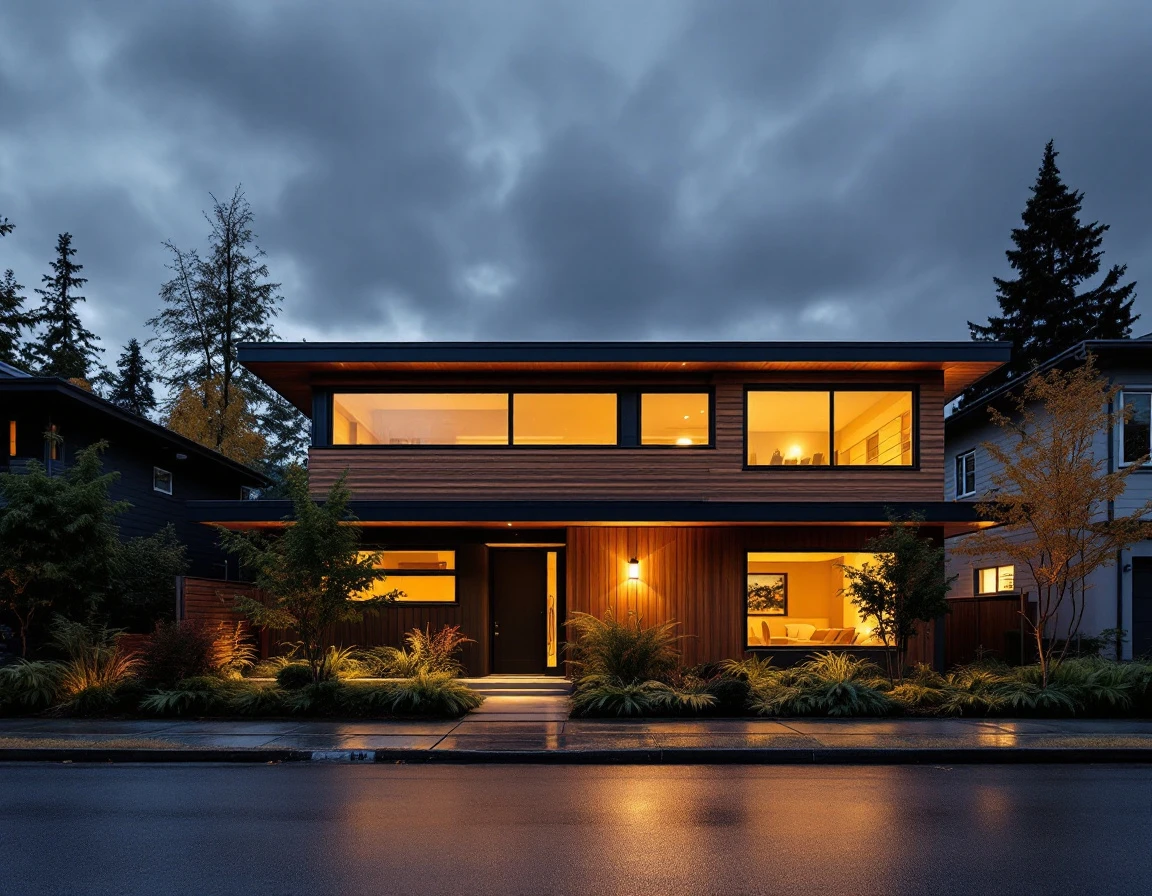
Contemporary homes in the Pacific Northwest use clean lines and connect indoor and outdoor spaces. Large windows let you enjoy your views, and open floor plans adapt to how you actually live. These homes feature flat or low-slope roofs and minimal decoration. Function matters more than ornament. You’ll see exposed steel beams, concrete floors, and sustainably sourced wood instead of decorative trim.
The visual hallmarks are easy to spot when driving through Portland’s urban neighborhoods. Look for homes with floor-to-ceiling windows, often positioned on the south-facing side to capture winter sunlight and reduce heating needs. Flat roofs simplify snow load management compared to complex roof valleys, while broad overhanging eaves protect walls and windows from our persistent rain. The color palette tends toward neutrals—grays, whites, blacks, and natural wood tones—creating a backdrop that highlights the surrounding market rather than competing with it.
In neighborhoods like Goose Hollow and University Park, contemporary homes stand out with their geometric forms and strategic use of glass. Large windows frame views of nearby trees or mountains. Open floor plans accommodate flexible lifestyles. Energy-efficient materials align with regional sustainability values. Your garage door should match this clean, minimal aesthetic while providing proper insulation.
Contemporary design serves our climate through intentional choices: south-facing glass maximizes passive solar heating, reducing winter energy costs. Material honesty means fewer maintenance headaches—metal, concrete, and treated wood withstand our wet winters better than complex architectural details that trap moisture.
Craftsman Style: Character & Construction
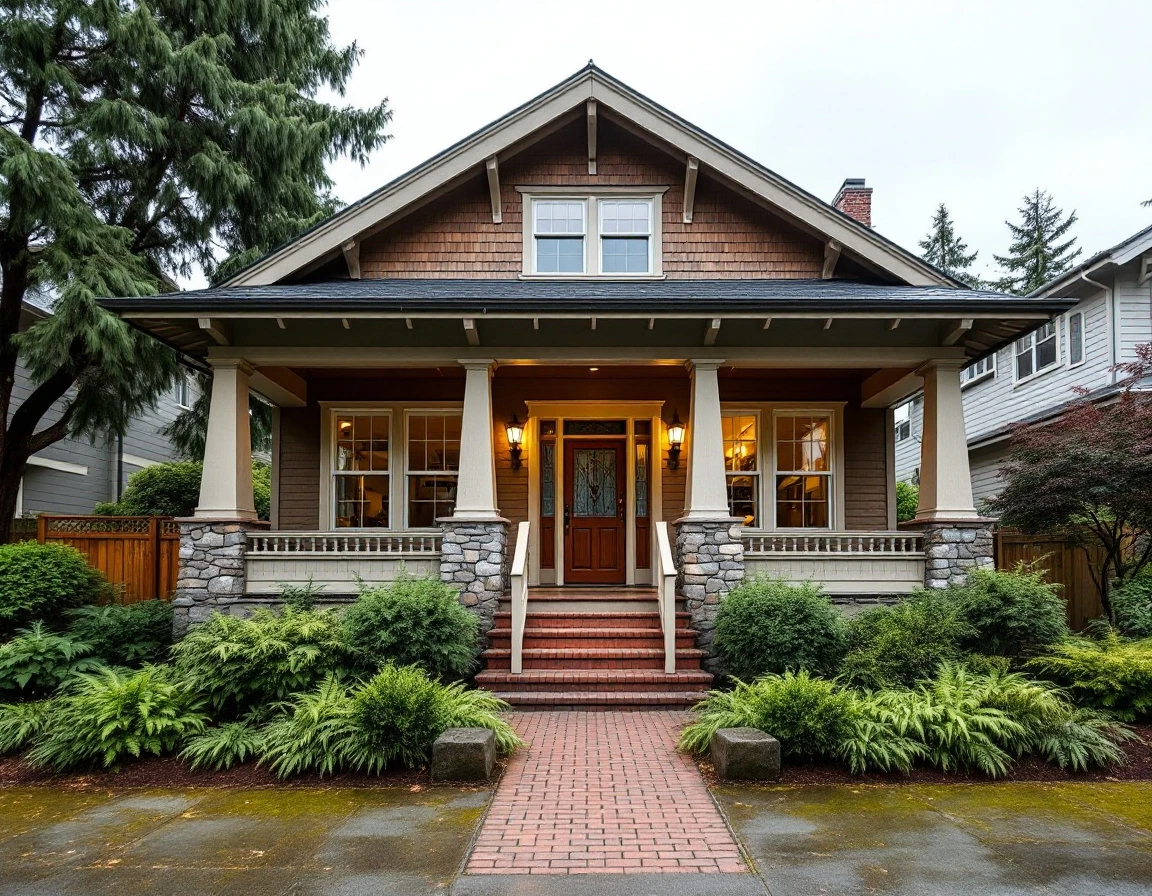
Craftsman architecture defines Portland’s residential identity more than any other style. Walk through Laurelhurst or Irvington, and you’ll notice craftsman homes celebrate their materials. Exposed wood beams, detailed trim, and quality craftsmanship define these neighborhoods. Your garage door should reflect the same quality and character—that’s where Garage Harmony comes in.
The defining features include:
- Tapered columns supporting deep front porches
- Low-pitched roofs with wide overhanging eaves
- Warm wood tones that age gracefully in our wet climate
Natural materials dominate craftsman homes. You’ll see Douglas fir beams and river rock foundations. Copper gutters develop a beautiful green patina over time. Every detail serves both function and beauty.
This philosophy emerged from the early 20th-century Arts and Crafts movement, a direct reaction against industrial mass production. Craftsman builders celebrated the maker’s hand, proving that homes could be both honest and beautiful. Portland embraced this approach early, and neighborhoods like Goose Hollow and Historic Richmond showcase exceptional examples you can still observe today. Modern craftsman design in Portland continues this legacy, with new construction honoring traditional details and material honesty.
The style resonates because it mirrors Pacific Northwest values: respect for materials, expectation of durability, and appreciation for craft.
The style’s influence runs deep in Portland’s design DNA, shaping how homeowners think about quality, authenticity, and what makes a house worth preserving.
How Climate Shaped These Styles
Portland’s 40+ inches of annual rain doesn’t just define our winters—it shaped how we build homes. Both contemporary and craftsman architectural styles evolved specific strategies to handle wet winters, freeze-thaw cycles in higher elevations like Mt. Hood and Sisters, and our mild but damp climate patterns.
Deep eaves are non-negotiable in both styles. Contemporary homes use cantilevers and overhangs that shed water away from windows and foundations, while craftsman designs feature those characteristic wide eaves with exposed rafter tails that protect wood siding from constant moisture. These aren’t decorative choices—they’re weatherproofing essentials that keep water off walls and prevent rot in our humid climate.
Window placement follows the sun. Both styles favor large south and west-facing windows to capture winter light and passive solar heating, critical during our gray months when every ray of sunshine counts. Contemporary homes use energy-efficient windows and materials that trap heat during the day and release it at night. How do craftsman homes achieve this? Strategic window placement and thick walls buffer temperature swings naturally.
Material choices reflect climate reality. Craftsman stone foundations and wood frames weather our conditions when properly maintained—the visible construction details let homeowners spot weathering problems before they become structural issues. Contemporary sealed details and durable materials like steel and fiber cement resist moisture penetration while requiring less hands-on maintenance. Your elevation matters too: homes in Bend or near Mt. Hood face more intense freeze-thaw cycles that demand even more attention to drainage and material durability.
Which Style Fits Your Home & Goals
Choosing between contemporary and craftsman homes starts with understanding your property and priorities. If your home dates from the 1960s or later and you plan to stay five or fewer years, contemporary updates typically offer the best return. Clean-lined garage doors. Energy-efficient windows, and low-maintenance fiber cement siding appeal to buyers aged 25-45 who value modern utility. These upgrades require less upkeep and align with newer construction throughout Beaverton, Happy Valley, and Gresham.
Craftsman style homes tell a different story. If you live in established neighborhoods like Laurelhurst or Milwaukie’s Ardenwald district, preserving period details protects resale value. Heritage-focused buyers pay premiums for authentic wood doors, exposed rafter tails, and handcrafted trim—but expect higher maintenance. This approach works best when you’re willing to invest in periodic refinishing and when surrounding homes share similar character.
Can you successfully blend styles? It depends on execution. Adding contemporary elements to a craftsman home works when materials and proportions respect the original design—think energy-efficient windows in traditional sizes, or a carriage-style garage door with modern insulation. Going the other direction requires more care, as contemporary homes don’t easily accommodate ornamental detailing.
Ask yourself: How old is my home? What style dominates my block? Should my garage door match that style? How much maintenance am I willing to handle? We can answer that last question for you—modern garage doors require less maintenance than you might think.
Your answers reveal whether contemporary efficiency or craftsman character serves your goals. Garage doors, exterior finishes, and landscaping then amplify whichever direction makes sense for your specific property context. Contact Garage Harmony today to find the right garage door for your home’s architectural style.



Leave A Comment