Why June Is Your Setup Window for Setting Up a Garage Workshop Summer
Portland homeowners looking to establish a garage workshop face a critical decision: when to tackle the project. June offers a unique convergence of conditions that make setting up garage workshop summer projects far more efficient than any other month. With daylight stretching to 15 hours at the summer solstice, you gain precious time to complete tasks without racing against darkness or sacrificing weekends to rushed work.
The temperature sweet spot matters more than most people realize. June’s consistent 65–75°F range keeps physical labor comfortable without the exhausting heat stress that arrives in July and August. Compare this to late summer, when afternoon temperatures regularly climb into the 90s, making extended garage projects feel like endurance tests rather than productive weekends.
Weather stability gives June another decisive advantage. While July brings heat waves and August introduces unpredictable storms that can halt outdoor work, early summer provides reliable execution windows. You won’t find yourself rescheduling paint drying times, concrete curing periods, or electrical installations around sudden weather changes.
Finishing setup in June means you’ll have a fully functional workspace ready for those summer evenings and weekends when you actually want to enjoy your new garage instead of still building it. Delay past June, and you’re setting up during the season you should be using it.
Pre-Setup Assessment Checklist
Before you move a single workbench or power tool into your garage, spend 1–2 hours this June conducting a thorough assessment that will prevent costly mistakes and wasted effort. Portland’s mild early-summer weather makes this the perfect time to complete this baseline evaluation while you can comfortably move around your space.
Complete your pre-setup assessment by evaluating the following items:
- Measure your garage’s footprint, ceiling height, and door widths to determine if you can fit a full-size table saw or need wall-mounted folding workbenches
- Count every electrical outlet and note their amperage, since Portland’s older Craftsman garages often have just one or two circuits that may need upgrading
- Check foundation seams, door thresholds, and ventilation gaps for moisture intrusion specific to Portland’s wet climate
- Look for water stains on concrete floors or efflorescence (white mineral deposits) that signal ongoing dampness
- Track sunlight patterns at 9 a.m. and 3 p.m. to position your workbench where natural light hits during peak working hours
Document these issues before equipment arrives, because moisture will rust saw tables and damage fine woodworking tools within months. For effective moisture control strategies specific to Portland garages, review our seasonal maintenance guide.
Priority Setup Tasks for June
June’s mild weather and extended daylight create the perfect conditions to tackle the foundational tasks that transform your garage into a functional workshop. While you could defer these projects to later in the summer, completing them now means avoiding the complications that come with Portland’s July heat waves and August storm potential. Focus on three core priorities that benefit directly from current conditions.
Floor Protection Comes First
Start with floor preparation and coating while temperatures hold steady between 65–75°F. Epoxy coatings and concrete sealers require specific curing conditions that June naturally provides. Plan for 2–3 days to clean, prep, and apply your chosen coating. This weather window matters because high temperatures cause rapid curing that traps imperfections, while cooler conditions can extend drying times unpredictably. A properly sealed floor protects against moisture intrusion, which is particularly important in Portland garages where foundation dampness remains a year-round concern.
Electrical Work While Comfort Allows
Schedule electrical upgrades and lighting installation during June’s comfortable working conditions. Running new circuits, installing overhead LED fixtures, and adding dedicated outlets for power tools becomes exhausting work in July’s heat. Allocate 1–2 days for electrical tasks when you can work efficiently without heat exhaustion slowing progress. Good lighting installation now means you’ll have proper visibility for all subsequent setup work.
Position Core Equipment
Once your floor cures and electrical systems are live, move workbenches into position and mount wall storage. These placement decisions determine your workshop’s functionality for years ahead, so take time to test different arrangements during June’s long daylight hours. If time runs short, defer cosmetic upgrades like wall paint or trim work to August or September. Building your functional baseline now means you can start using your DIY garage workshop Portland style immediately, rather than waiting until fall when project motivation typically wanes.
Flooring and Electrical Foundation
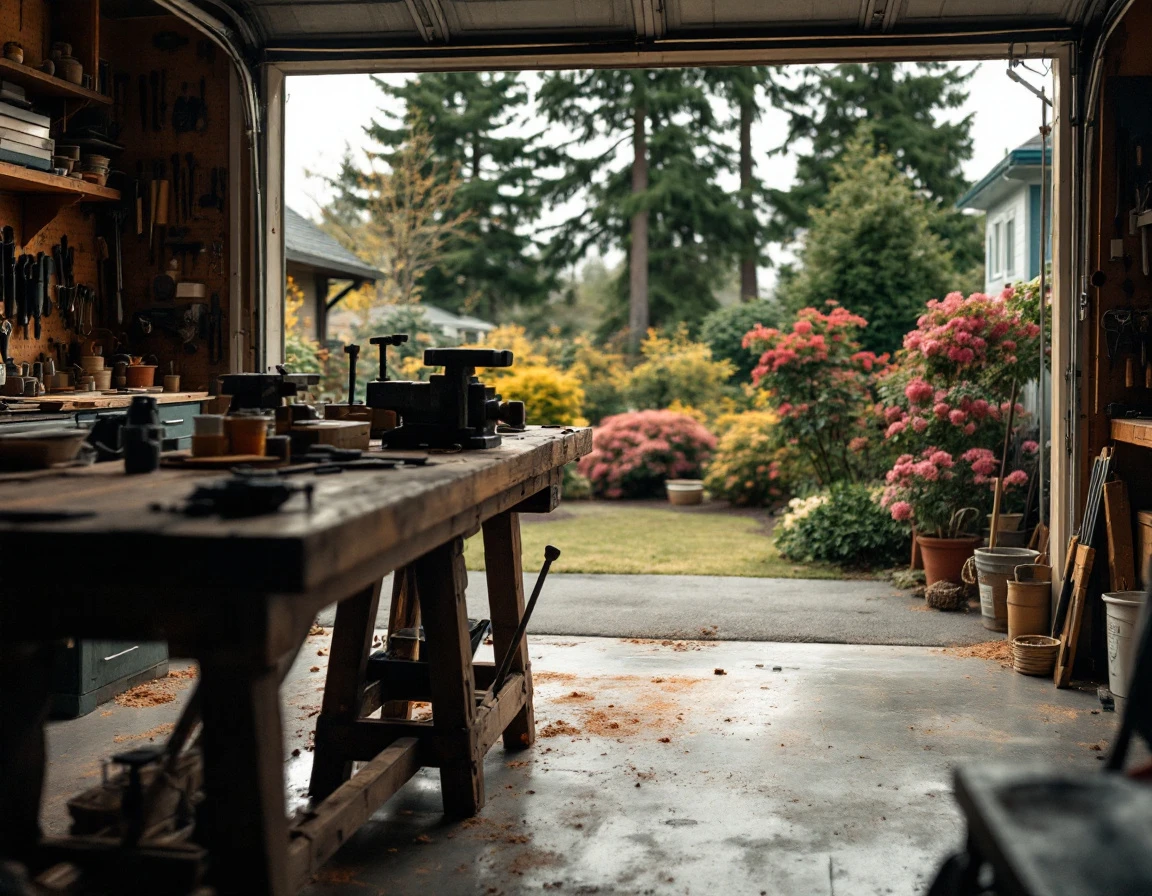
Your garage floor and electrical system form the permanent infrastructure of your workshop—two elements that cannot be easily modified once equipment fills the space. June’s 65–75°F temperature range creates ideal conditions for epoxy floor coating. A critical advantage that disappears when July heat arrives. Portland summers regularly exceed 90°F, and those higher temperatures accelerate epoxy curing unpredictably, creating surface bubbles and uneven finishes that compromise durability.
The epoxy application process spans two full days: thorough cleaning and degreasing on day one, followed by primer and topcoat application on day two. This coating resists moisture, spills, and staining far better than bare concrete, protecting your floor from oil leaks, paint drips, and the water tracked in during Portland’s rainy months.
Once cured, epoxy provides a sealed surface that cleans with a simple mop—but the coating must finish before you move heavy workbenches or toolboxes into position.
Electrical work follows the same logic: adding one or two dedicated 20-amp circuits for power tools prevents breaker overloads and eliminates extension cord trip hazards across your workspace. Installing these circuits before your workspace is occupied avoids the disruption of moving equipment later, drilling through drywall around shelving, or working around active projects. June gives you the empty-garage access needed to route wiring efficiently and position outlets exactly where your table saw, compressor, and charging stations will live all summer.
Tool Storage and Workbench Setup
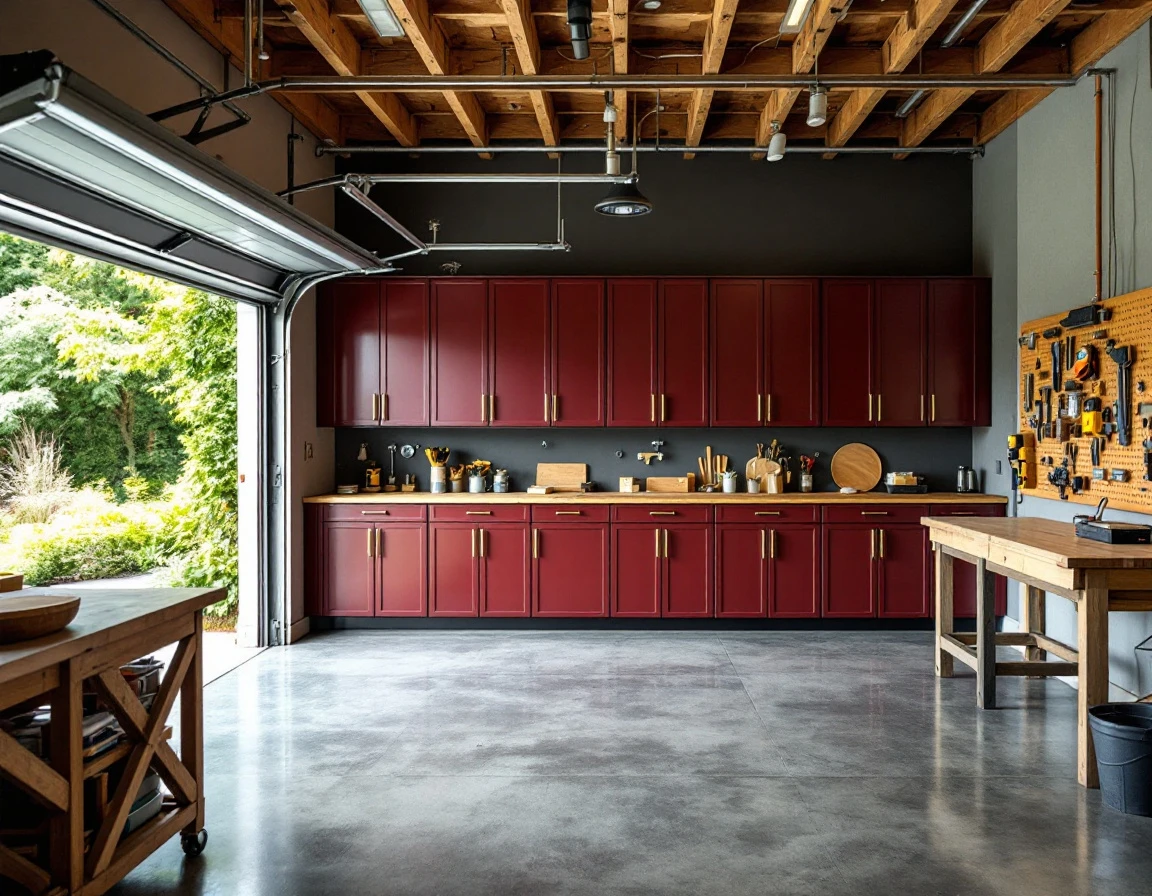
Once your floor coating has cured and electrical circuits are installed, June’s comfortable 65–75°F temperatures make tool storage installation and workbench assembly genuinely pleasant work. Installing a 4’×8′ pegboard for hand tools takes one day with minimal tools—just a drill, level, and stud finder. The mild weather means you can work steadily without heat exhaustion, unlike July when mounting heavy pegboards in a non-climate-controlled garage becomes physically demanding.
Workbench positioning matters more than most homeowners realize. Place a 48-inch workbench under a window for natural light, positioning it near your new dedicated outlets for power tool access. This setup takes half a day in June’s pleasant conditions, and you’ll immediately appreciate the ergonomic advantage when you start projects. Add two wall cabinets above the workbench for power tool storage—a one-day installation that uses vertical space without blocking movement around your workshop.
Why does June timing matter here? Because completing these installations now means you can start woodworking projects immediately, while your garage remains a functional workspace all summer. Delay to July, and you’ll be assembling furniture in 90°F heat while your unfinished space sits unusable. Summer garage organization tips like this one help you maximize your season.
June Timeline and Next Steps for Your Garage Workshop Setup Guide
Ready to turn your garage into a functional workshop before summer peaks? Here’s a realistic June timeline that fits around your work schedule and uses those long daylight hours.
- Week 1 (June 1–7): Apply epoxy floor coating during a weekend when temperatures stay between 65–75°F. Prime surfaces on Saturday morning, apply the coating Sunday, and let it cure through the workweek. Schedule any electrical contractor work for mid-week visits while the floor cures.
- Week 2–3 (June 8–21): Install dedicated circuits and assemble your workbench over two weekends. The mild temperatures make electrical work comfortable, and you can finish tasks by 8:30 p.m. without working in darkness. Complete rough assembly during evenings if needed.
- Week 3–4 (June 22–30): Mount pegboards, install overhead storage, and organize tools. Build in buffer days for weather delays or unexpected challenges. By June 30, you’ll have a functional workspace ready for summer projects and how to set up home workshop fundamentals complete.
Why does this matter? Delaying into July means working in 85–95°F heat, and August brings potential storms that interrupt outdoor tasks. Contact us today to schedule flooring preparation or electrical assessments early in June. That early start means your workshop is complete before Independence Day, giving you the entire summer to enjoy your new space without setup pressure.