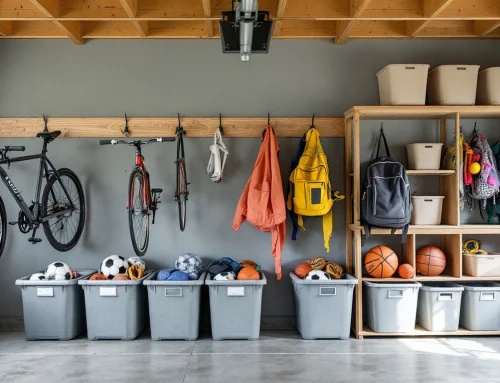
Winter Gear Accumulation Problem
Central Oregon’s unique position as a high-desert winter sports hub creates a specific storage challenge that hits hard every spring. With Mt. Bachelor’s ski season running November through May and towns like Bend, Sisters, and Redmond serving as gateways to year-round outdoor recreation, homeowners accumulate an arsenal of specialized gear. Skis, snowboards, boots, poles, sleds, tire chains, snow shovels, salt spreaders, and winter maintenance tools pile up in garages throughout the season. For those facing this annual problem, garage organization in Central Oregon requires a strategic approach that accounts for the region’s unique climate and winter culture.
The region’s dry climate means this equipment can theoretically be stored anywhere without mold concerns, but that advantage becomes a liability when homeowners stack gear haphazardly against walls, in corners, and across workbenches. When spring finally arrives and temperatures climb above freezing, garages reveal the true cost of winter: vehicles parked outside for months, workshop space buried under equipment, and floor space reduced to narrow pathways between piles of seasonal gear.
This isn’t just a visual annoyance. An unusable garage in April means continued exposure to Central Oregon’s intense UV rays for vehicles, delayed spring projects, and the psychological weight of facing a daunting cleanup task. Without an organized system, next winter will repeat the cycle, adding another layer to the existing chaos and pushing garages further beyond functional use.
Three-Category Sorting System for Spring Garage Cleanup
Before you can organize your winter gear, you need to decide what deserves space in your garage. The three-category sorting method gives you a clear decision framework that prevents the paralysis that keeps cluttered garages cluttered year after year.
Category 1: Keep & Store. This includes winter equipment you’ll genuinely use next season—skis, snowboards, tire chains, snow shovels, ice scrapers, and seasonal tools. Central Oregon’s dry climate actually works in your favor here. Unlike humid regions where stored gear deteriorates rapidly, our low-humidity environment preserves quality equipment remarkably well. That means if your snowshoes are still in good condition, keeping them for future use makes practical sense.
Category 2: Donate or Sell. Place outgrown sports equipment, duplicate tools, and anything you haven’t touched in two or more winters into this category. If your kids have moved past their junior-sized skis, or you own three snow shovels when one would do, these items deserve a second life with someone who’ll actually use them. Local consignment shops in Bend and Redmond welcome quality winter sports gear, especially during fall when new families are outfitting themselves for their first Central Oregon winter.
Category 3: Discard. Rusted tire chains, cracked plastic sleds, damaged snowshoes with broken bindings, and any safety equipment that’s compromised belongs in this pile. Don’t let sentimental attachment to broken gear consume valuable storage space.
How long does this sorting process take? For a typical two-car garage, expect to invest 2-4 hours. That single afternoon of decision-making sets the foundation for everything that follows—because you can’t organize what you haven’t first sorted.
Vertical Storage for Dry Climate
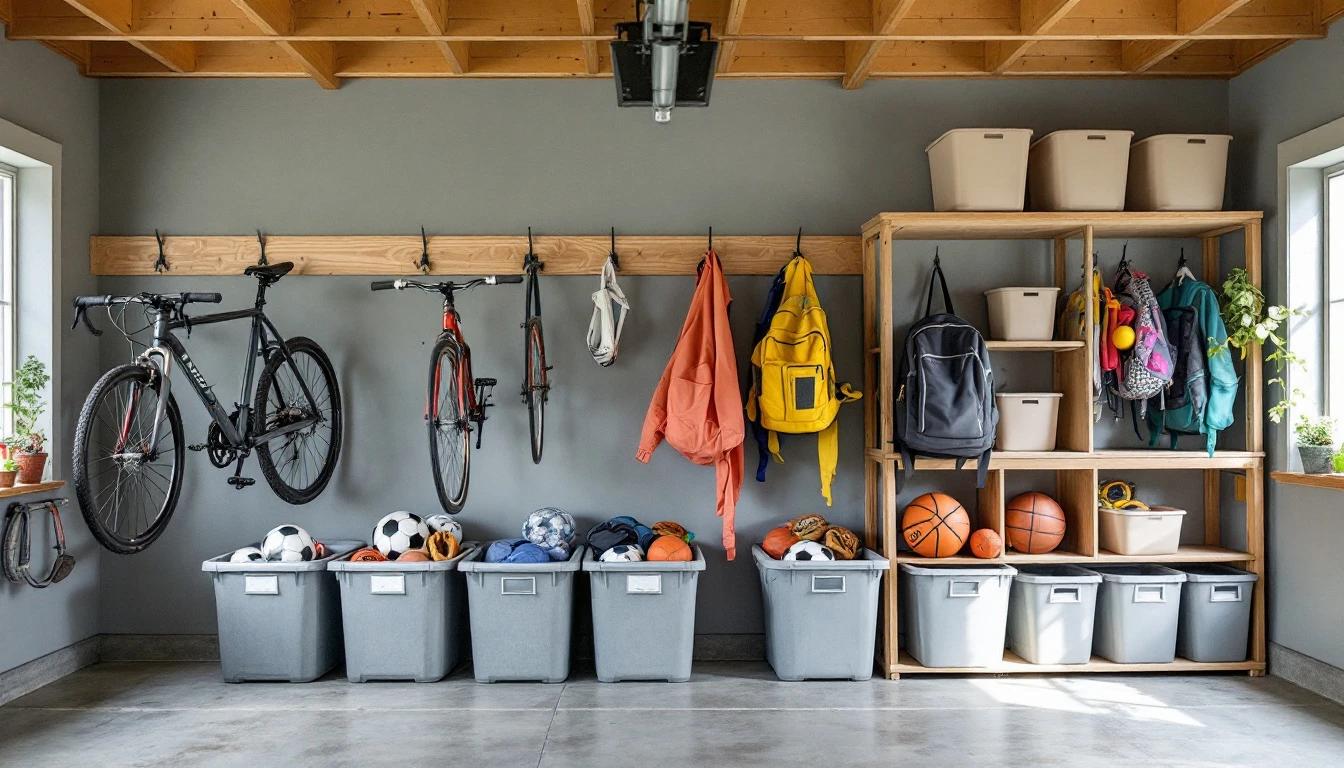
Central Oregon’s low humidity makes vertical wall-mounted systems ideal for winter gear storage without rust or moisture concerns. Unlike coastal regions where metal brackets corrode and fabrics mildew, the high-desert climate preserves equipment quality when properly mounted off garage floors. This garage storage solution for winter gear works particularly well in our region.
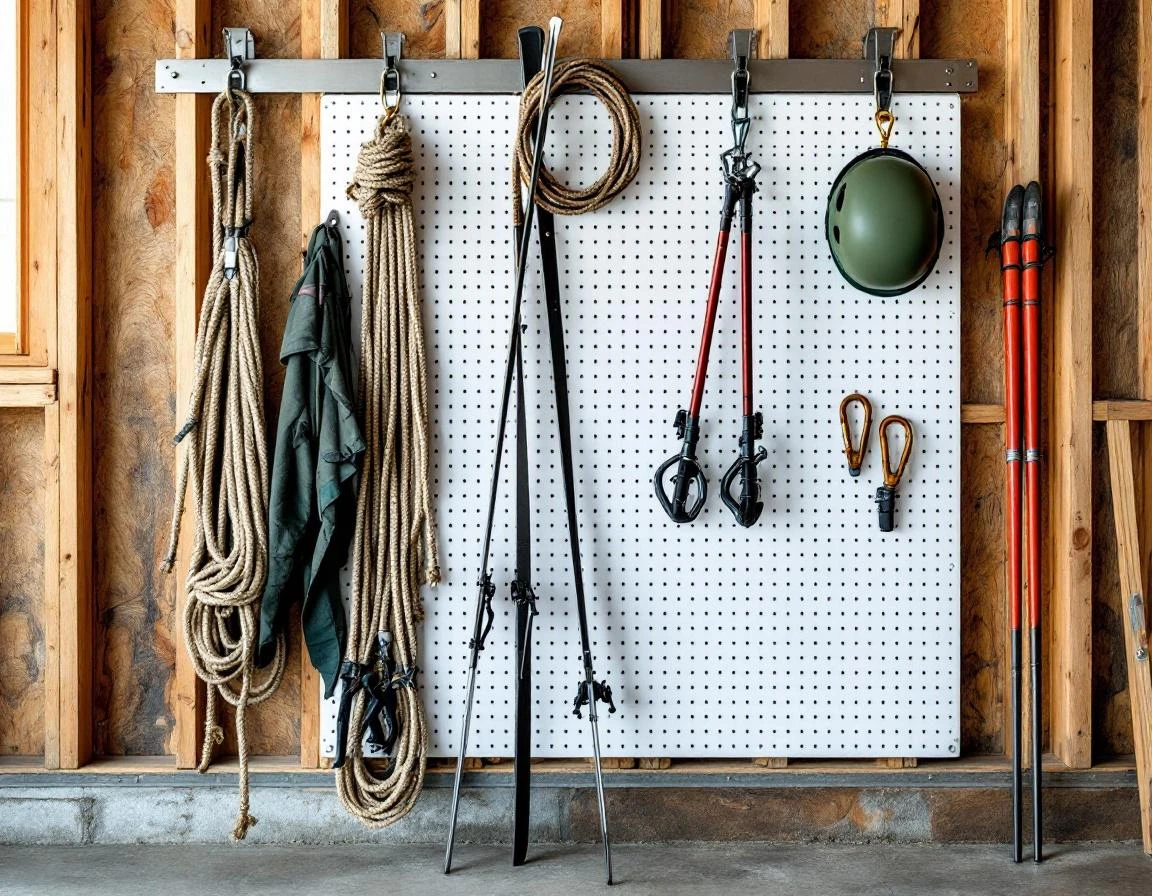
Wall-mounted racks for skis and snowboards
Central Oregon’s skiing and snowboarding culture means most garages house multiple sets of equipment that needs protection between trips to Mt. Bachelor. Wall-mounted racks designed specifically for skis and snowboards keep this gear accessible while preventing the damage that occurs when equipment leans against walls or gets buried under other items.
These racks typically mount directly to wall studs and feature padded hooks or cradles that support equipment without scratching bases or damaging edges. Most accommodate 4-6 pairs of skis or 3-4 snowboards in just two feet of wall space.
Beyond specialized racks, pegboard systems with adjustable hooks transform unused wall space into flexible storage that adapts as your gear changes. Pegboards work particularly well in Central Oregon’s dry climate since moisture won’t cause the boards to warp or hooks to rust, and they allow you to reconfigure storage layout as needed throughout the season.
Overhead ceiling storage uses vertical height while avoiding floor clutter
When wall space runs out, overhead ceiling storage systems transform the unused vertical height in your garage into functional storage zones. These ceiling-mounted racks install directly into ceiling joists and hold bulky seasonal items like ski bags, snowboard cases, and camping gear well above head level, keeping your floor completely clear for vehicles and workspaces.
Central Oregon’s dry climate makes ceiling storage particularly effective for long-term equipment storage. Unlike coastal regions where moisture can warp wood shelving or rust metal frames, the high desert’s low humidity means both wood and metal overhead systems maintain their structural integrity season after season. Your ski equipment stored in April will be in the same condition when you pull it down in November.
Most overhead rack systems support 200-600 pounds when properly installed, providing enough capacity for multiple ski bags, camping bins, and seasonal storage containers in a single unit. Making the most of vertical space is essential for transforming cluttered garages into organized storage areas.
Weekend Organization Checklist
Reclaiming your garage from winter clutter requires a realistic plan, not a vague commitment to “get organized.” This time-blocked schedule breaks the project into four manageable phases that fit into a typical Central Oregon weekend, taking advantage of spring’s cooler working temperatures before summer project season arrives.
A focused weekend of organization transforms a cluttered garage into a functional space ready for the season ahead, preventing the cycle from repeating next winter.
- Friday Evening: Clear and Sort (2-3 Hours) — Start Thursday or Friday evening by clearing your entire garage floor. Move everything into the center, then sort items into three distinct piles: keep, donate, and discard. This initial sorting prevents decision fatigue on installation day and gives you a clear picture of what storage solutions you actually need.
- Saturday Morning: Install Storage Systems (3-4 Hours) — Saturday morning is installation time. Mount wall-mounted racks, pegboards, and hooks while the garage is empty and wall access is easiest. Budget three to four hours for a standard two-car garage if you’re working alone—having a partner cuts this time in half. Central Oregon’s dry climate means you don’t need to worry about moisture-resistant fasteners or special coatings, simplifying your hardware choices.
- Saturday Afternoon: Place and Pack (2-3 Hours) — With storage systems mounted, Saturday afternoon focuses on placement. Hang your kept items on racks and pegboards, box up donation items for easy transport, and discard damaged gear that’s unsafe to pass along. This phase takes two to three hours and transforms your sorted piles into an organized system.
- Sunday Morning: Final Cleanup (30-60 Minutes) — Sunday morning handles the finish work. Load donation boxes into your vehicle for drop-off, sweep the now-clear floor, and verify that both vehicles fit with doors closing properly. This final check confirms your weekend delivered on its promise: a functional garage ready for the season ahead.
Seasonal Maintenance Rhythm
The initial weekend organization solves the immediate problem, but lasting success requires a simple maintenance rhythm that prevents accumulation. Central Oregon homeowners who adopt this three-phase approach find that future spring garage cleanup takes just 1-2 hours instead of another full weekend.
- Fall inspection (September–October): Before the first significant snowfall, spend 30 minutes auditing your stored gear. Test tire chains to confirm they’re not tangled, inspect ski edges and bindings, and verify you have adequate ice melt or sand on hand. While Central Oregon’s dry air prevents the rust problems that plague coastal garages, inspection still matters—a cracked ski boot or frayed chain discovered in September can be replaced before you need it on the road to Mt. Bachelor.
- Winter monitoring: Throughout the season, immediately place any new gear purchases into their designated spots rather than leaving them on the garage floor. Bought replacement gloves? Hang them on the pegboard. New shovel? Mount it on the wall rack. This simple discipline prevents the spreading mess that created the original clutter problem. Just as importantly, pay attention to what you actually use—your ‘actually used’ list will naturally emerge from the season itself.
- Spring organization (before March): Dedicate one Saturday to re-sorting with the three-category system. Because you’ve maintained the storage system all winter, this session focuses on identifying gear that should move to the donate pile or be discarded. Equipment you never touched all season becomes an obvious candidate for removal, keeping your garage lean and functional.
Next Steps for Your Garage
Start small to build momentum. Choose one wall in your garage and work through just one category from your sorting session—the ‘donate’ pile is usually easiest because decisions are already made. This focused approach takes 30-45 minutes and gives you confidence for the remaining work.
Use this weekend to measure your garage walls and ceiling areas where you’ll install storage. Take these measurements to any home improvement retailer in Bend or Redmond and order wall-mounted racks or pegboard systems. Affordable storage materials are readily available and arrive within days, keeping your project on schedule.
Before donating anything, test your sorting decisions. Use items from your ‘keep’ category during spring activities—take that rarely-used snowboard out for a late-season run, or wear those ski gloves on a cold morning hike. This testing phase reveals which gear actually deserves storage space and which items you thought you’d use but won’t. The confirmation gives you confidence to release unused equipment without regret.
Finally, open your calendar and set a reminder for early September. That simple alert will prompt your fall audit before the first snow arrives. Preventing next winter’s accumulation before it starts. This annual rhythm transforms garage organization from a dreaded spring project into a quick seasonal check that takes just an hour or two each year. Using clear, labeled bins and vertical storage means your system remains functional season after season.