Fall Storm Power Outages in Portland: Garage Battery Backup Solutions
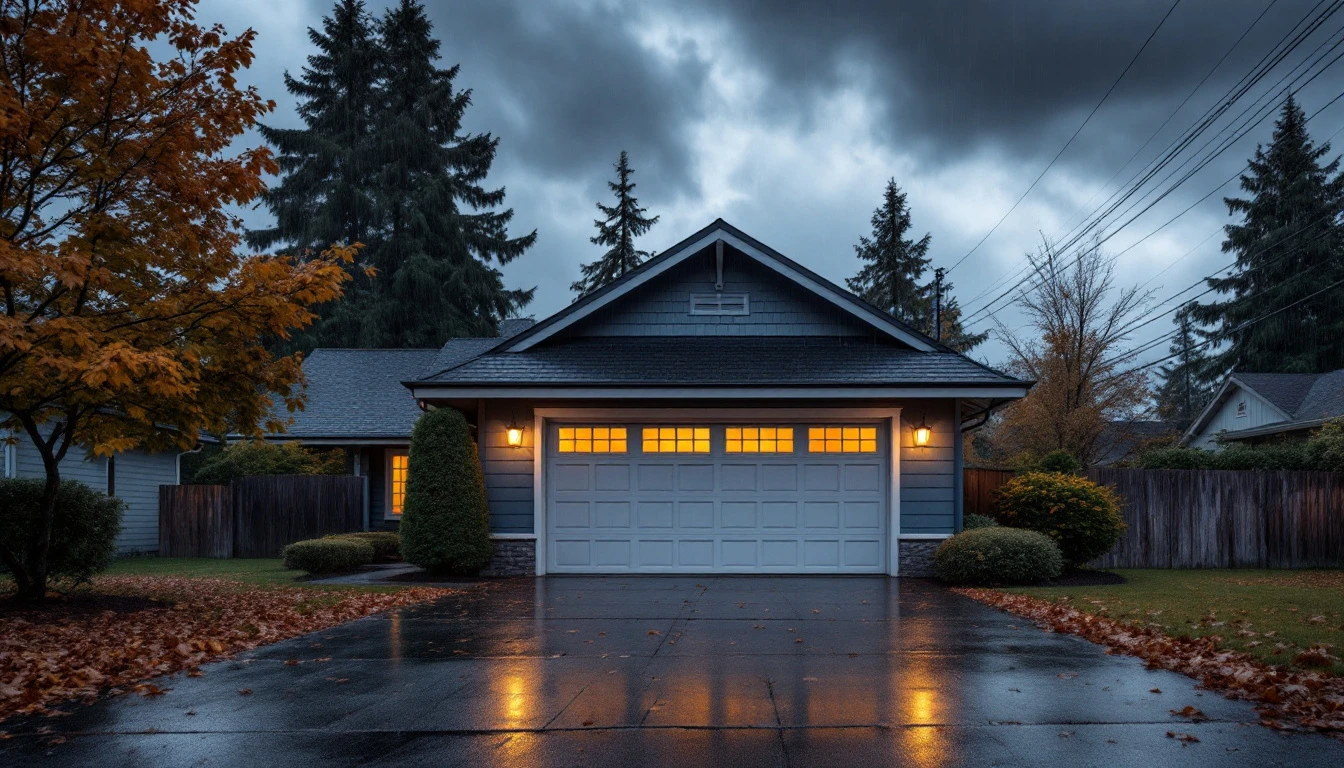
When fall and winter storms roll through the Pacific Northwest, power outages become a regular reality for Portland homeowners. Grid failures during these months can last anywhere from a few hours to several days, leaving families without essential electrical services. The combination of heavy rain, high winds, and occasional ice creates conditions that frequently knock out power lines across the metro area. Having a garage battery backup power outage solution means your garage door remains functional when the grid fails.
What happens to your garage door when the power goes out? Modern garage door openers rely entirely on electricity, which means the moment the grid fails, you lose the ability to open or close your door using the standard controls. This can trap your vehicle inside when you need to leave for work or an emergency, or leave your garage vulnerable if the door was open when power went out.
Portland homeowners often face emergency service calls during storm season that range from $200 to $500 just to manually release the door mechanism or restore temporary power access. These costs add up quickly when storms hit multiple times each season. A battery backup system eliminates this expense by keeping your garage door opener functional even when the grid fails, maintaining both access and security throughout the outage.
How Battery Backup Systems Keep Your Garage Running During Outages
When the power goes out, an uninterruptible power supply (UPS) system attached to your garage door opener detects the loss of AC current within milliseconds. The system instantly switches to battery power, maintaining full opener functionality without any interruption.
You won’t even notice the transition—your garage door will open and close just as it normally does.
Battery capacity is measured in amp-hours or watt-hours, which translates directly to the number of door cycles you can complete during an outage. A standard residential battery backup system typically provides 10 to 50 complete door cycles per charge, depending on the capacity you choose. For example, a basic system might deliver 15-20 cycles, while a higher-capacity unit can handle 40-50 cycles before needing a recharge.
Most Portland-area power outages last between two and six hours, making these systems more than adequate for typical storm events. With 20-30 cycles available, your household can operate the door multiple times without concern. Even if only one person needs to leave and return during an outage, you’ll have plenty of capacity remaining.
Modern smart systems take the guesswork out of battery management. Wi-Fi monitoring lets you check battery status and remaining cycle capacity right from your phone, so you always know how much backup power you have available. Best of all, most battery backup units retrofit directly onto existing garage door openers—no expensive installation required, just plug-and-play convenience.

Battery Capacity and Outage Duration
How many times do you need to open and close your garage door during a power outage? That’s really what battery capacity comes down to. A 2,000-3,000 watt-hour system provides enough energy for 15-25 door cycles—more than enough for typical household needs during the average Portland metro outage of 2-4 hours.
Ice storms change the equation. When winter weather knocks out power for 12+ hours, you’ll want to calculate your personal requirements. A family of four with two cars typically needs 10-15 cycles for all exits and entries during an average outage—morning departures, midday returns, evening arrivals. Count your household’s pattern: each person leaving and returning equals two cycles.
Most residential systems fall comfortably within the 2,000-3,000 watt-hour range, covering standard Pacific Northwest weather events while keeping initial costs reasonable.
Choosing the Right System for Your Garage
Before purchasing a battery backup system, you’ll need to identify your current garage door opener brand and model. The three major manufacturers are:
Each offers battery backup units designed specifically for their opener models. Compatibility is model-specific, so check your opener’s label or manual before buying.
LiftMaster sells its Battery Backup Module for openers with the Security+ 2.0 system, while Chamberlain provides similar units for its compatible models. Genie manufactures backup batteries that integrate with its chain-drive and belt-drive openers. Many manufacturers offer online compatibility checkers on their websites where you can enter your model number to verify which backup system will work.
When shopping in the Portland metro area, expect to pay $300 to $800 for complete battery backup systems. Depending on capacity and brand. Professional installation typically adds another $150 to $300 to your total cost. Most systems install in one to two hours without requiring major modifications to your garage.
One decision you’ll face is wall-mounted versus ceiling-mounted units. Wall-mounted batteries take up less overhead space and suit garages with lower ceilings or limited clearance—common in older Portland homes. Ceiling-mounted units attach directly to your opener, keeping floor and wall space clear but requiring adequate vertical clearance.
Portland garages vary widely in size and configuration, but most standard residential setups accommodate either mounting style without difficulty. Measure your available space before purchasing, and contact Garage Harmony if you need help determining which system fits your specific garage layout.
Installation and Maintenance Requirements
What does the installation process actually look like? Professional installation is a quick job for Portland-area technicians, handled in a single morning visit with labor costs that remain reasonable and competitive. Most modern battery backup systems use simple plug-in connectors that link directly to your opener—no complex rewiring or electrical panel modifications needed.
Homeowners comfortable with basic electrical connections can tackle DIY installation, though we recommend having a professional verify your setup for safety and warranty protection. The process involves mounting the battery unit, connecting power cables, and running a quick test cycle to confirm everything works properly.
Ongoing maintenance remains minimal but important. Plan for battery replacement every 3-5 years at a cost of $200-$400 depending on capacity and brand.
Most systems include smart app monitoring that tracks battery health in real time, alerting you when performance drops or replacement becomes necessary.
Schedule an annual battery health check to catch potential issues before storm season arrives.
Return on Investment and Storm Season Savings
Let’s talk numbers. A single emergency service call during a power outage carries a real cost, while a complete uninterruptible power supply for your garage door represents a worthwhile investment when professionally installed. If you experience just one or two storm events requiring emergency assistance, the system pays for itself.
Portland metro residents face 3 to 5 power outages each year on average. With two outages annually, most homeowners break even within the first year of ownership. Beyond emergency service fees, you’re also avoiding costs like emergency locksmith services when you can’t access your garage manually, temporary hotel stays during extended winter storms, and losses from spoiled items in garage refrigerators or climate-controlled storage.
Battery systems deliver an often-overlooked security benefit. Your garage door stays locked when the power fails. Without backup power, many homeowners manually disengage the opener to open the door, leaving their home vulnerable to intrusion until power returns. A backup power system garage door solution maintains normal security protocols throughout the outage.
This isn’t about emotional selling—it’s about practical household budgeting. When you can justify the expense through avoided emergency calls and maintained security, the decision becomes much easier to present to your family.
Next Steps: Getting Started Today
Ready to protect your home before the next storm hits? Start by locating your garage door opener’s brand and model number—you’ll usually find it on a label attached to the wall-mounted control panel or the motor unit itself. Check your original paperwork if the label has worn off over time.
Next, contact Garage Harmony for a compatibility check and free in-home assessment. Our team will verify which battery backup system works with your specific opener and provide an accurate installation quote. This professional assessment catches potential incompatibilities before you purchase, saving you the frustration of buying equipment that won’t work with your setup.
Timing matters. November marks the start of Portland’s peak storm season, and our installation schedule fills quickly as homeowners prepare for winter weather. The sooner you schedule, the better your chances of getting protected before the first major outage.
Once your system is installed, register it with the manufacturer. You’ll receive warranty coverage and helpful battery replacement reminders, keeping your backup power system ready when you need it most. For more information on preparing for power outages. You can review general preparedness guidelines. Contact us today to schedule your free assessment!